To plan your trip, you must know which tourist places are included in the Sacred Valley to successfully organize your days. At Trails to Machu Picchu we will guide you so you can understand the variety of this Andean destination. Therefore, this article details everything from the most famous archaeological complexes to the corners least explored by traditional tourism.
Main stops of the general tourist ticket in the valley
If you are looking to understand which tourist places are included in the Sacred Valley, you must first know the sites of the tourist ticket. These places are the most accessible and have an infrastructure prepared to receive you comfortably.
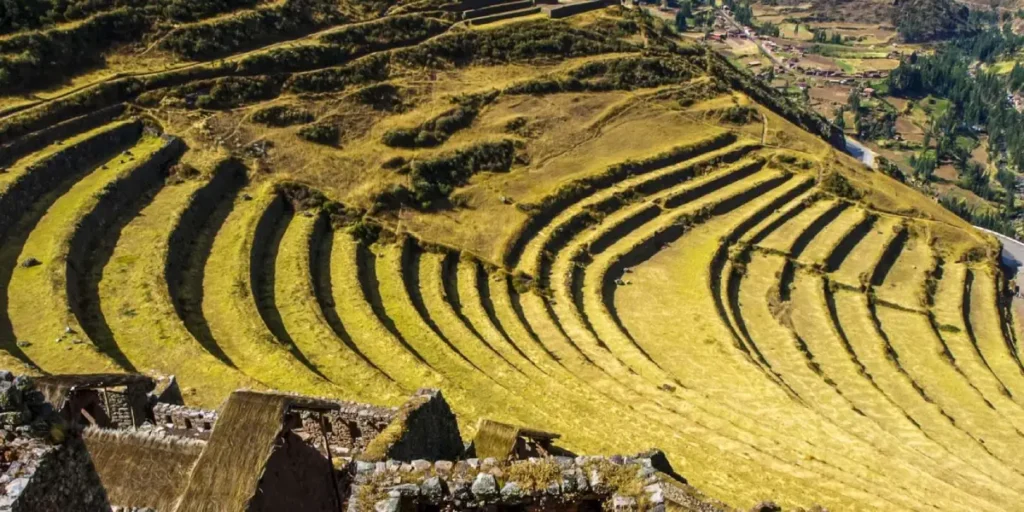
Pisac and its infinite terraces
This site stands out for its impressive agricultural terraces that seem to hang from the mountains. You will notice that the archaeological complex is vast, as it includes military, religious, and ancient cemetery sectors.
In addition to the ruins, we suggest you visit the traditional market in the modern town. Here you can find authentic handicrafts and textiles woven with ancient techniques by local communities.
To make the most of your visit to Pisac, follow these recommendations:
- Arrive early to avoid the midday crowds.
- Wear shoes with good grip to walk along the cobblestone paths.
- Use sunscreen, as the radiation is strong in this area.
- Carry enough water for the climb to the upper area of the Intihuatana.
Ollantaytambo as a living Inca city
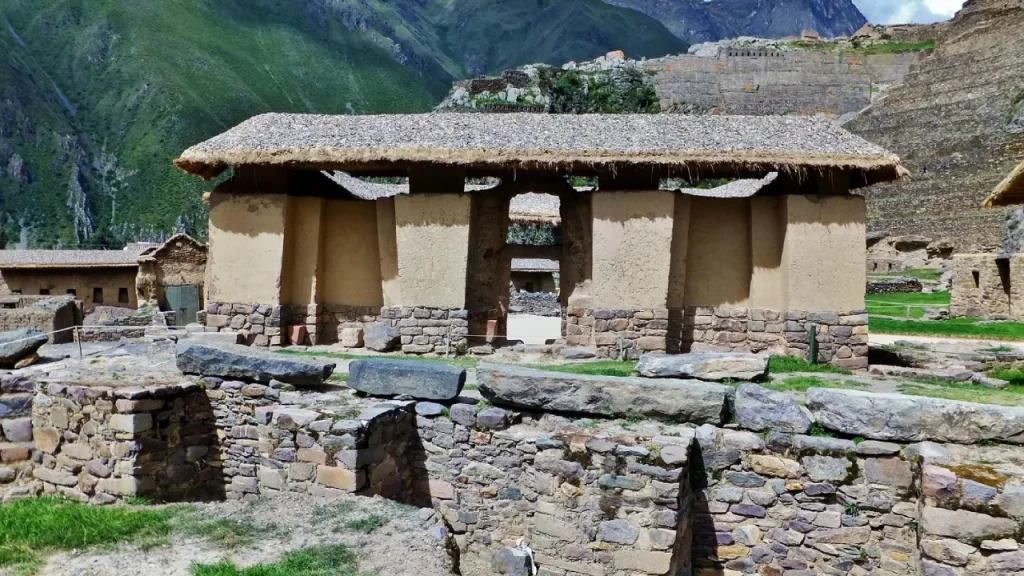
After Pisac, you must head towards Ollantaytambo to see a city that maintains its original design. Its narrow streets preserve the Inca water channels that still function today.
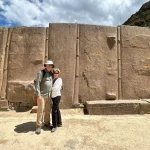
In the upper part, you will find the Temple of the Sun with its huge pink granite blocks. That is why we at Trails to Machu Picchu consider this place a key point of Andean engineering.
Chinchero and the textile interpretation center
As you go up to the plateau, you will arrive at Chinchero, a town famous for its textile traditions and its colonial church. This site was the royal palace of the Inca Túpac Yupanqui and preserves original walls of great quality.
Below, we list what to see at this point:
- Demonstrations of natural wool dyeing with cochineal.
- The main square where the Sunday market takes place.
- The archaeological terraces that offer views towards the Chicón snow-capped mountain.
- The interior of the church of Nuestra Señora de la Natividad.

Little-known archaeological sites that you can explore
Now that you know the classics, let’s look at other little-known archaeological sites that will enrich your experience. These routes are usually quieter and allow you to better connect with local history.
Huchuy Qosqo archaeological complex
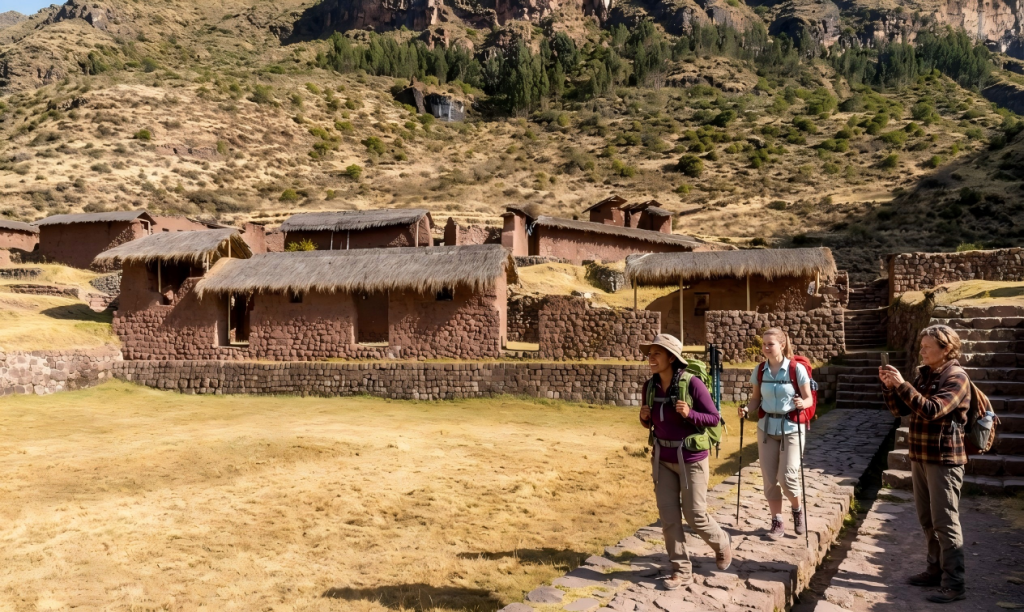
This site is located above the town of Lamay and its name means “Little Cusco” in Quechua. To get there, you must take a moderate hike that will give you incredible views of the Vilcanota River.
Once there, you will see two-story stone and mud buildings that are uncommon. We at Trails to Machu Picchu can help you organize this route so that you can walk safely.
If you decide to go on your own, keep this process in mind:
- First, take transport from Cusco to the town of Lamay.
- Then, start the ascent along the zigzagging path up the mountain.
- After that, pay your entrance fee directly at the site’s control booth.
- Finally, tour the enclosures and the large kallanka or meeting hall.
Archaeoastronomy in Andean temples
Another fascinating aspect is the archaeoastronomy in Andean temples that is manifested in several points of the valley. You will notice that the windows and doors are aligned with the sunrise on the solstices.
In practice, this demonstrates the advanced knowledge of the sky that the ancient Peruvians had. For example, in Pisac there are specific alignments with the Llama constellation or Urcuchillay.
The Intihuatana of Pisac
This is the most sacred point of the complex and served as a precise solar observatory. From this place, the priests determined the exact moments for planting and harvesting.
The Temple of the Sun in Ollantaytambo
This temple presents six giant monoliths that face directly east. You will notice that the finish of the stones is so perfect that you cannot fit even a sheet of paper between them.
The route through Calca and Lamay for an authentic trip
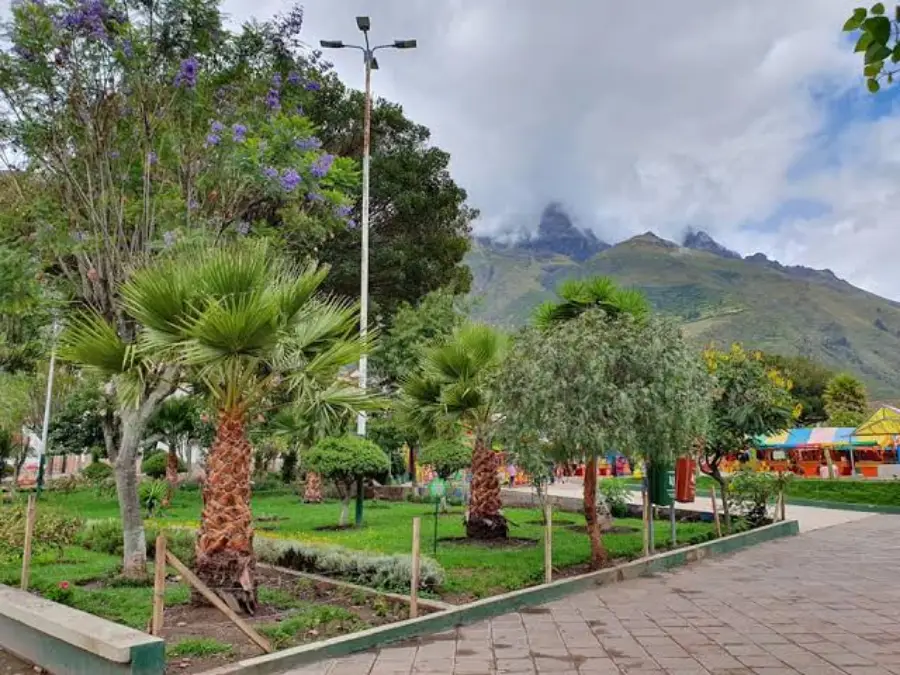
If you prefer to avoid the commercial routes, the route through Calca and Lamay is your best option. These towns maintain a slower pace of life and preserve deeply rooted traditions.
Less commercial traditional fairs
Unlike the markets in Cusco, the fairs in Calca are focused on local consumption. You will find fresh products from the different microclimates and altitude levels of the region.
We recommend trying the local food at the central market stalls. There you will see how native ingredients such as chuño, quinoa, and various types of corn are used.
For your visit, we suggest bringing the following:
- Cash in small denominations for purchases.
- Cloth bags to avoid the use of unnecessary plastics.
- A small camera to capture the colors of the fair.
- Light clothing, as the weather is warmer in this area.
Cultural centers and community museums
In this area, there are also cultural centers and community museums that rescue local history. For example, in Inkariy you will be able to see rooms dedicated to the various pre-Inca and Inca cultures.
In addition, these spaces are usually managed by local families who share their knowledge with you. Thanks to this, your visit contributes directly to the community’s economy.
Geography and nature of the Sacred Valley
To understand which tourist places are included in the Sacred Valley, it is vital to analyze its unique geography. The valley is not just history; it is a complex ecosystem with astonishing biodiversity.
Microclimates and altitude levels
You will notice that the weather changes drastically as you move between the towns. The valley has microclimates and altitude levels ranging from 2,700 to 3,800 meters.
According to a technical report by SENAMHI (2021), these variations allow for diverse agricultural production throughout the year. For this reason, the Incas built Inca agricultural experimentation laboratories like Moray to study these conditions.
Geological formation of the Sacred Valley
The geological formation of the Sacred Valley is the result of millions of years of river erosion and tectonic activity. The Vilcanota River, also called Urubamba, has shaped this deep and fertile canyon.
In the soil, you will see mineral deposits that make the land ideal for cultivation. We at Trails to Machu Picchu usually explain these natural details during our tours of the area.
Natural viewpoints of the Sacred Valley
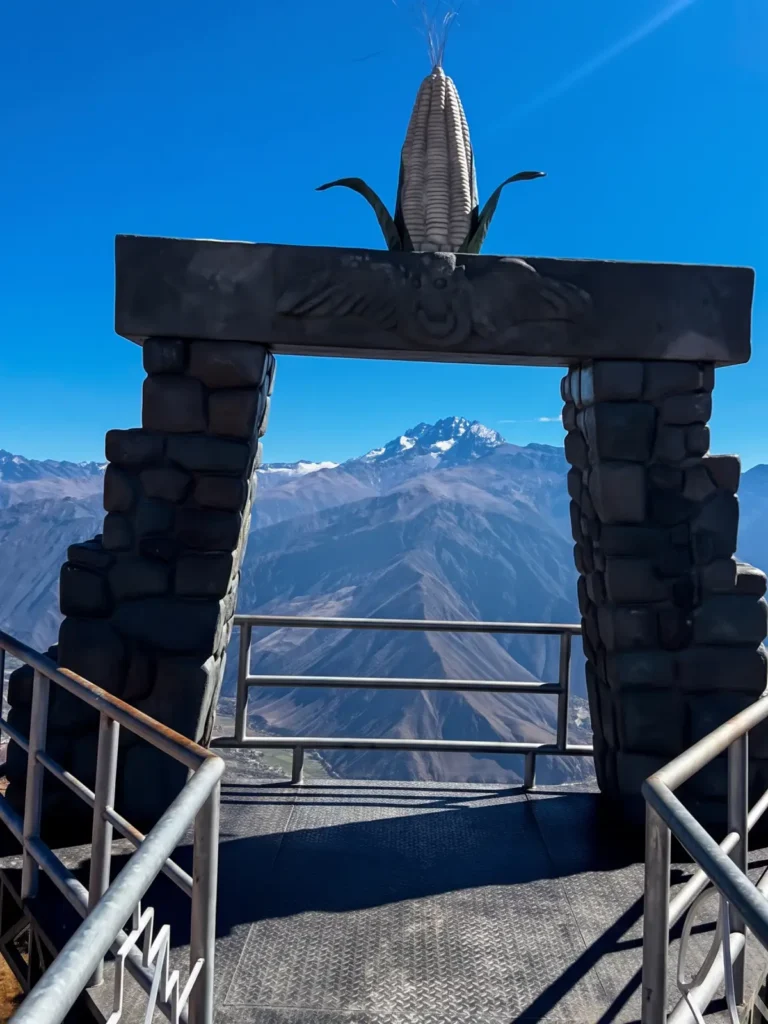
If you like photography, there are natural viewpoints of the Sacred Valley that you cannot miss. Many are located on the road that connects Cusco with the town of Pisac.
Below, we mention the most outstanding ones:
- The Taray viewpoint, which offers the most iconic view of the valley.
- The Ccorao viewpoint, ideal for seeing the mountains before going down.
- The Racchi viewpoint, near Chinchero, with views of the snow-capped mountains.
- The Pomatales sector, where you will observe the river snaking through the valley.
Organization of your route and local transport
Once you decide to visit the valley, you need to know how to move between the towns. Organization is key so that you do not waste time and make the most of every stop.
Map of distances from Cusco
The first step is to understand the map of distances from Cusco to the main points. You will notice that the valley is very close to the city, but the stretches can take time.
To help you plan, consider these approximate times in private transport:
- Cusco to Pisac: about a 45-minute trip.
- Pisac to Urubamba: approximately 1 hour of travel.
- Urubamba to Ollantaytambo: about 30 minutes on a flat road.
- Cusco to Chinchero: 50 minutes climbing up to the plateau.
Order of towns for itineraries
The order of towns for itineraries depends on where you decide to spend the night. Many travelers prefer to start in Pisac and end in Ollantaytambo to take the train to Machu Picchu.
However, if you are looking for tranquility, you can stay in Urubamba, which is in the center of everything. At Trails to Machu Picchu we recommend this option so you can move more easily in both directions.

Local transport between towns
Local transport between towns is constant and affordable if you decide to use minibuses or “colectivos.” These vehicles leave from specific stops in each town when they are full.
To use this service, follow these simple steps:
- First, locate the main collective bus stop in the town where you are.
- Then, ask the driver if they go through your final destination.
- After that, get on the vehicle and pay the fare directly to the assistant or driver.
- Finally, notify them in advance where you want to get off so the car can stop.
With all this information, you now know which tourist places are included in the Sacred Valley to build your ideal route. Remember that this destination offers much more than ruins; it offers a real connection with current Andean life.
If you prefer an organized and worry-free experience, at Trails to Machu Picchu we are here to help you. We make sure your time in the valley is comfortable, informative, and totally safe, contact us.