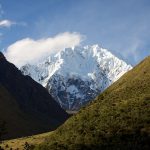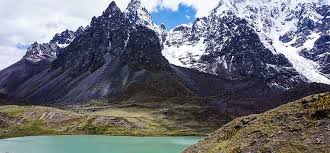
When you plan an adventure to the highest snow-capped mountain in Cusco, a fascinating question arises: what does Ausangate mean in Quechua. This mountain dominates the city’s southern horizon and reaches 6,384 meters in height. Furthermore, its name possesses a deep spiritual meaning.
In Quechua, the term Ausangate comes from the words “Awsa” and “Anqati.” According to the interpretation most accepted by local linguists, its name is related to the copper or reddish color of its rocks and surrounding lands.
At Trails to Machu Picchu, we have traveled these routes many times and we know that understanding its meaning transforms your experience. Thus, you will not only contemplate a snow-capped mountain, but you will understand that you are walking on a “copper protector” that nourishes the entire region.
- Etymology of the word Ausangate and its ancestral origin
- What Ausangate means in Quechua and its link to water sources
- Meaning of Apu in Andean culture and its relationship with the snow-capped mountain
- Interpretation of Ausangate in colonial documents and historical references
- Regional differences and how the inhabitants pronounce Ausangate
- Why the meaning of Ausangate is key to your trip
Etymology of the word Ausangate and its ancestral origin
To understand the origin of the name of the Ausangate snow-capped mountain, we must analyze the phonetic roots preserved by the residents of the Ocongate community. Many scholars suggest that the root “Awsa” refers to a metallic hue. Specifically, it relates to the shine of copper that appears at sunset.
On the other hand, the suffix “Anqati” is linked to the action of constantly bringing or dragging something. By joining both concepts, the local inhabitants explain that the name describes the mountain that “brings the color of metal.” It can also be interpreted as the one that “flows with copper tones.”
To better understand this interpretation, we present the main components of the name according to the toponymy of the Cusco snow-capped mountains:
- Awsa: Usually translated as copper, although it also describes the reddish glow of the minerals present in the rocks.
- Anqati: It is a term that suggests movement or the action of providing something from the heights down to the valleys.
- Combined interpretation: Defines the mountain as a constant source of minerals and metallic light in the landscape.
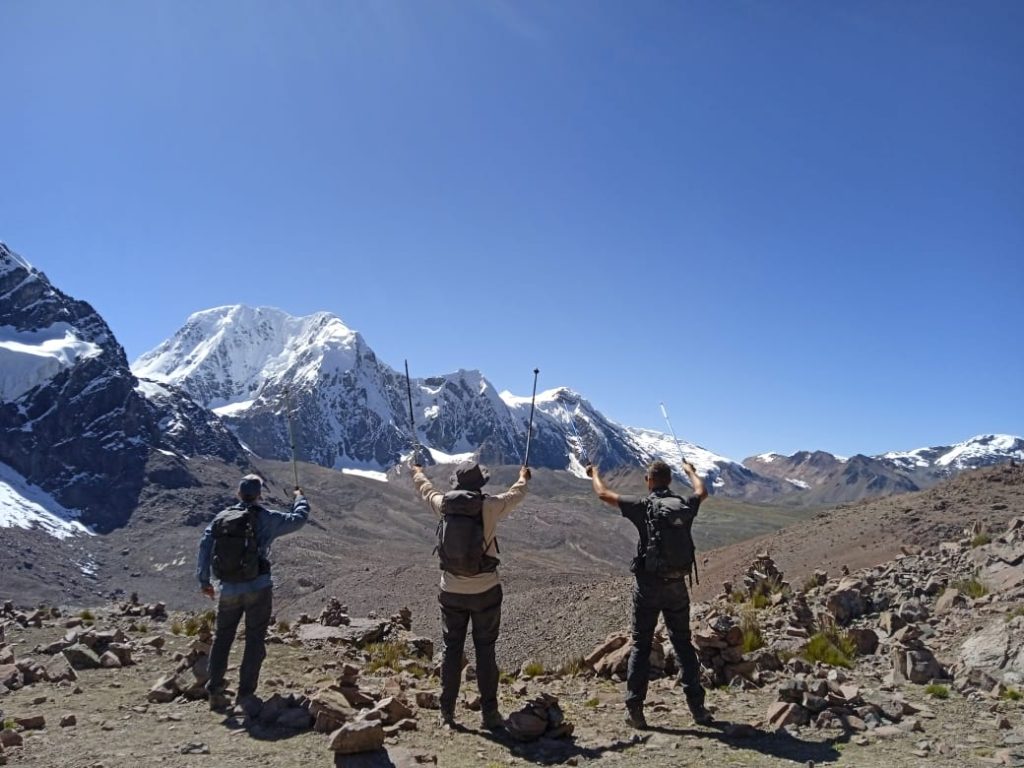
Relationship between the name Ausangate and the color copper
During your journey through Ausangate, you will notice that the surrounding geography presents minerals such as iron and sulfur. These elements generate hills with intense colors. For this reason, translating Ausangate from Quechua to Spanish as “the one that has the color of copper” is very accurate for travelers.
This coloration is not only visual. In fact, a study published in 2021 by researchers from the National University of San Antonio Abad of Cusco (UNSAAC) documented how mineralogical composition influences the cultural perception of space. Additionally, the research highlights that the name reflects the geological reality of the Vilcanota massif, where ocher and reddish tones predominate.
When you travel these routes with us, you will observe that the soil constantly changes color. This geological characteristic helps to understand why the ancient Quechuas gave this colossus such a descriptive name.
What Ausangate means in Quechua and its link to water sources
Beyond its minerals, Ausangate represents the heart of the water system in the south of Peru. According to the Andean cosmovision, this mountain is considered the “owner of the waters.” This is because its glaciers feed lagoons, rivers, and wetlands that are essential for life.
Furthermore, its name maintains a symbolic connection with fertility. It is believed that Ausangate collects water from the atmosphere and delivers it to the lowlands. For this reason, when we ask the local elders what this mountain represents for the Quechuas, they mention water first and then the cold.
For you to better understand this relationship, consider the following aspects of its hydrological function:
- The snow-capped mountain acts as a natural dam that releases water gradually during the dry season, from May to September.
- Its underground filtrations feed famous lagoons such as Sibinacocha and contribute to regulating the climate of the entire mountain range.
- The rivers that are born from its meltwater, such as the Vilcanota, travel thousands of kilometers until they reach the Amazon rainforest.
Likewise, research led by Dr. Fabian Drenkhan, published in the journal Science of the Total Environment in 2022, analyzes the vulnerability of these glacial systems. The study highlights that Ausangate is fundamental for alpaca herder communities. These populations depend on its waters to maintain the pastures.
This balance between the mountain and the water makes your visit especially significant. As you walk along its slopes, you will understand that every stream you cross is part of the body of this protective giant.
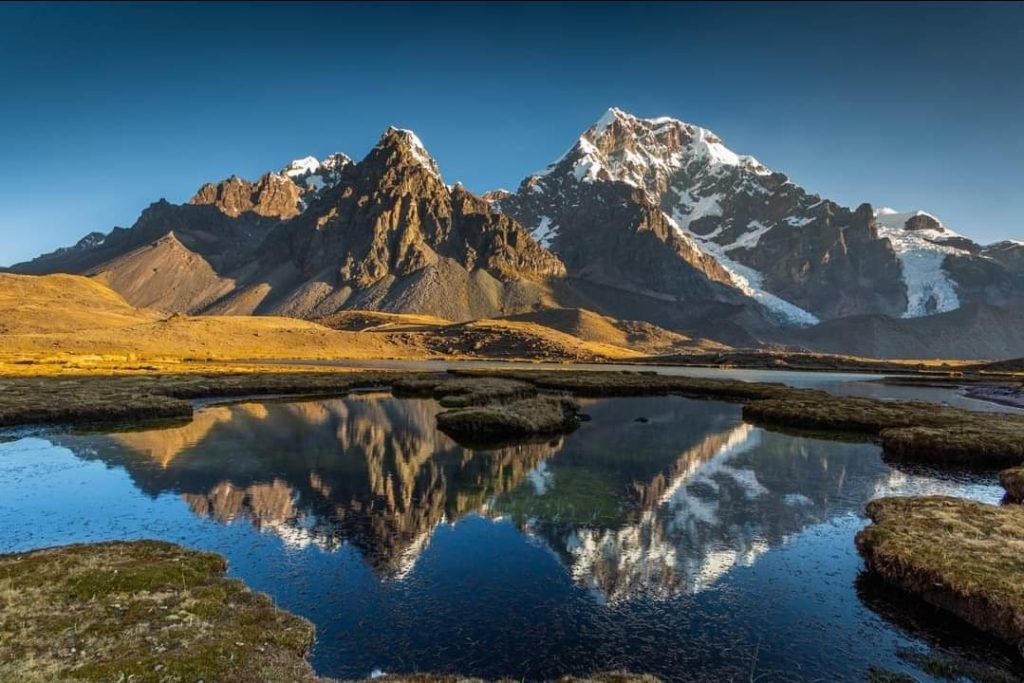
Meaning of Apu in Andean culture and its relationship with the snow-capped mountain
To understand what Ausangate means in Quechua, you must first know the concept of Apu. In the Andean world, an Apu does not simply represent a mass of stone and ice. It is considered a divine entity with will, personality, and protective power.
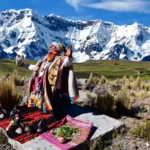
Currently, the Quechuas consider Ausangate the most powerful Apu in the Cusco region. According to their beliefs, it protects livestock and crops. During our tours, we often observe how the muleteers perform small offerings of coca leaves, known as tinkay, before starting any ascent.
These are the main spiritual functions that this Apu fulfills:
- Protection: It looks after the inhabitants of the Chillca and Ocongate communities in the face of inclement weather.
- Mediation: It acts as a bridge between the human world, known as Kay Pacha, and the upper world, called Hanan Pacha.
- Justice: Residents believe that the Apu can reward or punish you depending on the respect you show towards nature.
Spiritual importance of the name in the Andes
The respect for the name is so deep that the area’s inhabitants rarely pronounce it without reverence. In practice, this means that the name Ausangate functions as an invocation to ask for permission before entering its sacred valleys.
During your trip, we recommend you pay attention to how the guides and muleteers refer to the mountain. You will notice that there is a difference between Ausangate and other names of lesser mountains. A higher hierarchy is always attributed to the former.
At Trails to Machu Picchu, we deeply value this cultural respect and teach you to walk with awareness. Understanding the spiritual importance of its name will allow you to connect with the landscape in a deeper way.

Interpretation of Ausangate in colonial documents and historical references
Historical records also offer clues about how the meaning of this word evolved over the centuries. In the Spanish chronicles of the 16th and 17th centuries, the name appears written with various variants, such as “Abancat” or “Ausancata.”
Colonial documents suggest that the Spanish attempted to understand the devotion the Incas felt for this snow-capped mountain. Furthermore, historical references indicate that Ausangate was a place of pilgrimage long before the Qoyllur Riti festival was established.
For your trip, we consider it important that you know these historical facts:
- Ausangate appeared in colonial tribute records as a high-quality grazing area.
- Chroniclers described it as a “shrine of the Indians” due to the ceremonies performed in its lagoons.
- Even on old viceroyalty maps, the snow-capped mountain appeared as a key geographical and spiritual point for the southern Andes.
Additionally, an article published in 2023 in the archeology journal Ñawpa Pacha, prepared by researchers from the Pontifical Catholic University of Peru, details the presence of ceremonial sites in the high areas. These findings support that the name and the place have maintained their sacred status for more than 500 years.
Therefore, when you travel these trails, you will follow the footsteps of thousands of people who considered Ausangate a living being since the Inca era. Later, colonial history reinforced the idea that this territory was impregnable and deserved to be documented.
Regional differences and how the inhabitants pronounce Ausangate
Although it is written “Ausangate” on international maps, the local pronunciation in Ocongate presents some nuances. Quechua speakers tend to emphasize the penultimate syllable more. In this way, they produce a more melodic and deep sound that resonates in the valleys.
There are also regional variants of the term Ausangate, whose pronunciation changes slightly according to the community. In some areas near Pitumarca, the name is related more to the idea of “mountain that shines.” This interpretation is linked to the presence of permanent snow.
To feel more integrated during your hike, keep these linguistic curiosities in mind:
- The letter “G” in the name is usually pronounced softly, almost like an aspiration, according to the Cusco-Collao variant of Quechua.
- Quechua terms related to snow-capped mountains, such as “Rit’i,” usually accompany the name to specify its icy nature.
- If you hear a resident say “Apu Ausangate Rit’i,” they are referring specifically to the lord of the copper snows.
Although these differences do not modify the central meaning, they enrich the toponymy of the Cusco snow-capped mountains. At Trails to Machu Picchu, sharing these details with you is fundamental. Thus, we want to help you understand and speak the language of the mountain.

Why the meaning of Ausangate is key to your trip
Understanding what Ausangate means in Quechua helps you prepare mentally for the physical demands of the route. Knowing that you are in the domain of the “water provider” and the “copper Apu” provides a purpose that goes beyond taking photographs.
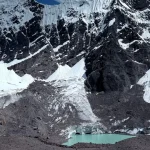
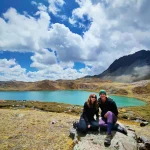
During your hike through the Ausangate circuit, you will observe lagoons of turquoise and reddish tones that evoke the legends about its name. Furthermore, every step you take above 4,000 meters in height will allow you to appreciate how geology and culture come together in a single word.
If you decide to take this tour with us, we recommend following these tips based on our experience:
- Take a moment to observe the colors of the rocks at sunset. This way you will understand why the mountain is related to copper.
- Respect the water sources, as they represent the most precious gift the snow-capped mountain offers to the region.
- Listen to the stories that the muleteers tell about the Apu. Their legends will help you understand the meaning of Ausangate better than any book.
Remember that this mountain is not conquered, but visited with humility. For this reason, knowing its name is the first step to establishing a respectful relationship with one of the most imposing landscapes on the planet. Now that you know its meaning behind the name, dare to discover this wonder with us.