The Phuyupatamarca Archaeological Site is one of the most important and best-preserved settlements along the Inca Trail to Machu Picchu. Located in a strategic geographical position, this complex of structures stands out for its complex hydraulic engineering and its deep integration with the natural environment. For travelers on the classic four-day route, this site represents a key transition point between the high mountain and the beginning of the cloud forest.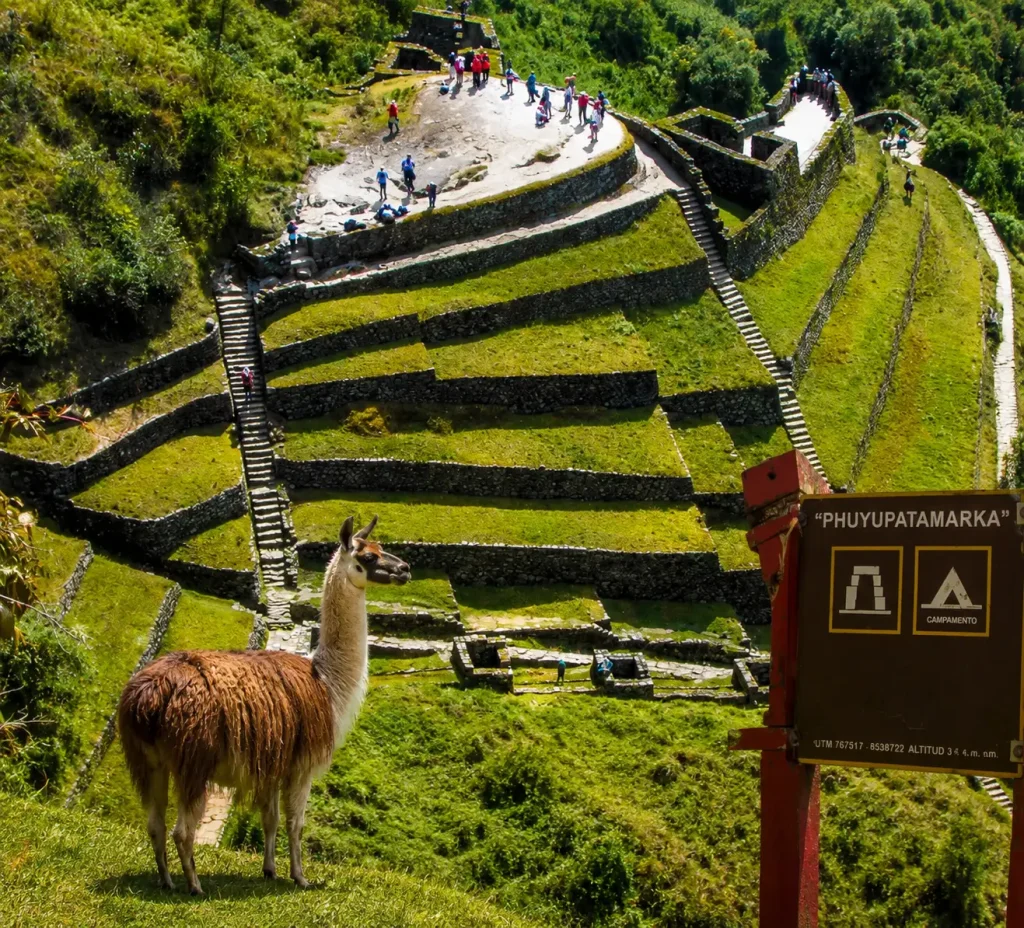
Meaning of Phuyupatamarca
The name of this archaeological complex comes from Quechua and offers an accurate description of its location. The Meaning of Phuyupatamarca is generally translated as “Place above the clouds” or “Town in the clouds”. This name comes from the roots phuyu (cloud), pata (place, platform, or level), and marca (town or city).
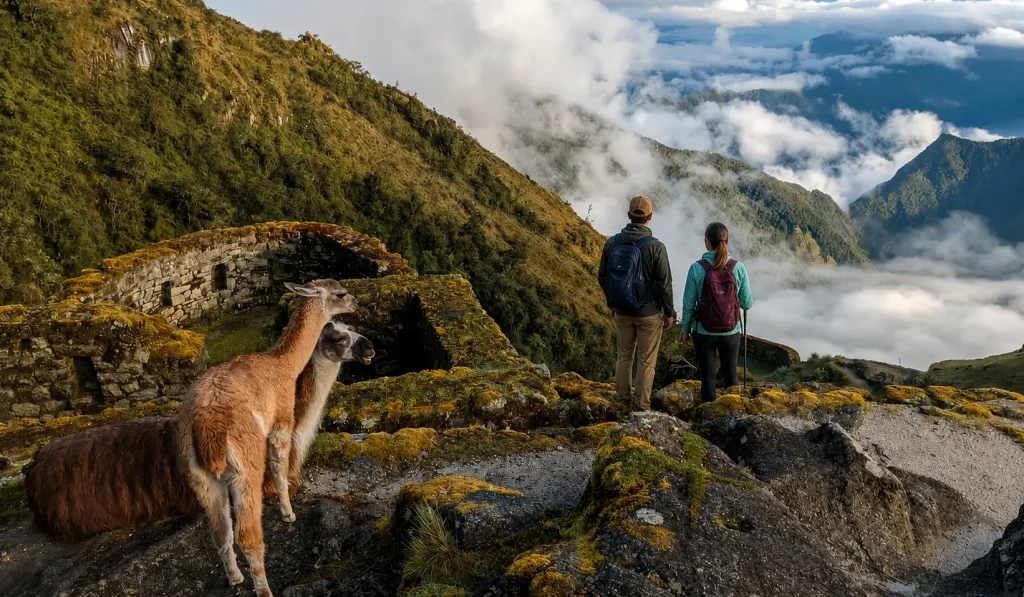
Due to its location on a mountain ridge, it is very common for the site to wake up shrouded in dense fog rising from the valley. When these clouds dissipate, the complex appears to float above the surrounding landscape. This atmospheric condition not only defines its name, but also gives a unique character to the Cloud Forest Climate, where humidity and visibility changes are constant throughout the year.
Location and Altitude of the Archaeological Site
The Phuyupatamarca Archaeological Site is located in the region of Cusco, within the Machu Picchu Historic Sanctuary. Geographically, it is situated at an elevation that demands respect from hikers. The Altitude of the archaeological site is approximately 3,670 meters above sea level.
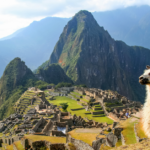
This height makes it one of the highest points along the route, second only to the pass of Warmiwañusca. Its location offers exceptional 360-degree visibility over the territory. From its upper platforms, visitors can observe the deep gorge of the Urubamba River and the mountain ranges that protect access to the Inca citadel.
Architecture and Functions of the Complex
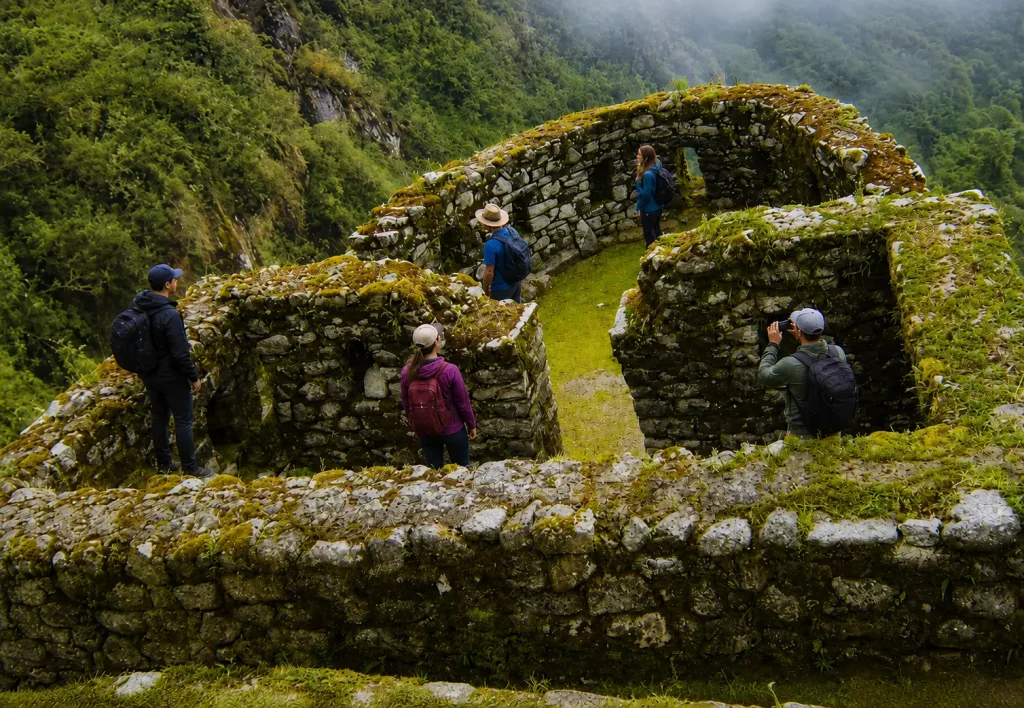
The structure of Phuyupatamarca demonstrates an advanced mastery of urban planning and adaptation to steep terrain. Inca architects used bedrock as a foundation for enclosures, terraces, and canals. The site was not a simple rest stop; it served administrative and, above all, religious functions linked to water and mountain worship.
Ritual Baths of Phuyupatamarca
One of the most prominent elements of the complex is the Ritual Baths of Phuyupatamarca. It consists of a series of six liturgical baths constructed with finely carved stone. These fountains are arranged on descending levels, allowing water to flow sequentially from one to another.
Even today, the hydraulic system continues to function with water coming from a nearby natural spring. In the Andean worldview, water had a purifying character. It is believed that travelers and Inca nobility performed cleansing rituals at these fountains before continuing their pilgrimage to Machu Picchu. The precision of the channels and the quality of the stonework reflect the site’s high spiritual status.
Circular Inca Terraces
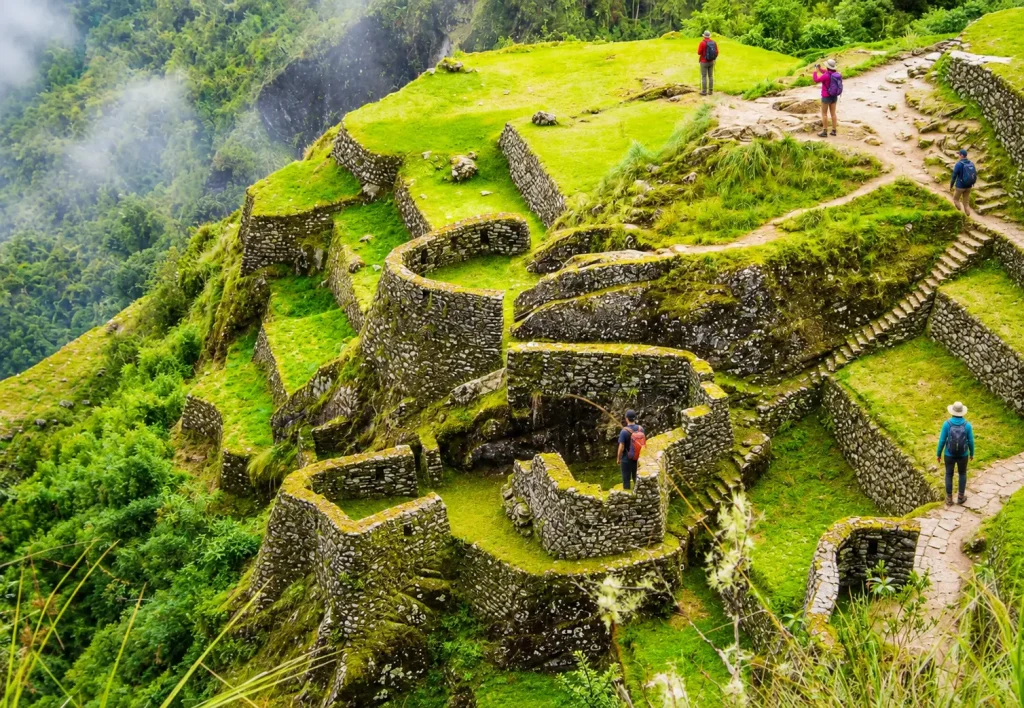
The site also features Circular Inca Terraces that adapt to the conical shape of the mountain peak. These terraces served two main purposes: structural stability and small-scale agricultural production. By building these retaining walls, the Incas prevented slope erosion and created microclimates suitable for growing ceremonial plants or food needed by the site’s inhabitants.
The layout of these platforms offers a unique aesthetic that differs from the linear terraces found at other sites in the valley. Their circular design optimizes sunlight capture in an environment where cloud cover is frequent.
The Inca Trail to Phuyupatamarca
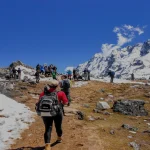
Access to the Phuyupatamarca Archaeological Site is an integral part of the Inca Trail experience. Generally, trekking groups reach this point on the Third day of the hike. This section is considered by many to be the most rewarding due to its archaeological richness and scenic beauty.
The section From Sayacmarca to Phuyupatamarca passes through tunnels carved into the rock and trails bordering cliffs with breathtaking views. Along this route, dense vegetation is traversed before emerging onto the open ridge where the complex is located. The path lets hikers gradually discover the site, enhancing the feeling of arriving at a sacred place.
For those who prefer professional trek organization, specialized companies such as Trails to Machu Picchu offer services ensuring proper interpretation of each visited area. Having expert guides allows a better understanding of the relationship between the stone structures and the astronomical cycles observed by the Incas from these vantage points.
Rock-Carved Stairways
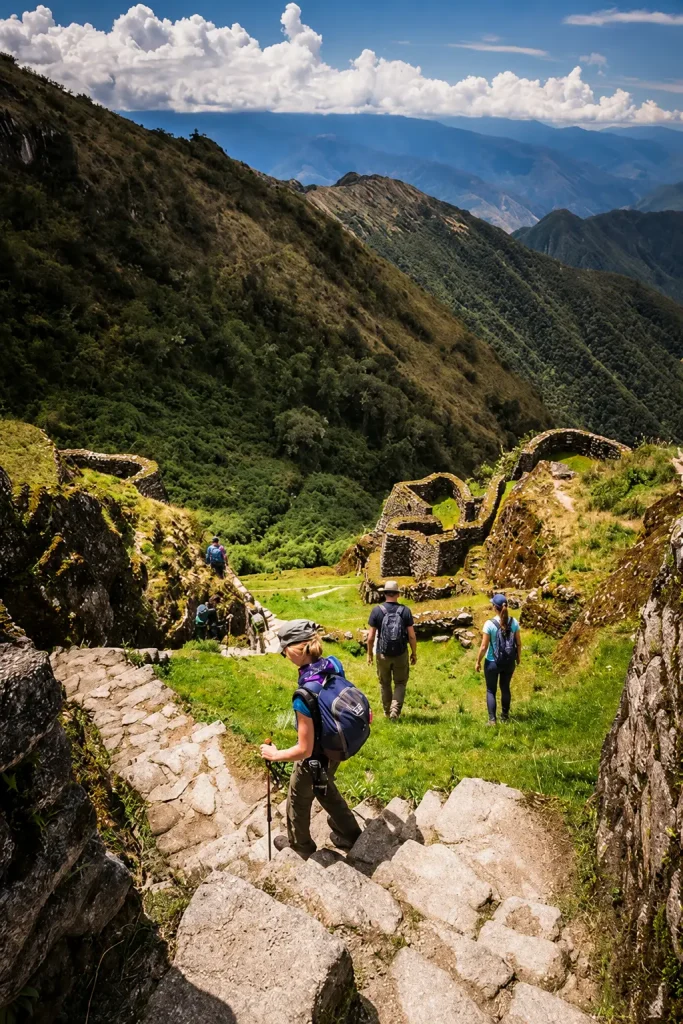
A distinctive feature of the descent from the site to the next campsite is the Rock-Carved Stairways. The path descends steeply down thousands of original stone steps. Many granite steps showcase construction techniques that have lasted for centuries.
Natural Environment: Viewpoints, Flora, and Fauna
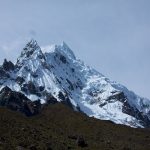
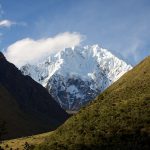
Beyond its walls, the environment surrounding Phuyupatamarca is a vibrant ecosystem. The site acts as one of the best Natural Viewpoints in the region. On clear days, views extend to the snow-capped Peaks of Salkantay and Pumasillo. The Incas considered these mountains protective apus, and their visibility from the complex highlights its ritual importance.
Regarding the Local Flora and Fauna, visitors find themselves right in the heart of the cloud forest. Some species and natural elements that can be observed include:
- Orchids: Dozens of wild varieties grow among the stones and surrounding trees.
- Birds: It is possible to spot various hummingbird species and, with luck, the famous Andean cock-of-the-rock.
- Spectacled bears: Although shy, this area is part of their natural habitat within the sanctuary.
- Queñua trees: Native high-altitude trees with flaky, reddish bark.
Practical Information for Travelers
Visiting the Phuyupatamarca Archaeological Site requires physical preparation and proper planning. As an intermediate point on a multi-day trek, it cannot be visited independently from Cusco on a day trip.
There is a Nearby Campsite where many groups spend the night. Camping near this site offers a unique opportunity to witness sunset and sunrise above the clouds—one of the most treasured experiences for photographers and nature lovers. However, campsite spots are regulated by the Ministry of Culture and SERNANP. So they must be booked months in advance through authorized agencies.
When exploring Inca Stone Structures, always respect the cultural heritage:
- Do not climb the walls of the enclosures or terraces.
- Wear footwear with good grip, especially on the stairways, which can be slippery due to moisture.
- Bring rain and wind protection, as the weather can change drastically in a matter of minutes.
- Stay on designated trails to protect local flora.
The Phuyupatamarca Archaeological Site is much more than a ruin along the trail. It is proof of how the Inca culture managed to harmonize territorial control with a spirituality deeply tied to water cycles and mountain observation. Its current state of preservation allows modern travelers to connect with that history while trekking one of the most iconic trails in Peru.