Exploring Runkurakay on the Inca Trail is one of the most rewarding experiences for those trekking the route to Machu Picchu. This archaeological site stands out for its unusual design and strategic location on the mountain slopes. Unlike other rectangular enclosures, its structure features curved shapes that capture the attention of travelers and researchers alike. Learning about its history allows us to better understand how the Incas managed their vast territories and road systems.
To reach this point, hikers must cross one of the most demanding stretches of the journey. Runkurakay is not just a rest stop. It is a testament to the engineering and state organization of Tahuantinsuyo. In this article, we detail everything you need to know about its location, historical function, and what to expect during your visit.
- Geographical Location of Runkurakay
- How to Get to Runkurakay on the Inca Trail
- History and Function of the Runkurakay Tambo
- Characteristics of the Circular Inca Construction
- Attractions of the Second Pass of the Inca Trail
- Weather and Best Time to Visit
- Practical Tips for Travelers
- Archaeological and Cultural Significance
Geographical Location of Runkurakay
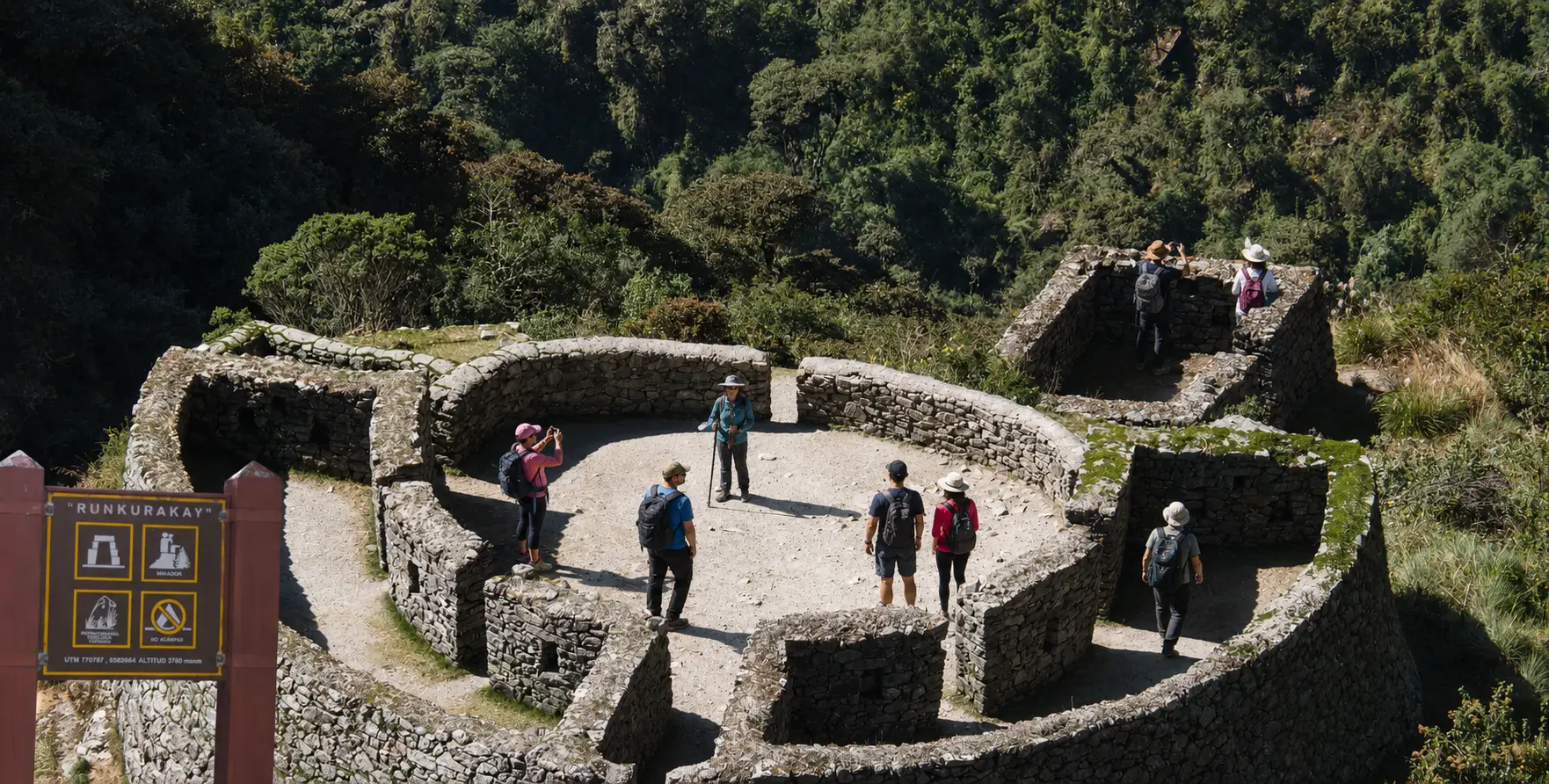
The archaeological site of Runkurakay is located in the department of Cusco, within the Historic Sanctuary of Machu Picchu. It is situated at an altitude that challenges visitors’ physical endurance. The altitude of Runkurakay is approximately 3,760 meters (12,335 feet) above sea level. It is located on the southern slope of the mountain of the same name, overlooking the Pacaymayo River valley.
Geographically, the site lies in a transition zone. Here, the high-Andean landscape begins to give way to the cloud forest brow. This location allowed ancient inhabitants to have a sweeping visual view over the surrounding valleys. During the hike, the site appears after overcoming the first major challenge of the route: the Warmiwañusca pass.
How to Get to Runkurakay on the Inca Trail
The only way to access these ruins is by hiking the classic four-day Inca Trail. There is no road or direct vehicular access to this area. This preserves the integrity of the site and the surrounding natural environment.
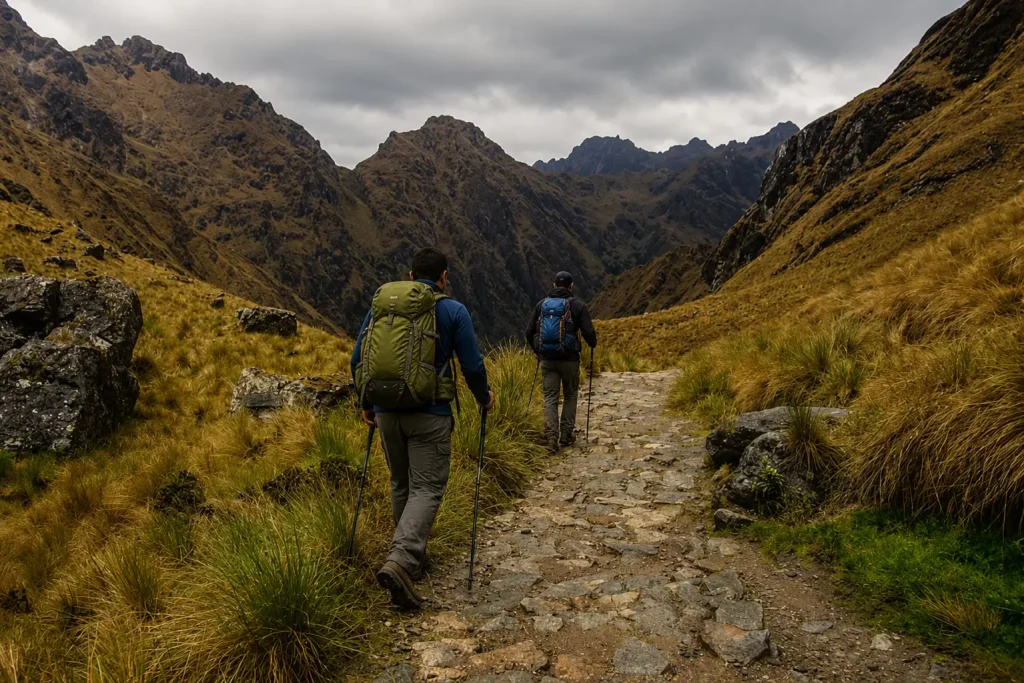
Generally, travelers visit Runkurakay on the second or third day of their expedition. After camping in the Pacaymayo valley, an ascent begins along a well-preserved stone-paved trail. The site is located halfway up the slope, before reaching the second pass of the Inca Trail, also called the Runkurakay pass, situated at 3,950 meters (12,959 feet) of altitude.
If you plan to hike this route, it is essential to rely on authorized tour operators. Agencies like Trails to Machu Picchu offer specialized services including expert guides who explain in detail the importance of each archaeological station along the way, contact us.
History and Function of the Runkurakay Tambo
The history of the Runkurakay tambo reveals the importance of communication networks in the Inca empire. The Quechua word “tambo” or “tanpu” refers to a lodging and storage structure. These places were distributed along the Qhapaq Ñan to serve state officials, military personnel, and chasquis (royal messengers).
Due to its design, many specialists suggest that Runkurakay had a combined military function and logistical role. Its strategic location allowed monitoring the movement of people from lower elevation regions into the higher zones of Cusco. It was not a residential town, but rather a checkpoint and supply post. The niches in its walls indicate that it may also have served to store basic supplies for imperial travelers.
Besides being a resting stop, it is believed to have functioned as an astronomical observation post. Some researchers note that the orientation of its openings allowed monitoring celestial phenomena. However, its role as a border control point and administrative station remains the most widely accepted theory in the archaeological community.
Characteristics of the Circular Inca Construction
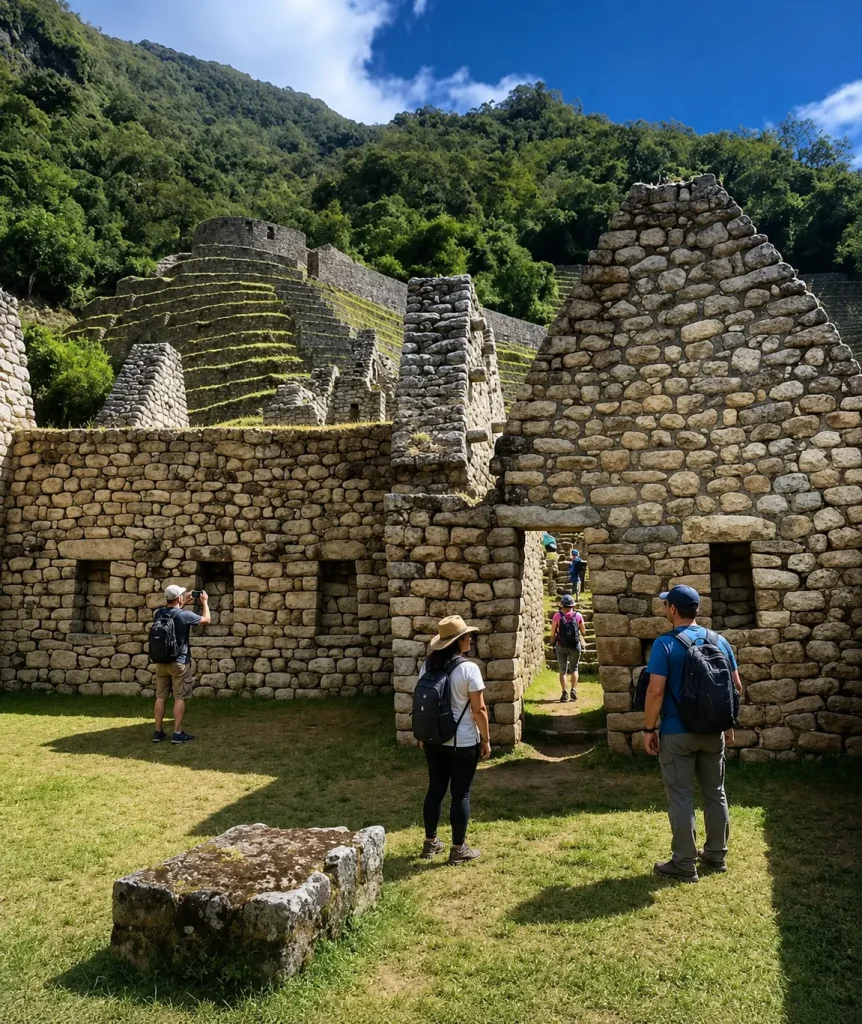
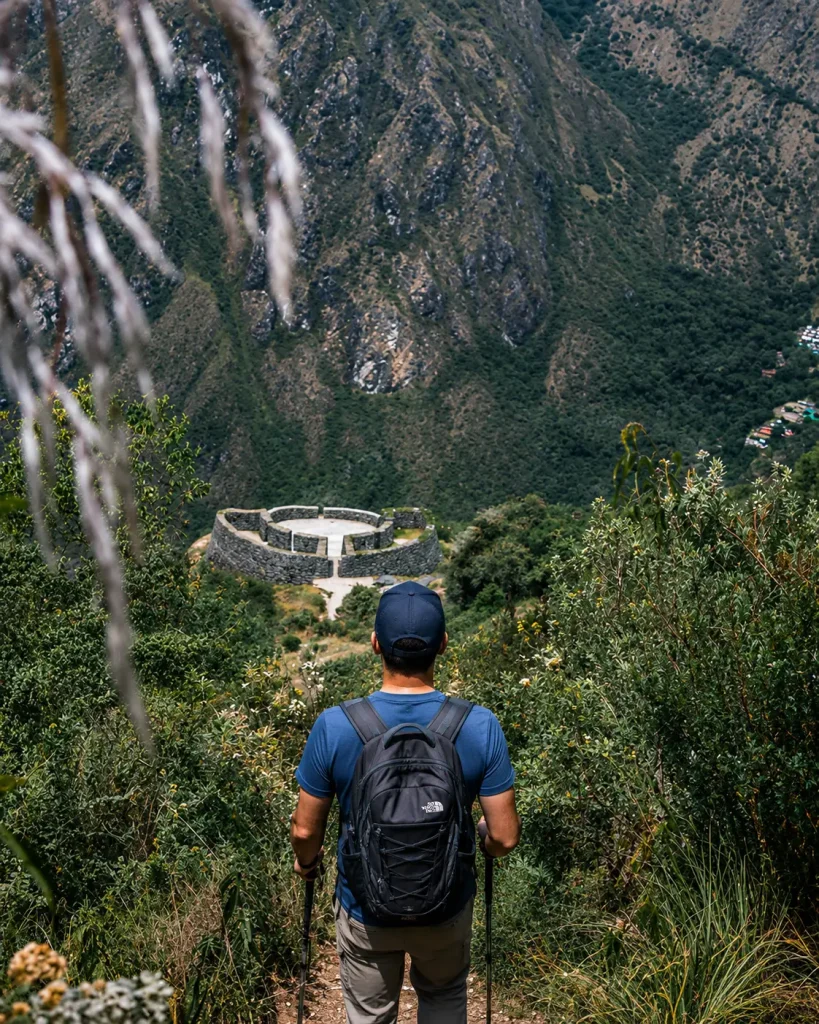
What surprises visitors most about the ruins of Runkurakay in Cusco is its unique morphology. It is a circular Inca construction, or more precisely, semicircular. The site consists of two concentric, horseshoe-shaped enclosures that open toward the east. The walls are constructed with local slate and granite stones bonded with mud mortar.
Circular designs are uncommon in civil Inca architecture, which typically favored rectangular shapes. It is believed that this form adapted better to the terrain’s topography and the need for panoramic visibility. The interior chambers feature trapezoidal niches, characteristic of the Inca building style. These spaces were used to place objects for daily or ritual use.
Access to the site is through a single entrance leading into a central courtyard. From this point, the layout of the rooms enabled efficient movement inside. The strength of its walls has allowed the structure to remain standing despite centuries of weather exposure and extreme mountain conditions.
Attractions of the Second Pass of the Inca Trail
Passing Runkurakay is only part of the experience. Continuing the ascent toward the second pass rewards hikers with stunning visual scenery. In this section of the Inca Trail day 2 attractions and challenges blend seamlessly. As you gain elevation, the vegetation changes and the air becomes colder and crisp.
From the highest point of the pass, you get spectacular views of the Vilcabamba mountain range. You can spot snow-capped peaks such as Pumasillo. The subsequent descent toward the site of Sayacmarca is equally captivating. The path winds through cloud forests filled with orchids, ferns, and mosses. This ecological transition is one of the highlight values of the trek.
- Valley views from Runkurakay: The site offers a unique perspective of the Pacaymayo valley and the trails winding down the mountain.
- Flora and fauna: It is common to observe various bird species, such as the giant hummingbird, and with luck, the Andean deer.
- Integrated architecture: You will observe how the Incas built the structure into the rocky environment without disrupting the harmony of the landscape.
Weather and Best Time to Visit
The weather and best time to visit this region of Cusco are defined by two distinct seasons. The rainy season runs from November to March. During these months, the trail can become slippery, and fog frequently reduces visibility. Additionally, the entire Inca Trail closes for maintenance during the month of February.
The dry season, from April to October, is the ideal time to visit. Days are usually sunny, allowing travelers to capture excellent photos of Runkurakay with clear skies. However, nights are considerably cold, with temperatures dropping below 0°C (32°F). Packing thermal clothing and layering options is crucial to adapt to sudden temperature shifts during the day.
Practical Tips for Travelers
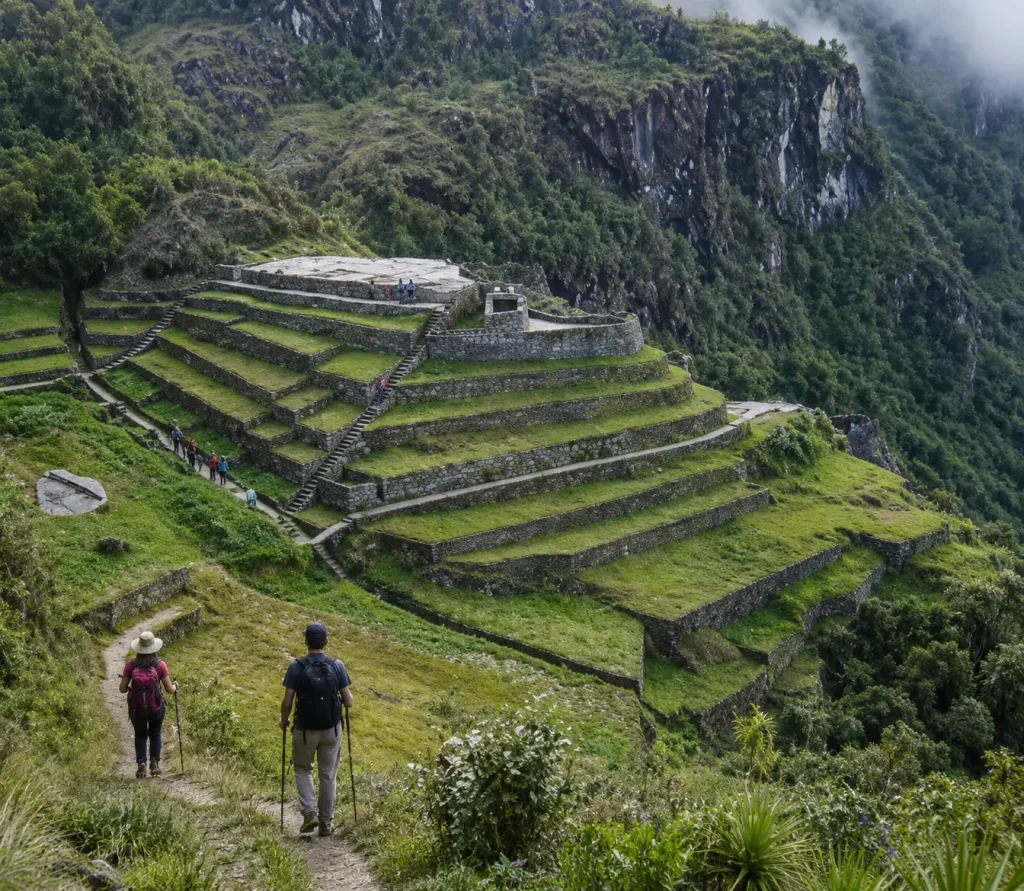
Visiting Runkurakay on the Inca Trail requires prior physical preparation. High altitude can affect anyone regardless of fitness level. It is recommended to spend at least two days in the city of Cusco to acclimatize before starting the trek. Staying hydrated and eating light meals helps prevent altitude sickness.
During the ascent to the archaeological site, it is best to maintain a steady, unhurried pace. Trekking poles are highly recommended to protect your knees, especially on downhill sections. Don’t forget to carry sun protection, a hat, and a rain poncho, as mountain weather can be unpredictable.
Respecting cultural heritage is essential. Climbing on the ruined walls or leaving any garbage behind is strictly forbidden. As a site protected by the Peruvian government, visitors must maintain exemplary behavior to ensure these historic structures are preserved for future generations.
Archaeological and Cultural Significance
Runkurakay demonstrates the Inca culture’s ability to adapt to demanding ecosystems. Building in such a high and remote location reflects advanced expertise in civil engineering. Furthermore, it highlights the importance the Inca Empire placed on its road system, considered the backbone of their territory.
Studying these sites allows archaeologists to reconstruct daily life for those who kept imperial routes operational. Every stone set at Runkurakay tells a story of dedication, surveillance, and cultural connection across the Andes. Visiting this site connects travelers to a living history that continues to amaze the world.
Understanding the purpose of Runkurakay on the Inca Trail enriches the trekking journey. It transforms a physical challenge into a voyage through time. Standing before its circular walls in the morning light is a memorable moment of reflection on the greatness of pre-Columbian civilizations in Peru.