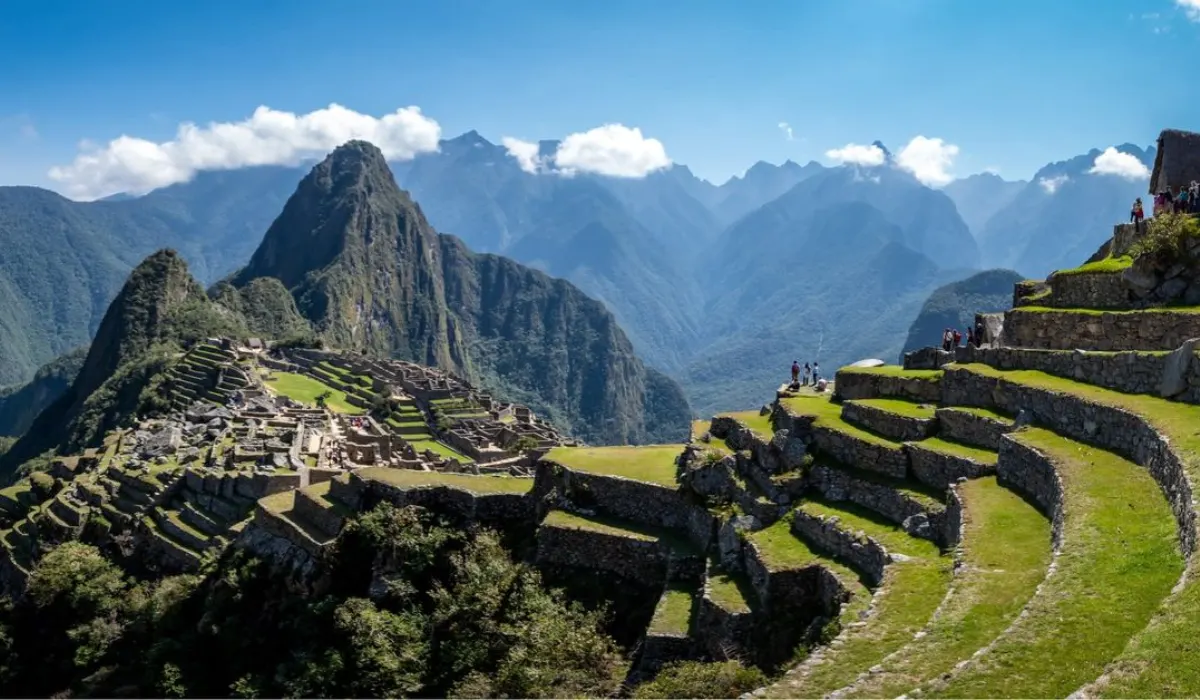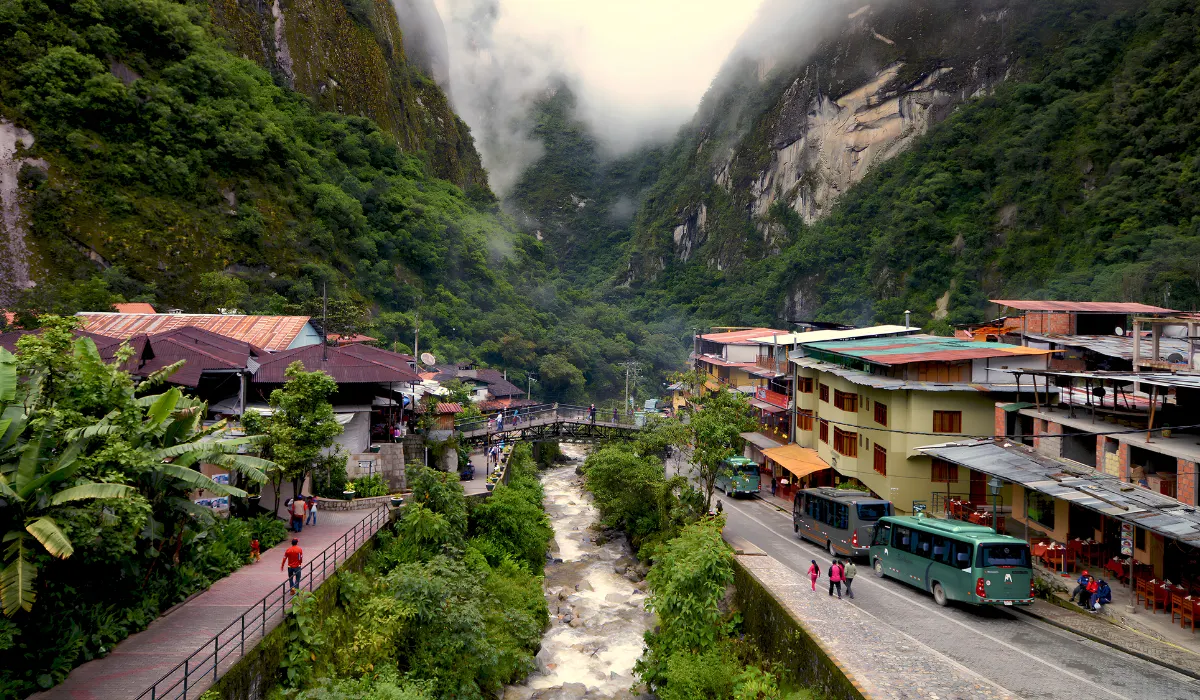
Aguas Calientes is the closest town to the Machu Picchu citadel. It is also officially known as Machu Picchu Pueblo. Every year, thousands of travelers begin their journey to one of the world’s greatest wonders from this destination. In addition, the town offers attractions, restaurants, and accommodations to enjoy before or after visiting the Inca citadel.
In this guide, you will discover what to do, how to get there, and how to plan your visit. With Trails to Machu Picchu, you can book a well-organized experience and make the most of your trip.
Why is Aguas Calientes the gateway to Machu Picchu?
Aguas Calientes is located in the Cusco region, on the banks of the Urubamba River. It lies about 9 kilometers from the Machu Picchu citadel. Therefore, it serves as the main gateway for visitors.
Most travelers arrive at Machu Picchu Pueblo before visiting the archaeological site. They often rest, explore the town, or prepare for their adventure. In addition, the town provides hotels, restaurants, and other services that make every visit more comfortable.
From Aguas Calientes, visitors can reach the citadel on foot in approximately two hours. The trail follows an uphill path surrounded by beautiful natural scenery. Alternatively, travelers can take a shuttle bus for a faster and more convenient journey.
If you want a hassle-free experience, Trails to Machu Picchu offers Machu Picchu tours with local guides and expert assistance throughout your journey.
What to do in Aguas Calientes before or after visiting Machu Picchu
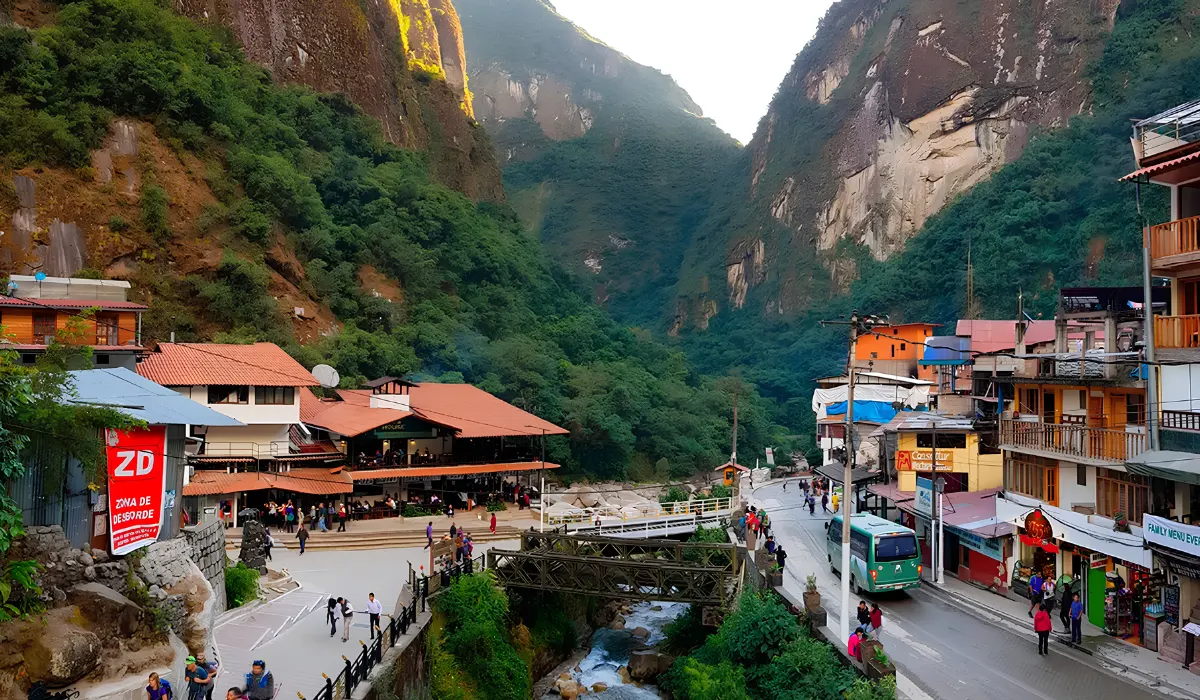
As the main gateway to Machu Picchu, Aguas Calientes offers several attractions that enhance your trip. For this reason, many travelers spend time exploring Machu Picchu Pueblo before or after visiting the Inca citadel.
Aguas Calientes Hot Springs
The Aguas Calientes Hot Springs are among the town’s most popular attractions. Their mineral-rich waters provide the perfect place to relax after exploring Machu Picchu.
Aguas Calientes Artisan Market
The Artisan Market is one of the first places many visitors explore. It is located near the train station and features a wide variety of traditional products. You will find textiles, alpaca garments, ceramics, and handcrafted souvenirs made by local artisans.
Manuel Chávez Ballón Site Museum
This museum introduces visitors to the history of Machu Picchu. Its exhibits showcase the archaeology, culture, and biodiversity of the Historic Sanctuary. In addition, visitors can view artifacts recovered during archaeological excavations. As a result, it is an excellent stop for anyone interested in the Inca civilization.
Machu Picchu Butterfly House
The Machu Picchu Butterfly House protects native butterfly species from the region. During the visit, you can learn about their life cycle and conservation efforts. It also offers a unique nature experience during your stay in Aguas Calientes. 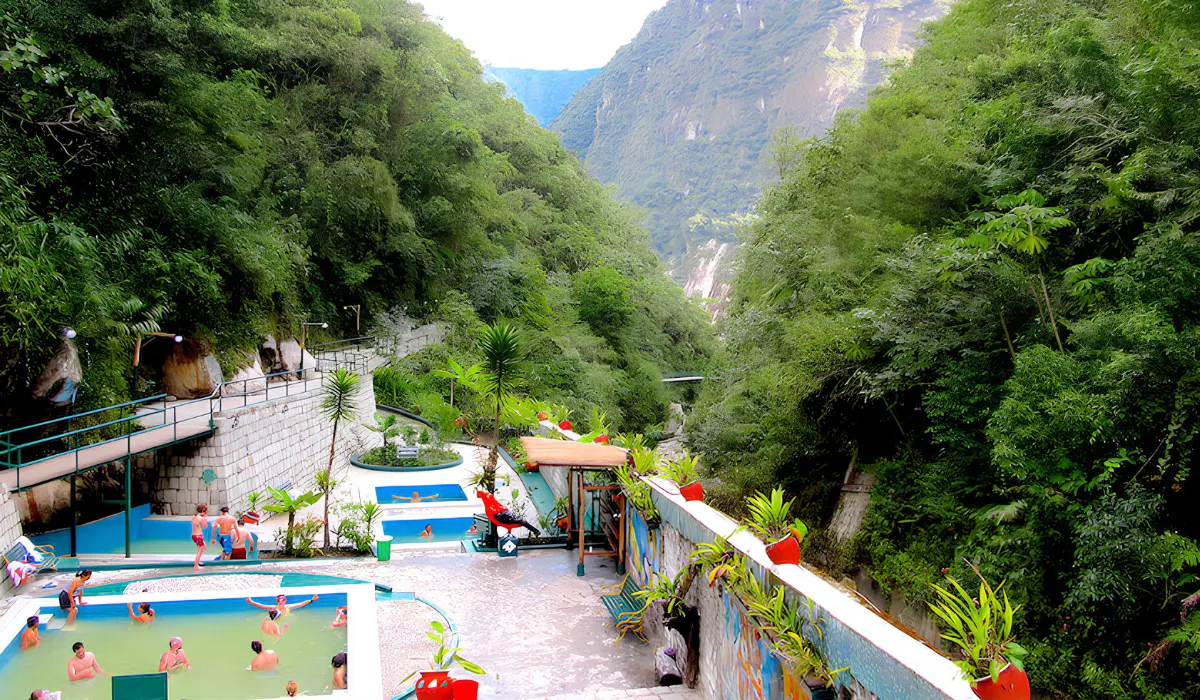
How to get to Aguas Calientes
Reaching Aguas Calientes is an essential step when visiting Machu Picchu. Because of its mountain location, the train is the most popular way to reach this Andean town. Moreover, the journey offers spectacular views of the surrounding landscape.
Getting to Aguas Calientes by train
The train is the most common transportation option to Machu Picchu Pueblo. It connects several locations in Cusco with the destination visited by thousands of travelers each year.
The most popular routes depart from Cusco and Ollantaytambo. Both options offer different schedules and services to meet a variety of travel needs.
Traveling from Ollantaytambo
Ollantaytambo is one of the main departure points for Aguas Calientes. Many visitors choose this station because it is located in the Sacred Valley and offers a shorter travel time.
In addition, this route combines comfort with breathtaking scenery. Therefore, it remains one of the best options for travelers heading to Machu Picchu.
Traveling from Cusco
Travelers can also reach Aguas Calientes by train from Cusco. This option usually includes a transfer to the appropriate railway station before boarding.
Although the journey takes longer, it allows visitors to begin their adventure from Cusco, the region’s main tourist hub.
Arriving at Aguas Calientes Station
Once you arrive at the Aguas Calientes train station, you will find a variety of tourist services nearby. From there, you can easily walk to the town center, where hotels, restaurants, and shops await.
In addition, the station marks the beginning of the final stage of the journey to Machu Picchu. For this reason, it plays an important role in every travel itinerary.
If you want to simplify your trip, you can book a Machu Picchu tour with Trails to Machu Picchu. You will enjoy transportation, local guides, and a carefully planned travel experience.
Tips for visiting Machu Picchu from Aguas Calientes
Visiting Machu Picchu from Aguas Calientes requires good planning. These practical tips will help you enjoy a smoother and more comfortable experience.
Book your entrance tickets in advance
Machu Picchu tickets have limited availability. Therefore, you should purchase them in advance. Early booking gives you more flexibility when choosing your preferred entry time and planning your itinerary.
Carry cash for small purchases
Although many businesses accept credit cards, carrying some cash is still a good idea. Small vendors and local services may only accept cash payments.
Prepare for changing weather
Aguas Calientes has a humid climate and changing weather conditions. Therefore, pack comfortable clothing and a lightweight rain jacket. Good hiking shoes will also make your visit more enjoyable.
Bring your identification
You must present your passport or another valid identification document to enter Machu Picchu. For this reason, keep your documents with you throughout your trip.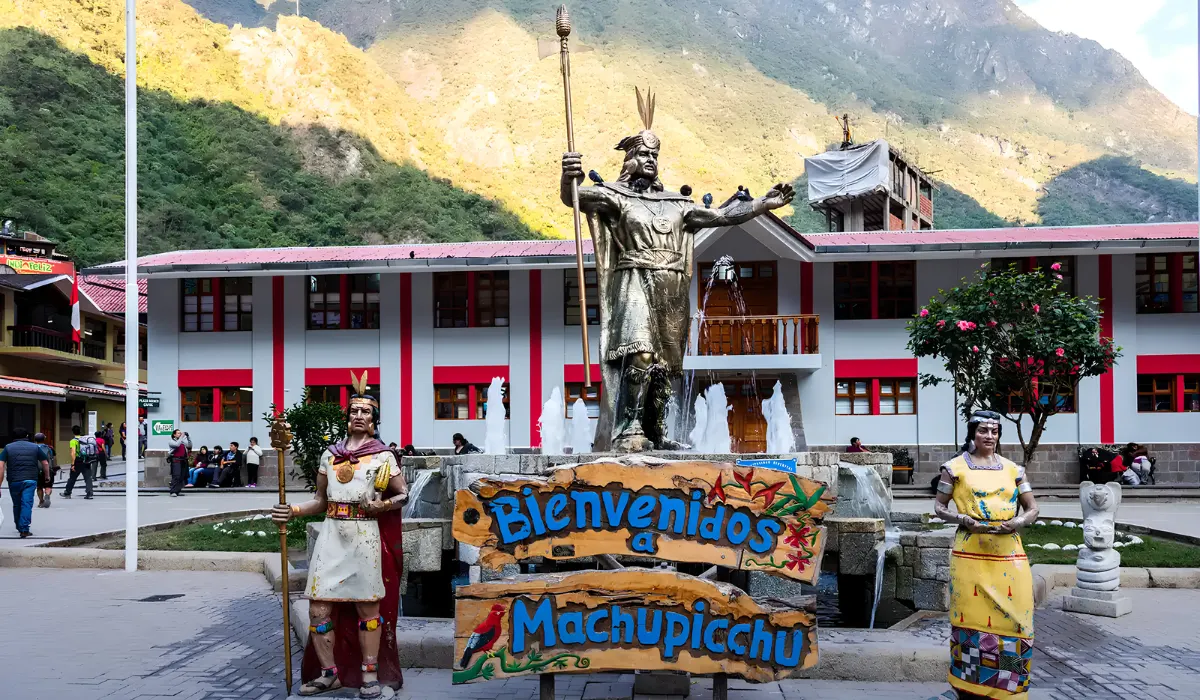
Explore Machu Picchu with Trails to Machu Picchu
At Trails to Machu Picchu, you will find different routes to reach Machu Picchu, accompanied by expert local guides and designed for different types of travelers.
- Inca Trail: Explore one of the most iconic trekking routes to Machu Picchu. You will walk along ancient Inca paths, visit archaeological sites, and enjoy diverse Andean landscapes before arriving at Machu Picchu.
- Salkantay Trek: Experience an unforgettable adventure through snow-capped mountains, lagoons, cloud forests, and spectacular Andean scenery. Additionally, this trekking route will take you to the impressive citadel of Machu Picchu.
- Lares Trek: Discover a less crowded route that combines high-mountain landscapes, traditional Andean communities, and an authentic immersion in local culture before reaching Machu Picchu.
Book your Machu Picchu tour with Trails to Machu Picchu and enjoy trekking experiences, reliable transportation, and the expertise of professional local guides.