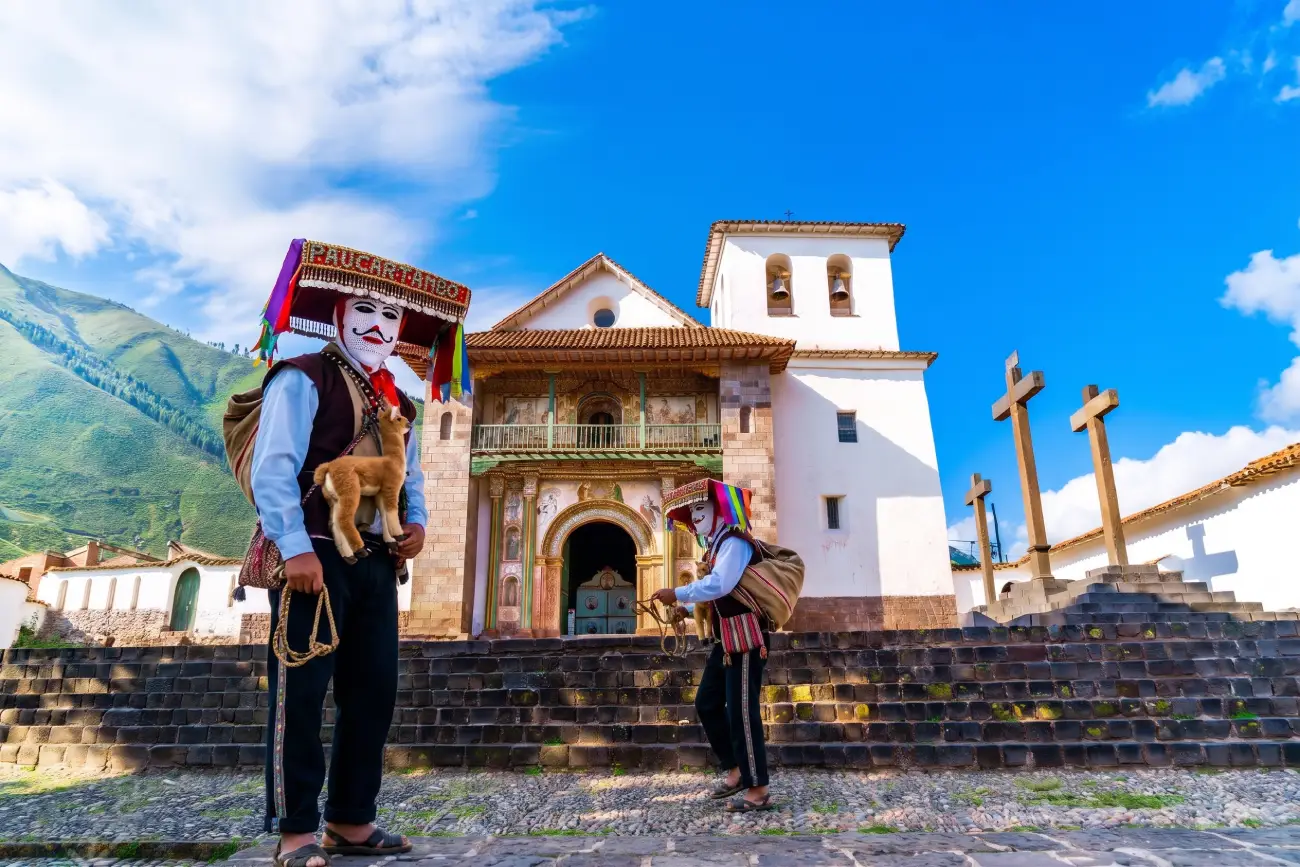
The Sistine Chapel of the Americas is the name given to the temple of San Pedro Apóstol in Andahuaylillas. We at Trails to Machu Picchu recommend visiting it for its impressive interior decoration. This nickname stems from the richness of its mural paintings and coffered ceilings. Furthermore, it is a mandatory stop if you want to learn about the history of art in Cusco.
What is the Sistine Chapel of the Americas and why visit it?
Now that you know its name, you might wonder what makes this place so special for travelers. You will notice that its facade is simple, but its interior holds incalculable artistic treasures from the colonial era.
The Temple of San Pedro Apóstol in Andahuaylillas
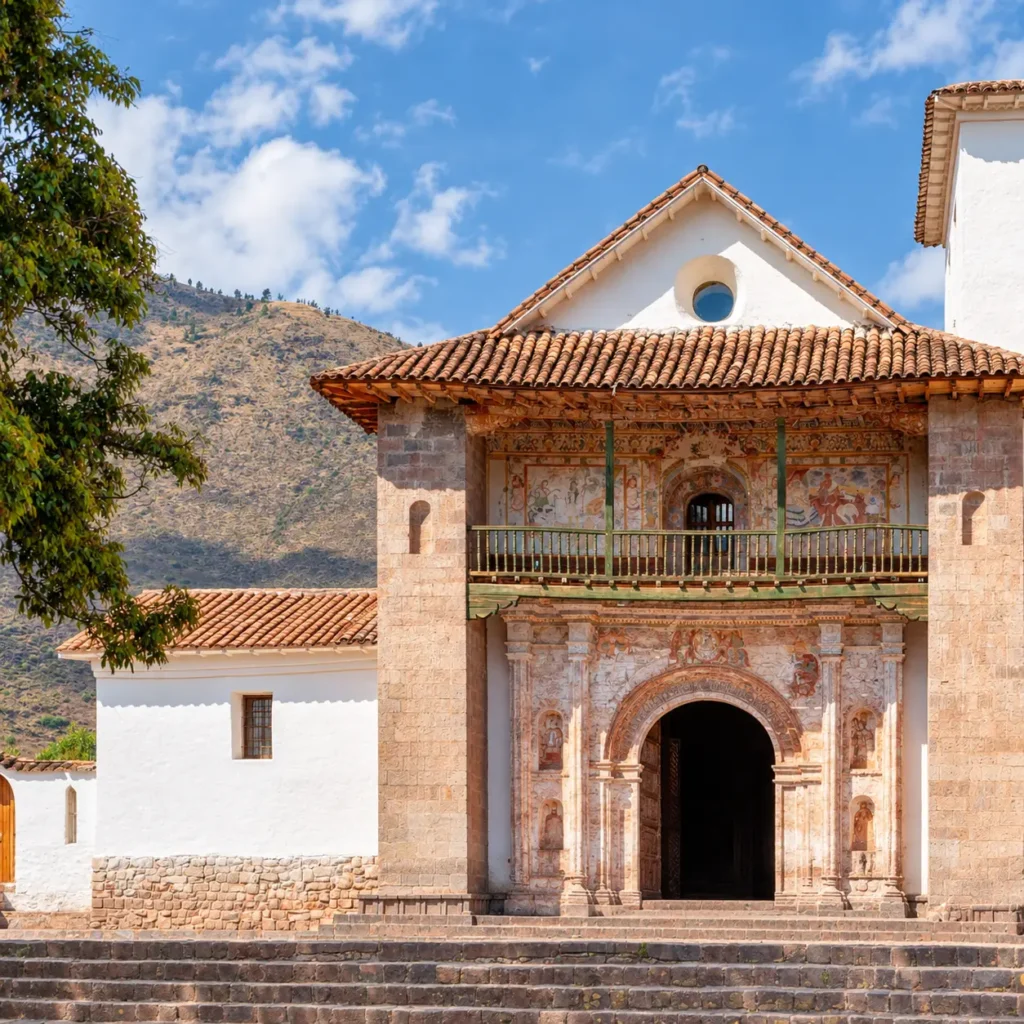
This building is the heart of the town of Andahuaylillas and a display of colonial religious power. It was built by the Jesuits over an ancient Inca settlement during the 17th century. That is why you will see a unique mix of stone walls and decorated adobe structures.
At Trails to Machu Picchu, we consider it the high point of mestizo art in the region. Its external structure features a classic bell tower and a square surrounded by pisonay trees.
The legacy of Andean Baroque art
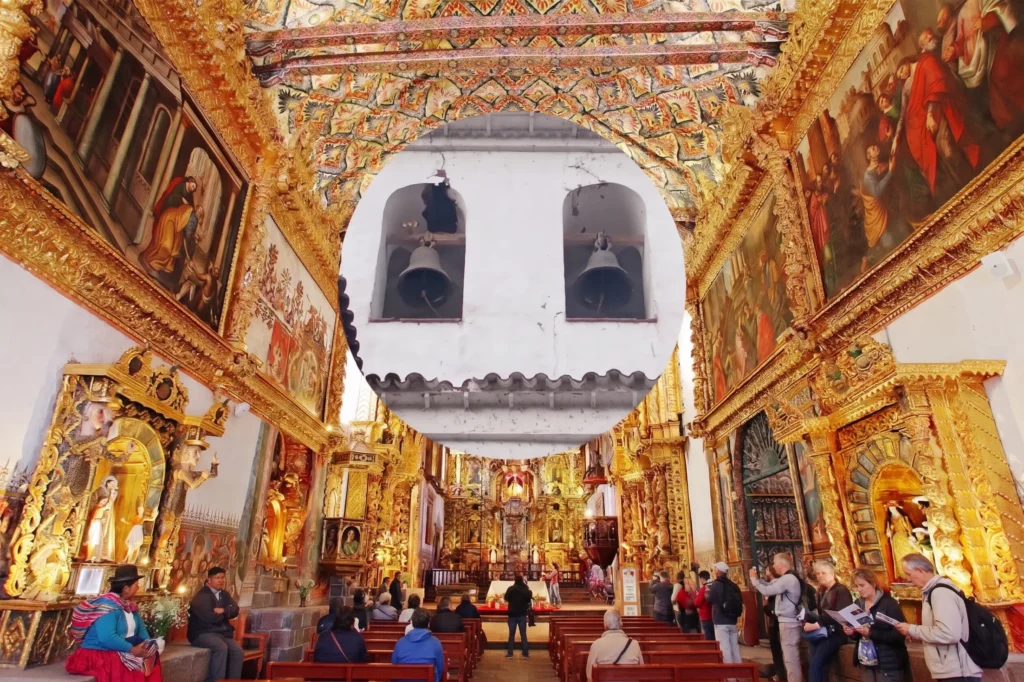
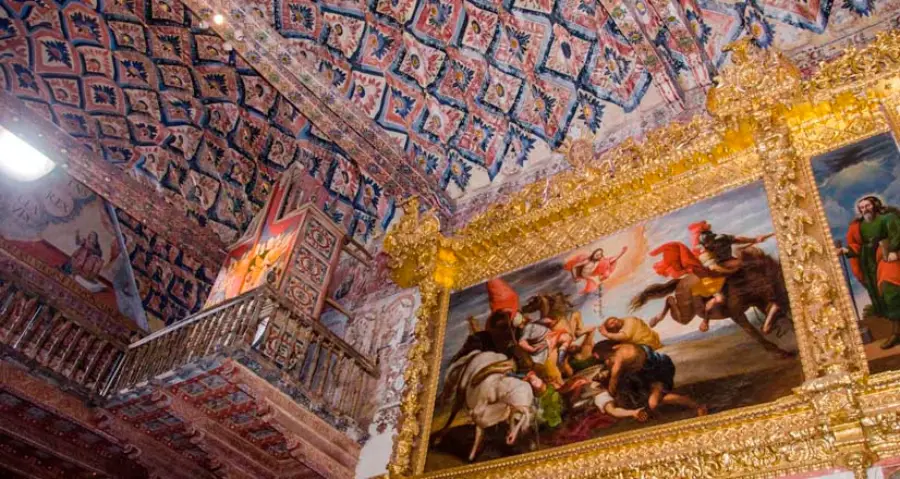
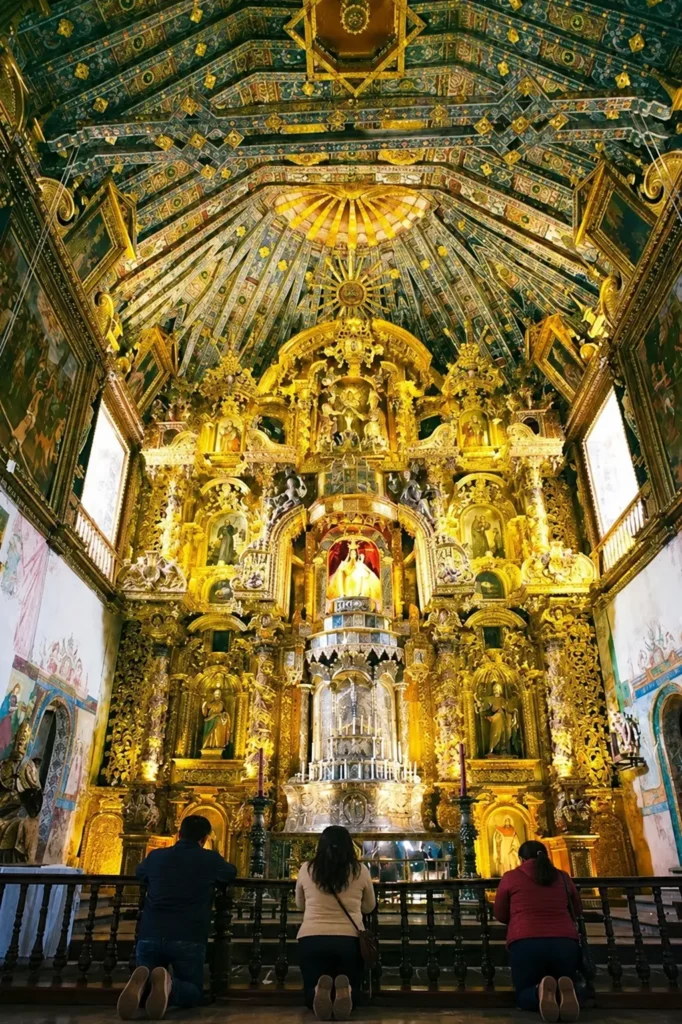
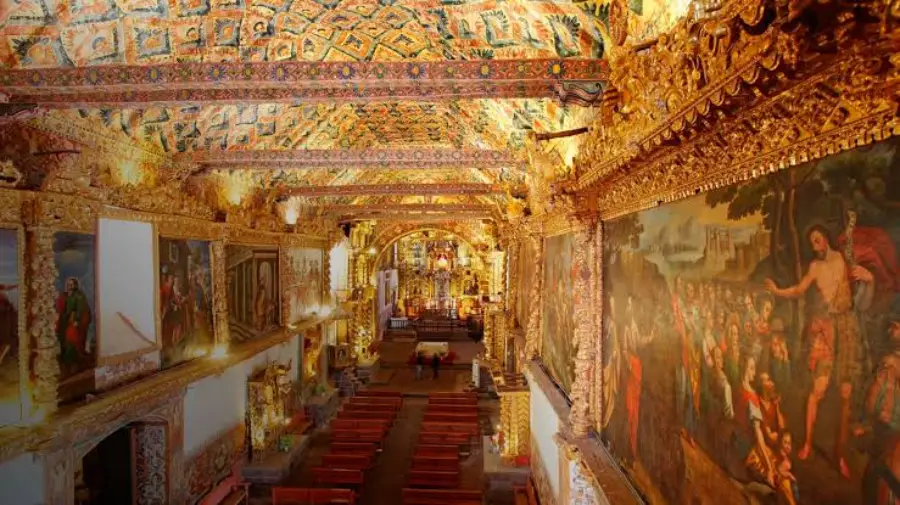
After entering the temple, you will quickly understand why it is compared to the work of Michelangelo. The architectural style of the Andahuaylillas church stands out for its excessive and detailed ornamentation. Every centimeter of the walls is covered by paintings, gold leaf frames, and carvings.
To make the most of your visit, we suggest observing the following key elements:
- The Mudejar-style ceilings with geometric patterns.
- The gilded frames surrounding each canvas in the main nave.
- The original polychromy preserved on the wooden beams.
Location and how to get there from Cusco to the South Valley
With this clear, the next step is to plan your transfer to this less-explored area. The town is located in the province of Quispicanchi, within the fertile South Valley of Cusco.
Travel time and distance
The travel time from Cusco to the South Valley is approximately 45 to 60 minutes. We usually recommend this destination because the journey is short and the landscapes are very relaxing. You will cover about 35 kilometers along an asphalt road in very good condition.
In addition, the climate in this area is usually a bit warmer than in the city. This will make your walk around the main square much more comfortable and pleasant.
Transportation options for your visit
If you are wondering how to get to Andahuaylillas from Cusco, you have several safe alternatives at your disposal. To do it right, follow these steps:
- First, head to the bus stop for Urcos on Belenpampa street.
- Then, board a public transport vehicle or a shared colectivo.
- Once you reach the town, walk two blocks to the main square.
- Finally, make sure to coordinate your return before sunset.
On an organized tour with us
After evaluating public options, you might prefer the comfort of a private or group service. At Trails to Machu Picchu, we organize this route along with other gems of the South Valley.
Thanks to this, you will not have to worry about local bus schedules. We pick you up at your hotel and provide you with a specialized guide throughout the trip.
The artistic treasures you will find inside
Once inside the temple, you will see that the decoration tells complex stories about faith and culture. It is here that the characteristics of the Cusco School in murals reach their maximum artistic expression.
Luis de Riaño’s murals and the Last Judgment
The most famous work is the murals by Luis de Riaño in Andahuaylillas, painted in the year 1626. These works decorate the triumphal arch and side walls with scenes of great visual impact. You will notice that the symbolism of the Last Judgment in colonial art seeks to educate through fear and hope.
On the left side, you will see the road to hell full of thorns and graphic punishments. In contrast, the right side shows the path to heaven with flowers and protective angels.
The Mudejar ceiling and polychromy
Added to this is the preservation of polychromy on ceilings and walls, which is truly astonishing. The ceiling was built without using metal nails, using only wood and leather joints. The red, blue, and gold colors come from natural pigments that have withstood centuries of humidity.
We recommend looking up calmly to notice the floral and geometric details. This technique demonstrates the high level of knowledge of the indigenous artisans of the era.
History of the tubular organs of Andahuaylillas
Another point worth checking out is the pair of musical instruments located in the choir. The history of the tubular organs of Andahuaylillas places them as the oldest on the entire continent. They still retain their original bellows and are decorated with motifs of angels and flowers.
To understand their value, consider these interesting technical facts:
- They were built locally following Spanish school models.
- Their pipes are made of finely worked wood and metal.
- They are still used in special ceremonies and baroque music festivals.
Symbolism and cultural syncretism in the temple
After admiring the technique, it is important to understand the hidden message behind each painting. The cultural syncretism at the Temple of San Pedro Apóstol is evident in every corner of the building.
The blend of Inca and Catholic beliefs
You will notice that many angels have Andean features or hold typical elements of the region. This happened because local artists integrated their own symbols within the mandatory Christian iconography. For example, you will see representations of Pachamama camouflaged in the figure of the Virgin Mary.
Thanks to this syncretism, evangelization was more effective among the indigenous population of the valley. We believe that this mix is what gives the church its soul and character.
The role of the Jesuits in evangelization
The presence of the Jesuits in the South Valley was decisive for the artistic development of the area. They founded workshops where indigenous people learned European painting and sculpture techniques. However, they allowed local masters to add their own vision of the world and nature.
A fascinating detail is the inscription in five languages above the baptistery door. There, you will find phrases in Latin, Spanish, Quechua, Aymara, and the extinct Puquina language.
Plan your visit: hours, tickets, and recommendations
Now that you know its cultural value, it is time to think about the practical details of your trip. It is essential that you arrive prepared to enjoy the experience without last-minute setbacks.
Entry price and hours in Andahuaylillas
The entry price and hours in Andahuaylillas can vary depending on the season of your trip. Generally, the temple opens its doors from Monday to Sunday, starting early in the morning. We suggest purchasing the Andean Baroque Route ticket to save on your visits.
To organize your day, keep in mind the following recommendations from our team:
- Arrive before ten in the morning to avoid crowds.
- Remember that taking flash photographs inside the temple is prohibited.
- Wear respectful clothing, as it is an active place of worship.
- Bring cash to pay for your admission at the ticket office.
Churches of the Andean Baroque circuit
Once you finish in Andahuaylillas, you can continue with the churches of the Andean Baroque circuit. The main stops of the Andean Baroque Route also include the temples of Huaro and Canincunca. Each one offers a different perspective on colonial art and Andean religious devotion.
In Huaro, for example, the murals by Tadeo Escalante will show you a rawer vision of hell. In Canincunca, you will enjoy a small chapel located in front of a beautiful lagoon.
Research and heritage conservation
Despite the passage of time, the temple remains in excellent condition thanks to international efforts. It is vital to recognize the work that allows you to see these works today.
Restoration work by the World Monuments Fund
The restoration by the World Monuments Fund in Cusco has been key to saving this historical monument. Between 2008 and 2013, international experts worked alongside Peruvian technicians on the structure. They reinforced the foundations and cleaned the murals to recover their vibrant original colors.
This project also included training the local community in preventive conservation techniques. That is why the inhabitants of Andahuaylillas feel proud and actively care for their heritage.
Differences from the Sistine Chapel in Rome
Although the name suggests a copy, there are marked differences from the Sistine Chapel in Rome. The European version stands out for its ceiling frescoes created by a single Renaissance genius. In contrast, our Andean version is a collective work by many anonymous and indigenous artists.
While the one in Rome is monumental and vast, the one in Cusco is intimate and warm. Both places share the intention of elevating the human spirit through visual beauty.
In short, visiting the Sistine Chapel of the Americas is a journey into the heart of Cusco’s identity. We at Trails to Machu Picchu want you to live this experience with the greatest possible comfort. Therefore, we invite you to contact us if you need help with your transportation or a specialized guide.
We hope this guide helps you take advantage of every detail of this colonial treasure. If you are looking for a route that combines history, art, and peaceful landscapes, the South Valley is your best option. See you soon on the road!