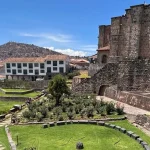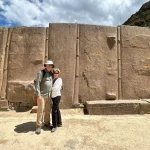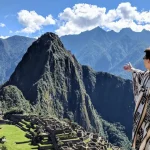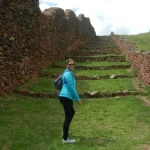
The Raqchi archaeological site stands out as a key point in Andean history for its ceramic production. You will notice that this complex served as an administrative and religious center during the Inca Empire. Furthermore, its strategic location facilitated control over resources coming from the south. For this reason, at Trails to Machu Picchu we recommend visiting it to understand Inca technology.
- Geological and administrative context of the area
- Strategic importance of Raqchi in the expansion towards Collasuyo
- Mass production of ceramics and grain deposits
- Traditional pottery techniques in San Pedro de Cacha
- Preparing for your visit to the archaeological complex
- Book your cultural experience with us
Geological and administrative context of the area
Now that you know its importance, let’s see how the natural environment defined the construction of this administrative center. The relief of the Vilcanota valley offered unique resources that the imperial architects utilized with great mastery.
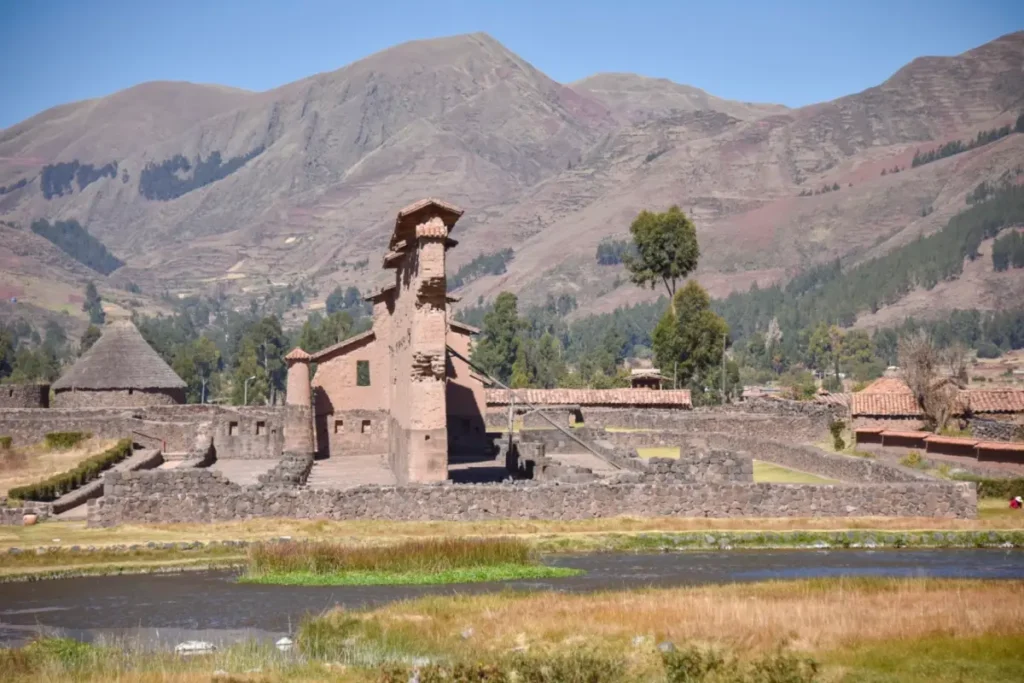
Geological influence of the Quimsachata volcano on local buildings
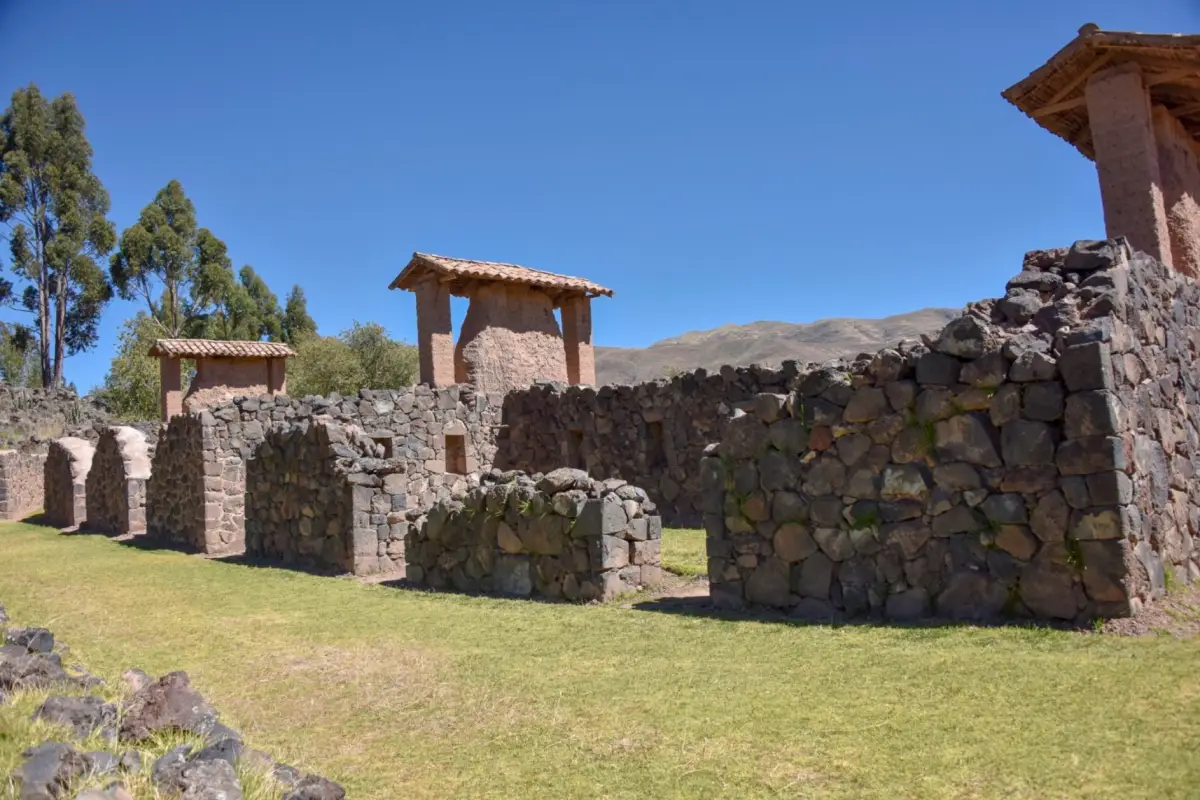
The presence of the Quimsachata volcano was decisive for the builders who inhabited this area of Cusco. As a result, you will observe that the walls mix dark volcanic stone with highly resistant adobe. This combination allowed for the construction of very tall structures that still stand today.
Furthermore, the volcanic soil provided special stability to the foundations of the great temples. You will notice that the gray color of the stone contrasts with the reddish tone of the upper finishes. To recognize these materials, we suggest you look at the following characteristics:
- Bases made of finely carved volcanic andesite.
- Walls of compacted mud with vegetable fibers.
- Porous textures that facilitate the adhesion of the plaster.
- Seismic resistance proven over more than five centuries.
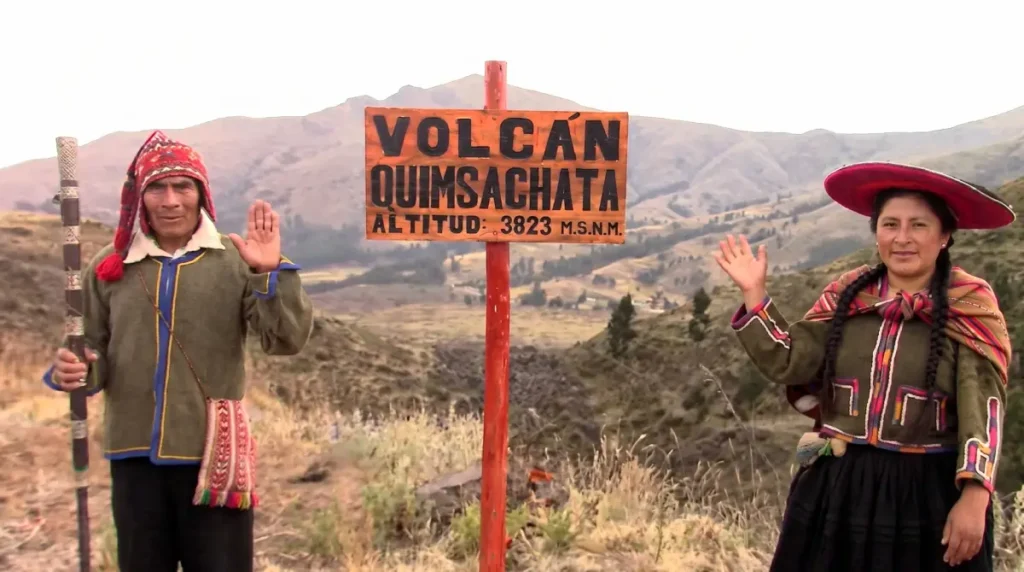
Connection between the Qhapaq Ñan road network and the administrative center of Raqchi
The Raqchi archaeological site was an essential part of the system of imperial roads that united the entire continent. Therefore, it functioned as a control and rest point for state officials. If you decide to travel with us at Trails to Machu Picchu, you will notice the proximity of the main route.
This connection allowed for the constant flow of information and products between the capital and the distant provinces. Likewise, the location of the site facilitated the surveillance of caravans transporting metals and textiles. Keeping this in mind, you will understand why the Incas invested so much effort in fortifying this sector.
Strategic importance of Raqchi in the expansion towards Collasuyo
After analyzing its location, it is time to review why this place was vital for the conquest of the south. The expansion towards the highlands of Titicaca required a solid and well-equipped support center.
Role of the Raqchi archaeological site as a link with the Altiplano
The complex acted as a natural and administrative border between the region of Cusco and the Altiplano. Thanks to this, the Cusco rulers consolidated their presence in the lands of Collasuyo effectively. You will notice that its design allowed for receiving large groups of people on prolonged transits towards the south.
In addition to being a shelter, the site served to impose imperial culture over the conquered peoples. For this reason, you will see that the architecture of Raqchi commands respect due to its monumental scale and order. In practice, this meant that any traveler had to pass through its checkpoints before continuing their route.
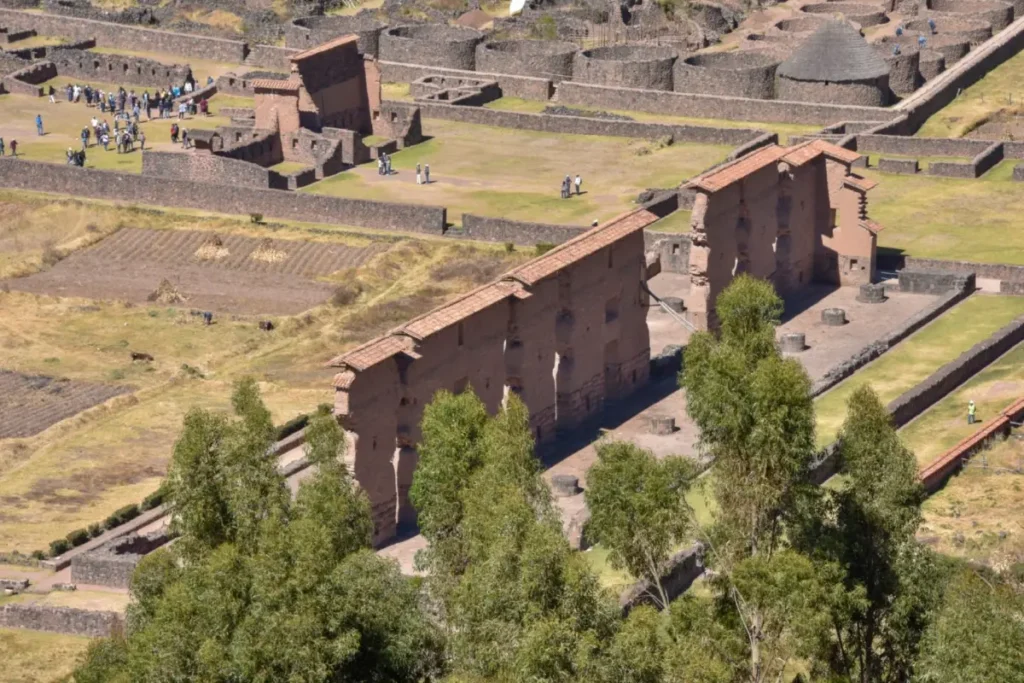
The monumental Temple of Wiracocha and its symbolism
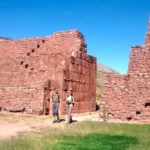
This structure is the largest in the Raqchi archaeological site and will surprise you with its dimensions. It represented religious power and served to honor the creator deity of the world according to the Andean worldview. We at Trails to Machu Picchu usually explain this mystical link to you during your tour of the precinct.
To build a building of such magnitude, the engineers had to innovate in the use of heavy materials. On your visit, you will be able to distinguish three different levels of construction that give it its characteristic shape:
- Polished stone plinth at the bottom.
- Central body made of rustic volcanic stone.
- Upper walls made of thick adobe.
Use of volcanic materials in the structure of the Temple of Wiracocha
The base of the temple is made of perfectly carved volcanic stones to support the weight of the roof. Above them, mud walls were raised that reach almost twelve meters in total height. However, the lightness of the processed volcanic stone prevented the structure from collapsing under its own weight.
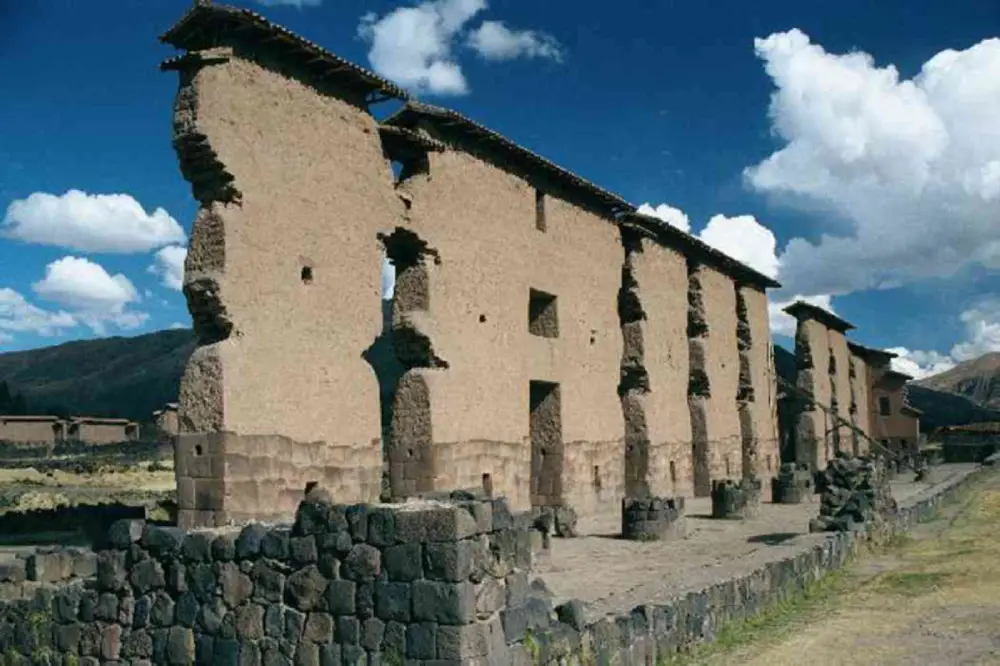
Mass production of ceramics and grain deposits
With this clear, let’s move on to review how the site became a large-scale state factory. It was not only a religious center, but also an economic engine for the entire southern region.
Functional architecture of the qollqas or circular grain deposits
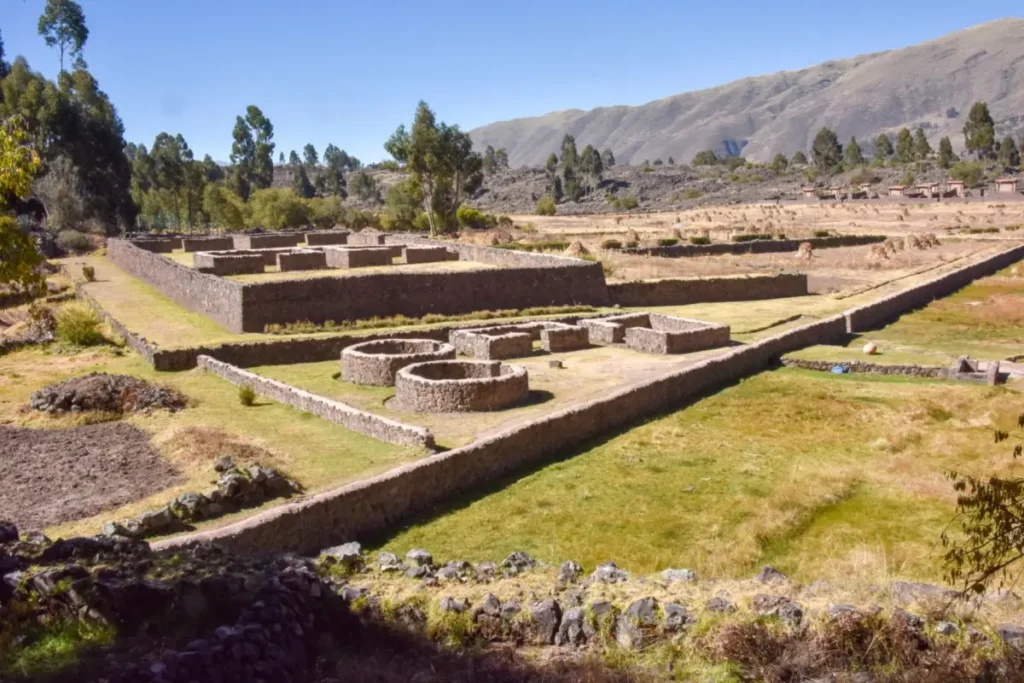
You will find more than 150 circular constructions intended for the storage of food and various goods produced locally. Their geometric design took advantage of air currents to preserve corn and quinoa for a long time. Thus, the Inca ensured the sustenance of their armies in times of drought or conflict.
Each of these qollqas has a similar diameter to standardize the amount of products stored there. Additionally, the use of volcanic stone in their walls helped regulate the internal temperature of the deposit. If you walk between these rows of warehouses, you will understand the enormous logistical capacity that the empire had.
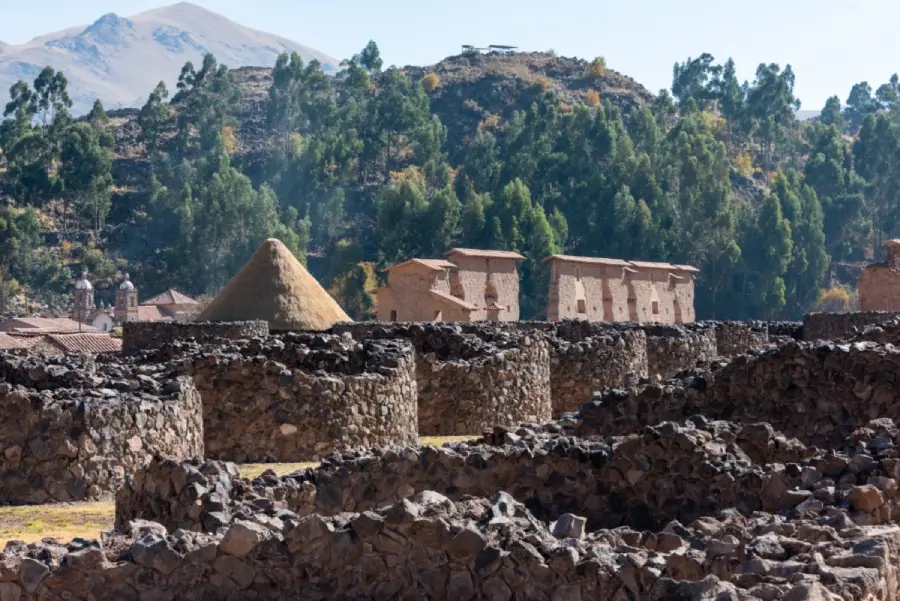
Organization of workers specialized in ceramic production
The site housed families dedicated exclusively to the creation of vessels, plates, and jars for the state. These artisans lived in specific sectors and received raw materials directly from the central deposits of the complex. Due to their great skill, their pieces reached the furthest corners of the Andes.
Production was not free, but rather responded to centralized planning to supply religious rituals. Therefore, you will notice a great uniformity in the style and shapes of the objects found. With us at Trails to Machu Picchu you will learn the details about the daily life of these specialists.
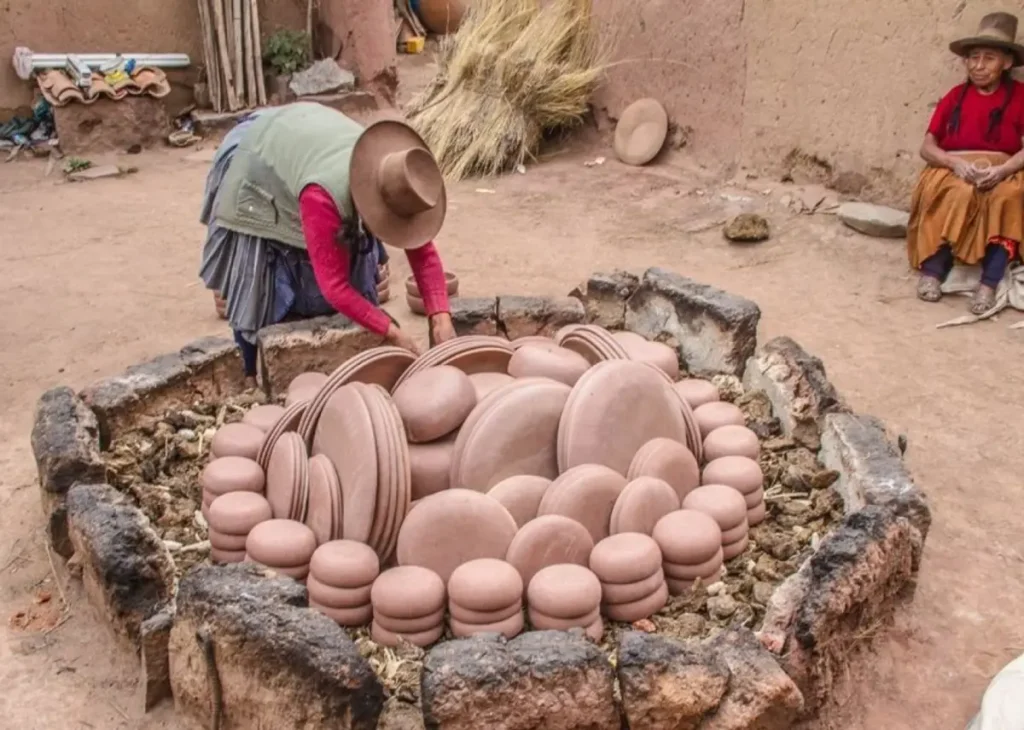
Archaeological research on ceramic manufacturing in Raqchi
Academic studies confirm that there was rigorous state control over the quality of each piece produced here. Researchers such as Sillar (2021) have analyzed remains that prove the intensive use of clays selected from nearby quarries. These findings demonstrate that the site was the most important pottery center of its time.
Evidence of pre-Hispanic kilns in the surroundings of the Raqchi complex
You will notice that outside the main area there are traces of ancient open-air mud baking centers. These kilns allowed for the production of thousands of pieces in a standardized way thanks to the constant heat of the charcoal. Even today, researchers find fragments of molds that facilitated the speed in the manufacturing of the jars.
Traditional pottery techniques in San Pedro de Cacha
After seeing the past, it is exciting to observe how these traditions remain alive in neighboring towns. The community of San Pedro de Cacha maintains the legacy of its ancestors with pride and dedication.
Properties of local clay for pottery in San Pedro de Cacha
The soil of this area possesses unique minerals that facilitate the modeling of large-sized pieces. For this reason, current artisans still prefer to use the mud they extract from around the volcano. If you join us, you will notice how these volcanic lands influence the durability of the final product after firing.
The local clay has superior plasticity that allows for the creation of thin but very impact-resistant walls. In addition, its natural color after firing is highly appreciated by collectors of traditional art. We recommend visiting local workshops to see this material in the hands of master potters.
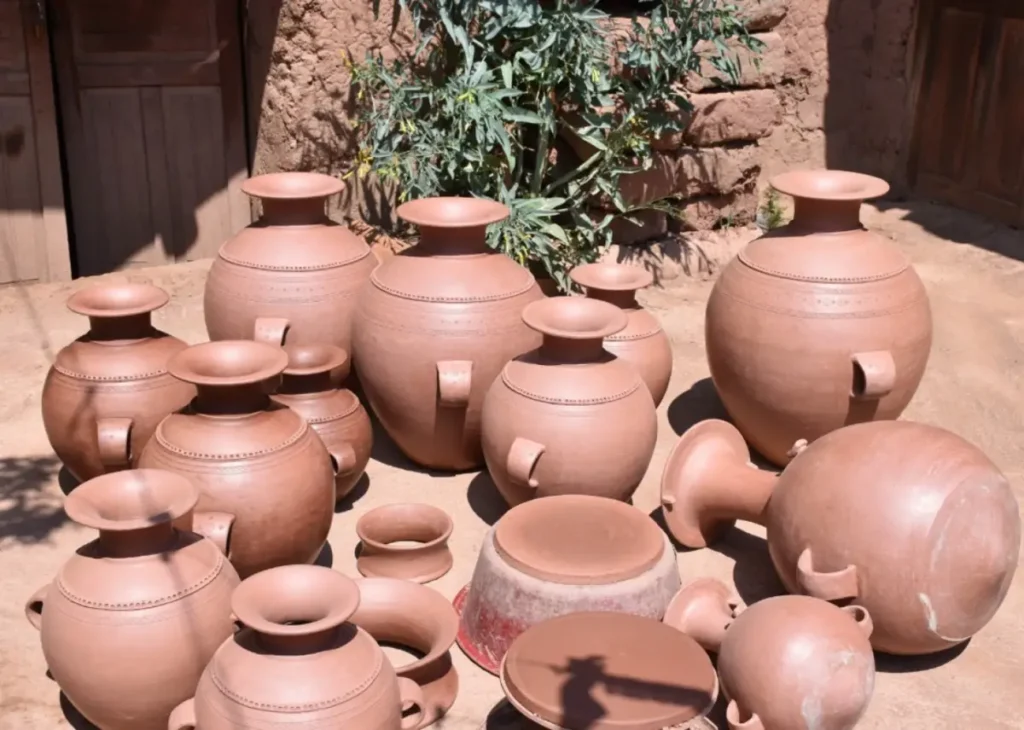
Traditional pottery techniques that have been maintained since the Inca era
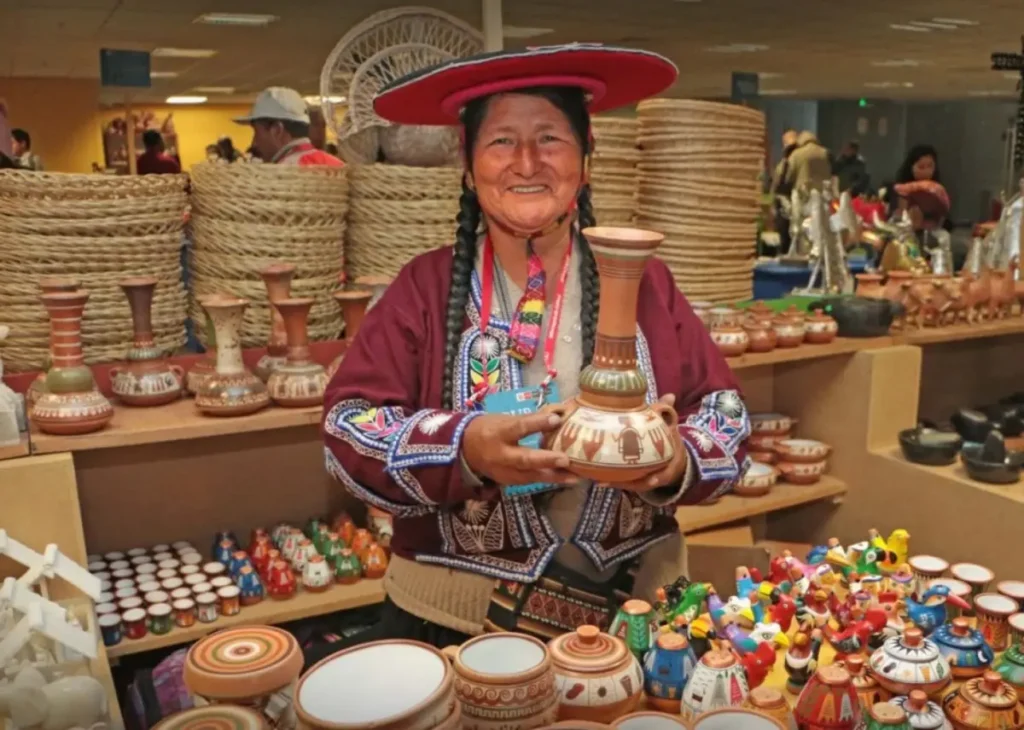
Many artisans still use the manual potter’s wheel and burnishing with river stones to add shine. You will notice that they do not use chemical glazes, but rather natural mineral pigments extracted from the surrounding mountains. In this way, the manufacturing process remains faithful to what the imperial tradition dictated.
Even the firing system in mud kilns follows ancient patterns to control the oxidation of the pieces. This cultural continuity is one of the greatest attractions you will find while traveling through the Vilcanota valley. To make the most of your visit, keep these traditional elements in mind:
- Use of stone molds for repetitive shapes.
- Decoration with animal hair brushes.
- Hand polishing to achieve brilliant finishes.
- Firing with camelid dung for uniform heat.
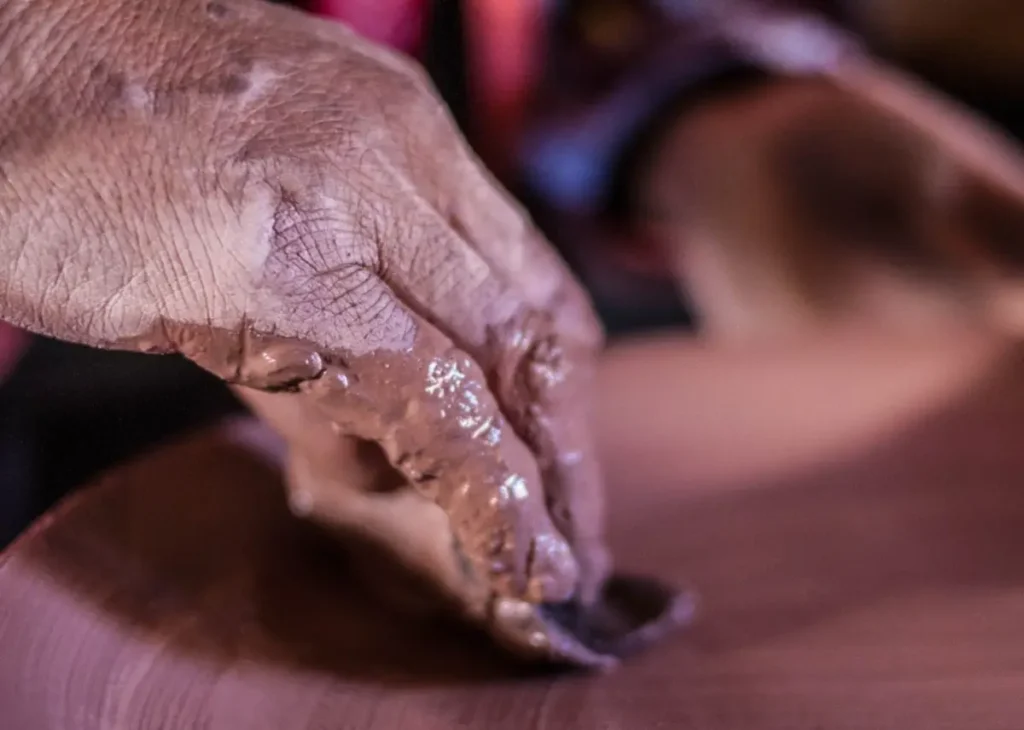
Iconography and design of the ceramic pieces produced in Raqchi
Designs usually include geometric motifs that represent the organization of space and respect for nature. You will also see stylized representations of birds, felines, and plants that were sacred to the Inca civilization in Cusco. These images were not just decorative; they told stories about the origin of the Andean world.
Preparing for your visit to the archaeological complex
Once you know the history, the next step is to plan how you will get to this impressive place. The trip from the city of Cusco is simple and offers beautiful landscapes throughout the journey.
Reasons to learn about the engineering and hydraulic technology of Raqchi
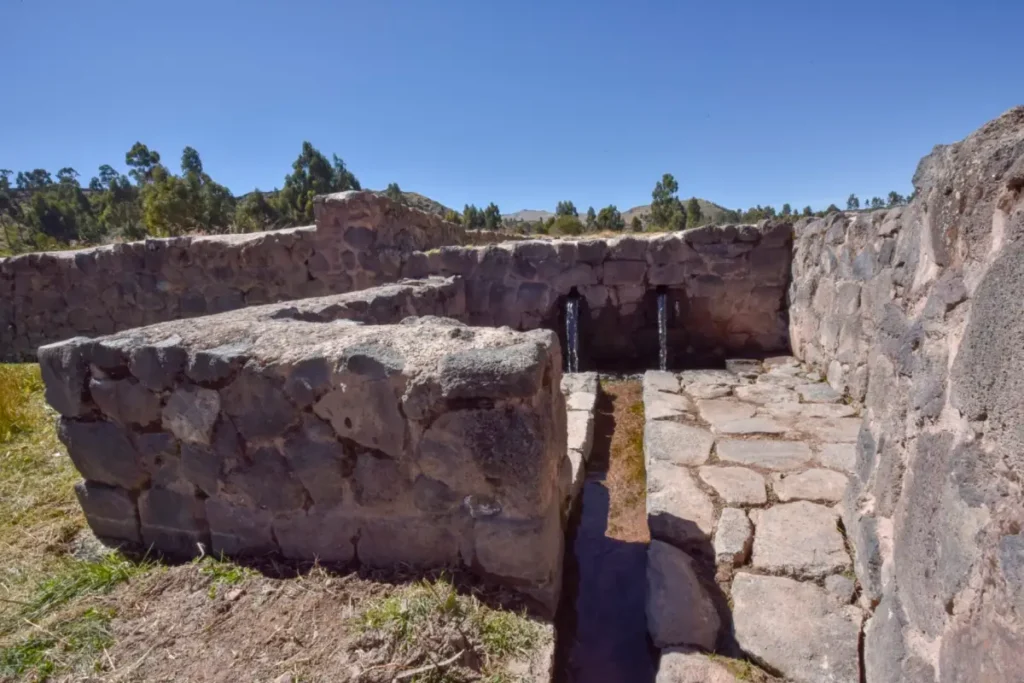
Beyond the temples, you will notice a sophisticated system of channels that supplied water to the entire precinct. Inca engineers managed to channel distant springs to feed ritual fountains that still function with precision today. Understanding this technology will allow you to value the adaptability of this culture to its environment.
Water management was also vital for the clay cleaning processes in ceramic production. Therefore, you will see stone fountains located strategically near the work and housing areas. If you want to know these technical details, at Trails to Machu Picchu we can guide you through the key points.
Recommended stops on the Route of the Sun between Cusco and Puno
If you are traveling south, the Raqchi archaeological site is one of the mandatory stops you must make. On this route, you will find other attractions that complement your vision of Andean history and the colonial era. We suggest organizing your itinerary considering these interesting stops:
- Church of San Pedro de Andahuaylillas.
- Tipón archaeological complex.
- Pukara site museum.
- La Raya viewpoint at the departmental border.
Hikes through the Vilcanota valley to reach the archaeological remains
If you prefer direct contact with nature, you can hike through the Vilcanota valley to reach the archaeological remains. These trails offer you a different perspective of the landscape and allow you to get to know rural communities that maintain ancestral customs. It is an ideal option if you are looking to escape the more congested bus routes.
You will notice that the road follows the course of the river and crosses corn and vegetable fields. This experience will connect you with the agricultural environment that supported the original inhabitants of the Raqchi archaeological site. Remember to bring comfortable clothing and sunscreen to enjoy the mild climate of the area.
Book your cultural experience with us
With all this knowledge, you are ready to explore one of the most fascinating production centers of ancient Peru. The Raqchi archaeological site combines history, engineering, and an artistic tradition that is still alive in its current inhabitants. You will notice that every corner tells a story of effort and organization that will inspire you on your trip.
We at Trails to Machu Picchu organize this tour so that you can enjoy a profound and well-planned visit. We accompany you to discover the secrets of the great temples and the skill of the ancient Inca potters. If you want to live this cultural adventure, you can contact us to book your spot and ensure an unforgettable experience.