Taking on the Qhapaq Ñan Trekking and Machu Picchu represents much more than a simple hike through the mountains. For us at Trails to Machu Picchu, this route means walking through the veins of a civilization that transformed the Andes. This network of trails connected an entire empire, linking communities, temples, and administrative centers with great precision. Therefore, if you are planning this adventure, keep in mind that you will be walking on stones placed centuries ago by expert Inca engineers. Below, you will find the essential technical, weather, and administrative details to organize your trip successfully and explore this heritage site with respect.
- The Origin and Significance of the Qhapaq Ñan
- Regulations and the Importance of Booking in Advance
- Physical Preparation and Acclimatization in Cusco
- Geographical and Weather Features of the Route
- Inca Architecture and Technology Along the Trail
- Services Included and Required Gear
- Cultural Impact and Responsible Tourism
The Origin and Significance of the Qhapaq Ñan
The Tahuantinsuyo Road Network, known as the Qhapaq Ñan, is one of the most extensive engineering works of the ancient world. This network not only facilitated the transport of products but also allowed for the rapid communication of news through messengers or chasquis. That is why, when you walk these trails today, you have the opportunity to connect with the living history of Peru in a way no modern transportation can match.
Which Inca Built the Qhapaq Ñan?
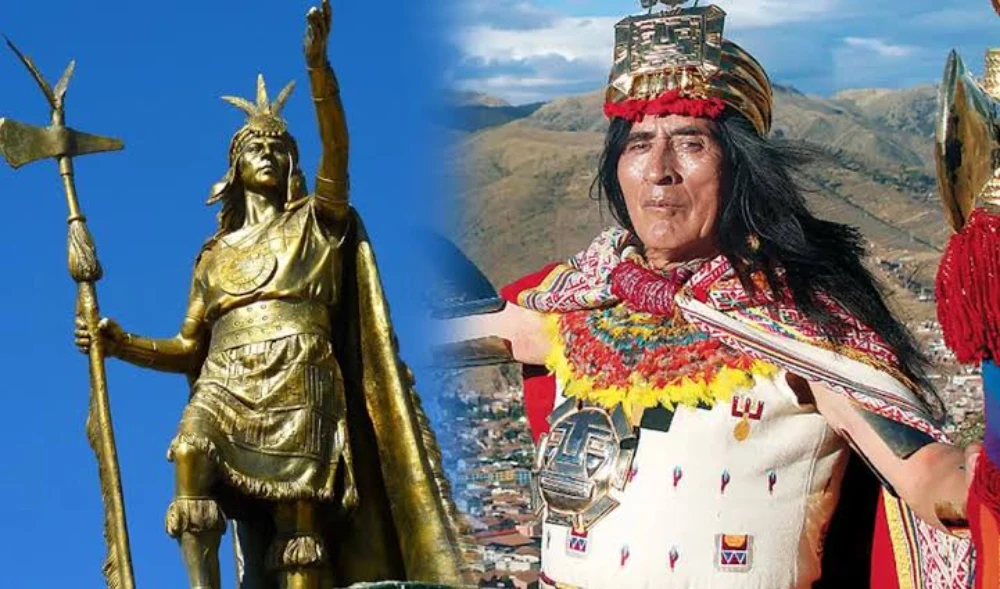
Although pre-Inca peoples already had local routes, it was Inca Pachacutec who initiated the great expansion of this system. Under his leadership, the Qhapaq Ñan began to unify the various conquered territories. Subsequently, his successors Túpac Yupanqui and Huayna Cápac consolidated and expanded the network to its highest expression.
These rulers understood that to control such a vast empire, they needed roads resistant to the most extreme climates. Therefore, as you make your way along this route, you will be able to appreciate part of the infrastructure that connected different territories of the empire.
Extent in Inca Times and Present-Day Length
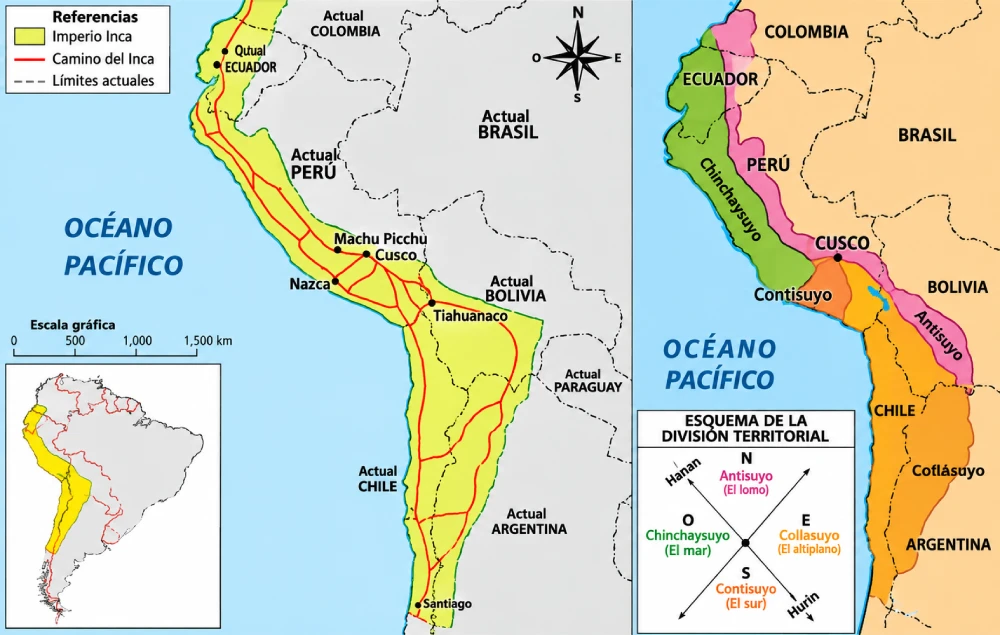
The Qhapaq Ñan reached its maximum extent during the 15th century, with an approximate length of 30,000 kilometers at the height of the empire. This extensive network connected the present-day countries of Colombia, Ecuador, Peru, Bolivia, Chile, and Argentina.
However, today you will no longer find those 30,000 kilometers forming a continuous network. Over the centuries, many paths disappeared or were altered by modern populations. Even so, you can still find numerous preserved sections.
On June 21, 2014, UNESCO declared the Qhapaq Ñan a World Heritage Site, recognizing 780 kilometers within its components, distributed among the six mentioned countries. Of this length, the Ministry of Culture notes that a total of 250 kilometers belong to Peru. For this reason, if you visit Peru, you will find various archaeological sections that still retain elements of this infrastructure.
In particular, the section leading to Machu Picchu is probably the best preserved thanks to ongoing maintenance work.
Regulations and the Importance of Booking in Advance
If you are planning to do the Qhapaq Ñan Trekking and Machu Picchu, you should know that spots are limited. The Ministry of Culture and SERNANP strictly control entry to the route to ensure its conservation. Therefore, we always recommend that our travelers keep in mind that permits usually sell out many months in advance, especially during the peak season.
To ensure you enjoy your experience without setbacks, it is important to be familiar with the regulations and safety measures established to preserve this heritage site:
- Permits are personal and non-transferable.
- It is not possible to do this trek independently.
- It is mandatory to hire the services of an authorized agency that provides official guides and necessary equipment.
- The daily limit of people allowed on the trail is 500. This figure includes tourists, guides, cooks, and porters.
- Reservations must include the exact details of your valid passport.
- The trail closes imperatively every February for maintenance and safety due to rains.
- Using trekking poles with metal tips and extracting any flora or fauna species is strictly prohibited.
For this reason, we suggest booking at least six months in advance, especially if you plan to travel during the dry season. At Trails to Machu Picchu, we manage permits as soon as you confirm your interest to secure your spot in this highly requested experience.
Physical Preparation and Acclimatization in Cusco
The physical challenge of the Qhapaq Ñan Trekking and Machu Picchu should not be underestimated. The route crosses mountain passes exceeding 4,000 meters in altitude. However, you do not need to be a professional athlete; nevertheless, arriving with basic preparation is important to enjoy the trek without excessive difficulties.
Tips for Effective Acclimatization
We recommend arriving in the city of Cusco at least two or three days before starting the trek. During this time, you can do low-intensity activities, such as visiting nearby archaeological sites like Sacsayhuamán or walking through the Sacred Valley.
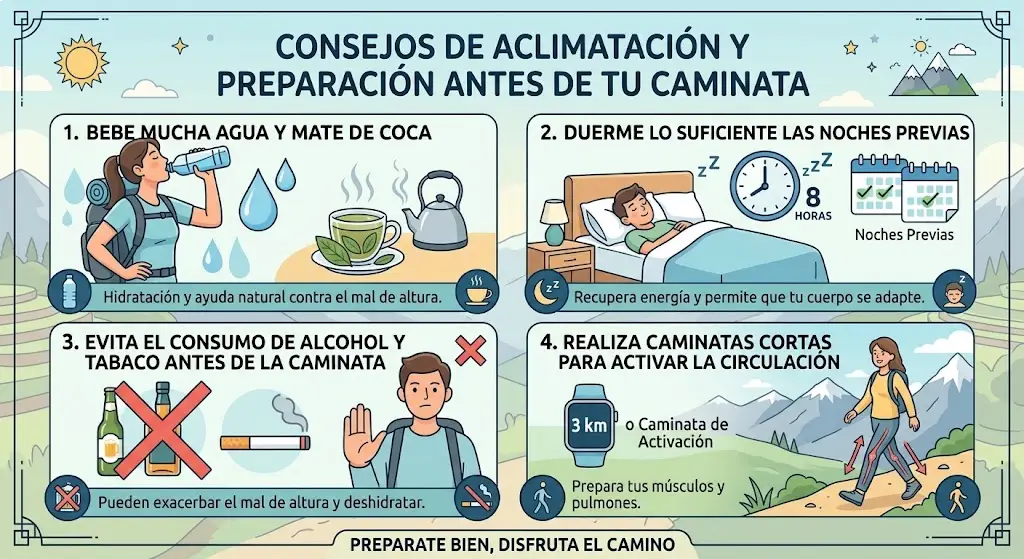
Additionally, to help your body adapt to lower oxygen levels, we advise you to:
- Stay hydrated and avoid heavy meals.
- Drink plenty of water and coca tea.
- Get enough sleep during the preceding nights.
- Avoid consuming alcohol and tobacco before the trek.
- Take short walks to stimulate circulation.
Pre-Trip Training
If you live at low altitudes, it is helpful to go on short hikes or do cardiovascular exercises in the weeks leading up to your departure. This will strengthen your legs and improve your lung capacity, helping you conquer the sections of Inca staircases.
Additionally, remember that the terrain is uneven and you will often be walking on original stones that can be wet.
Geographical and Weather Features of the Route
The weather in the cloud forest margin and the Central Andes is highly variable. In a single day, you could experience intense sunshine, cold winds, and light drizzling. Therefore, understanding these variations will help you choose the necessary gear to stay comfortable throughout the trek.
Best Time to Travel
The dry season, from April to October, brings sunny days and cold nights, especially at higher elevations. Consequently, it is the ideal period to complete the Qhapaq Ñan Trekking and Machu Picchu due to the lower chance of rain.
On the other hand, the rainy season between November and March offers much greener landscapes. However, the trails can become slippery and clouds might obscure panoramic views.
In February, the Inca Trail closes imperatively for maintenance and safety reasons due to potential mudslides. Likewise, if you choose to travel during transition months like March or November, you should be prepared for sudden downpours that can make navigating the rocky terrain more challenging.
Biodiversity of the Central Andes
When taking on the Qhapaq Ñan Trekking and Machu Picchu, you will cross different life zones and appreciate how the landscape shifts as you advance. Furthermore, the biodiversity of the Central Andes becomes evident during the transition from high-Andean regions down to the cloud forest.
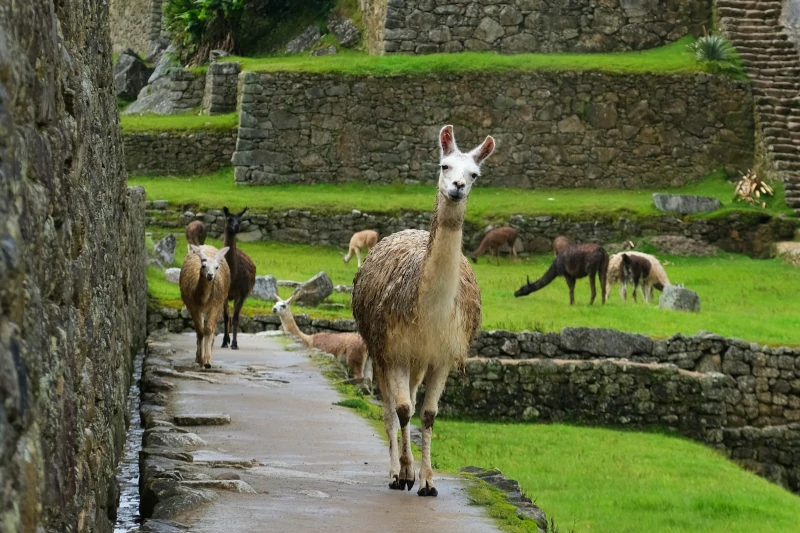
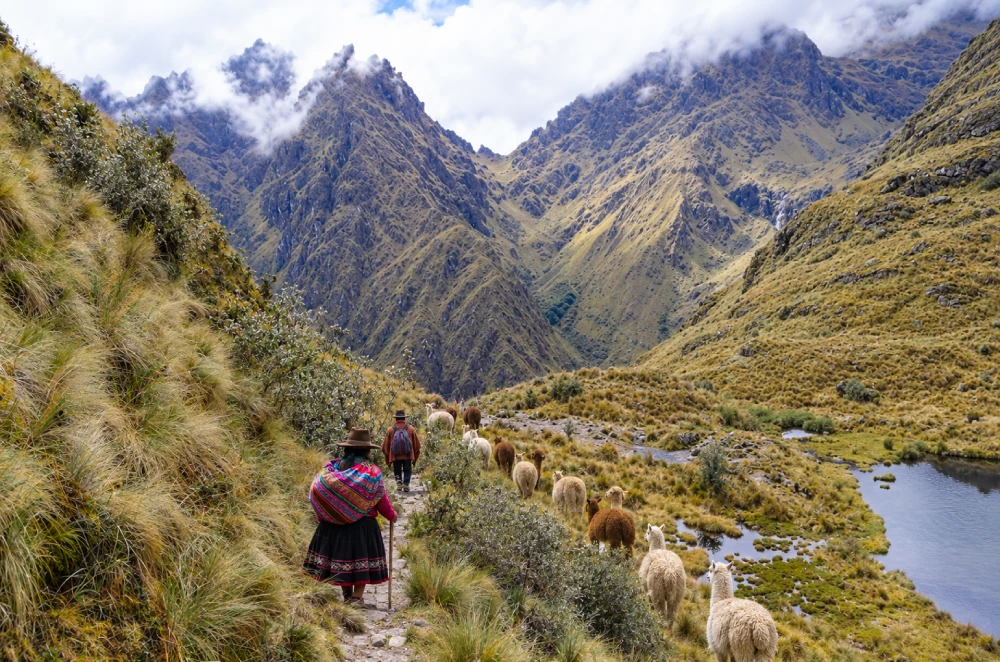
In the highest sections, for instance, you may spot the flight of the Andean condor and encounter llamas in grazing areas.
As you descend toward the Historic Sanctuary of Machu Picchu, the environment will become progressively greener and more humid. In this sector, you can find a rich variety of orchids, with an estimated 300+ species present in the area. Likewise, this ecosystem is home to the spectacled bear and the Andean cock-of-the-rock, the national bird of Peru.
Thus, walking this route allows you not only to discover significant archaeological remains but also to experience diverse ecosystems and observe local Andean flora and fauna. In this way, the Qhapaq Ñan Trekking and Machu Picchu becomes an Andean travel experience that beautifully complements the cultural and archaeological aspects of your journey.
Inca Architecture and Technology Along the Trail
During your Qhapaq Ñan Trekking and Machu Picchu, you will appreciate the Incas’ ability to adapt to the geographical terrain. Every structure you encounter had a specific function and was built to endure for millennia despite earthquakes and erosion.
Inca Drainage System
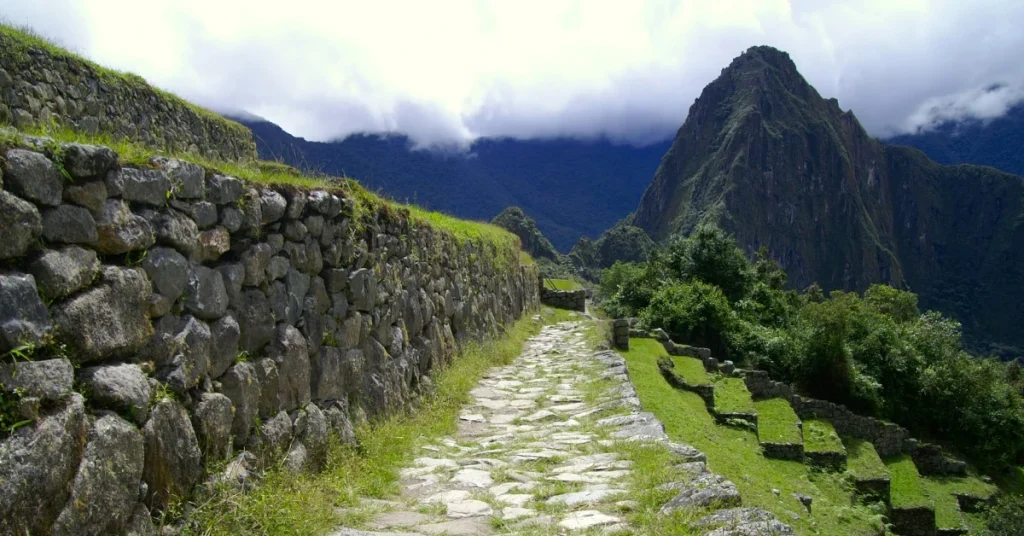
You will notice that even after heavy rain, the trail does not flood. This is due to the advanced Inca drainage system. Engineers of the era built side channels and gravel layers under the main stones to filter water away.
Thanks to this system, the roadbed remains solid to this day. It also prevented landslides that could have destroyed the route centuries ago.
Tambos and Checkpoints
Along the trail, you will find ruins of strategically located tambos and checkpoints. Tambos served as food storehouses and shelters for official travelers and the Inca army.
In addition, we often stop at these sites to explain how the flow of people toward the sacred city was managed. You will also cross ancestral stone bridges that showcase this culture’s expertise in spanning mountain chasms.
Surrounding Quechua Communities
The trail is not a static museum; it is a living, inhabited space. Along the trek, you will pass near Quechua communities that maintain agricultural and textile traditions inherited from their ancestors.
Therefore, respect for these local populations is essential. At Trails to Machu Picchu, we work hand in hand with local staff, allowing us to offer you a more authentic and human insight into mountain life.
Services Included and Required Gear
Nutrition on mountain routes is a key factor in keeping your energy up. On our end, we prepare balanced menus using fresh local ingredients, designed to give you the necessary carbohydrates and proteins.
Furthermore, you don’t have to worry about cooking or carrying heavy tents, as our team makes sure everything is set up by the time you arrive at camp.
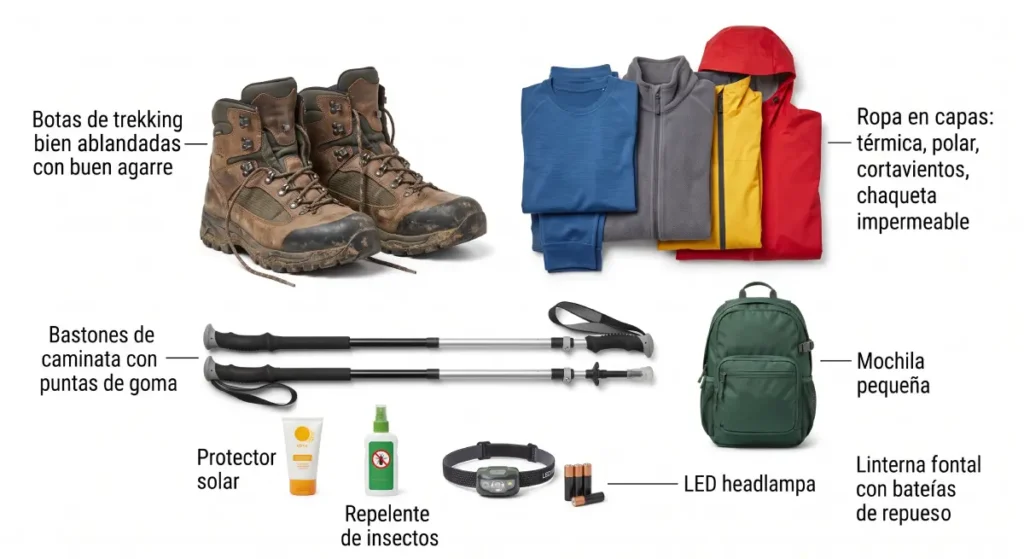
Basic Gear Checklist:
- Well broken-in trekking boots with good grip.
- Layered clothing: thermal base layer, fleece, windbreaker, and a waterproof jacket.
- Trekking poles with rubber tips to avoid damaging the Inca paving.
- A small daypack for your daily personal belongings.
- Sunscreen, insect repellent, and a headlamp.
- Rain jacket or waterproof poncho.
- Headlamp with extra batteries.
It is wise to choose your footwear carefully before traveling to Peru. We do not recommend wearing brand-new boots on day one, as blisters could spoil your experience.
Likewise, we can advise you on the right type of poles or additional gear you might need depending on the season you choose to visit us.
Cultural Impact and Responsible Tourism
Walking the Royal Inca Trail carries a responsibility toward local communities and the environment. Responsible tourism aims to minimize environmental impact and foster respect for ancient customs.
By trekking these paths, you support the livelihood of local families who work as porters and cooks and possess deep knowledge of the mountains.
Respect for the Guides’ Work
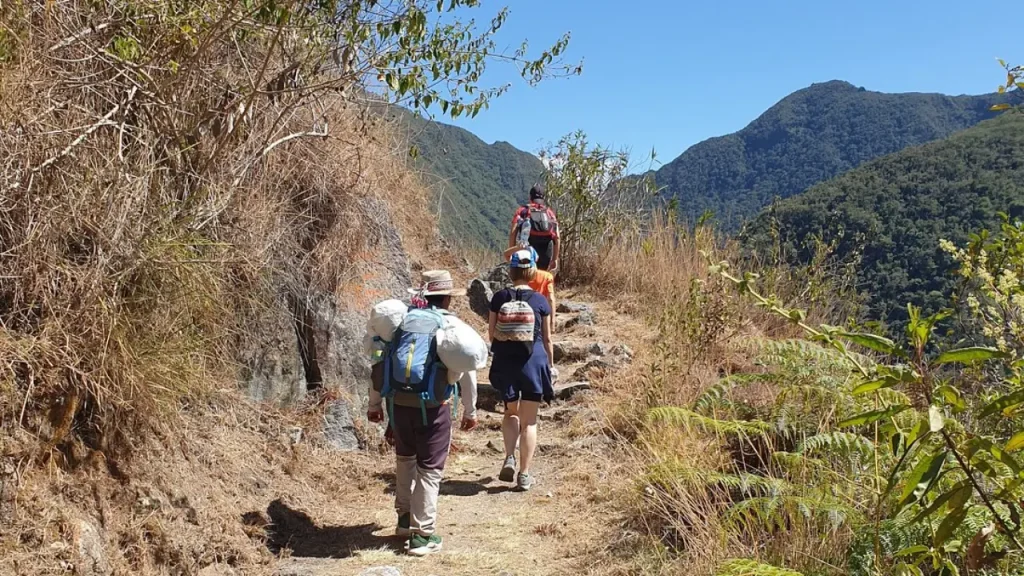
It is essential to always follow your guides’ instructions and stay on designated paths. In addition, remember that the Historic Sanctuary of Machu Picchu is a delicate ecosystem; therefore:
- Proper waste management is critical; everything you bring must be packed back to Cusco for appropriate disposal.
- Respect all archaeological structures and do not climb on walls.
- Avoid making unnecessary noise.
In doing so, you help ensure that future generations can also enjoy this incredible legacy.
Responsible Connection with Machu Picchu
When you arrive at Machu Picchu right at sunrise, you will experience the crowning moment of the trek. After days of physical effort and connection with nature, viewing the citadel from above will be your quiet reward.
Thus, it won’t be just the end of a hike, but a moment to understand how a civilization managed to harmonize architecture with such a challenging natural setting.
If you are ready to begin this adventure, we invite you to plan it carefully. At Trails to Machu Picchu, we are prepared to guide you through this technical and cultural journey, ensuring every detail of your trip is professionally covered.
Proper preparation turns a great challenge into a personal achievement you will cherish forever. So, contact us.