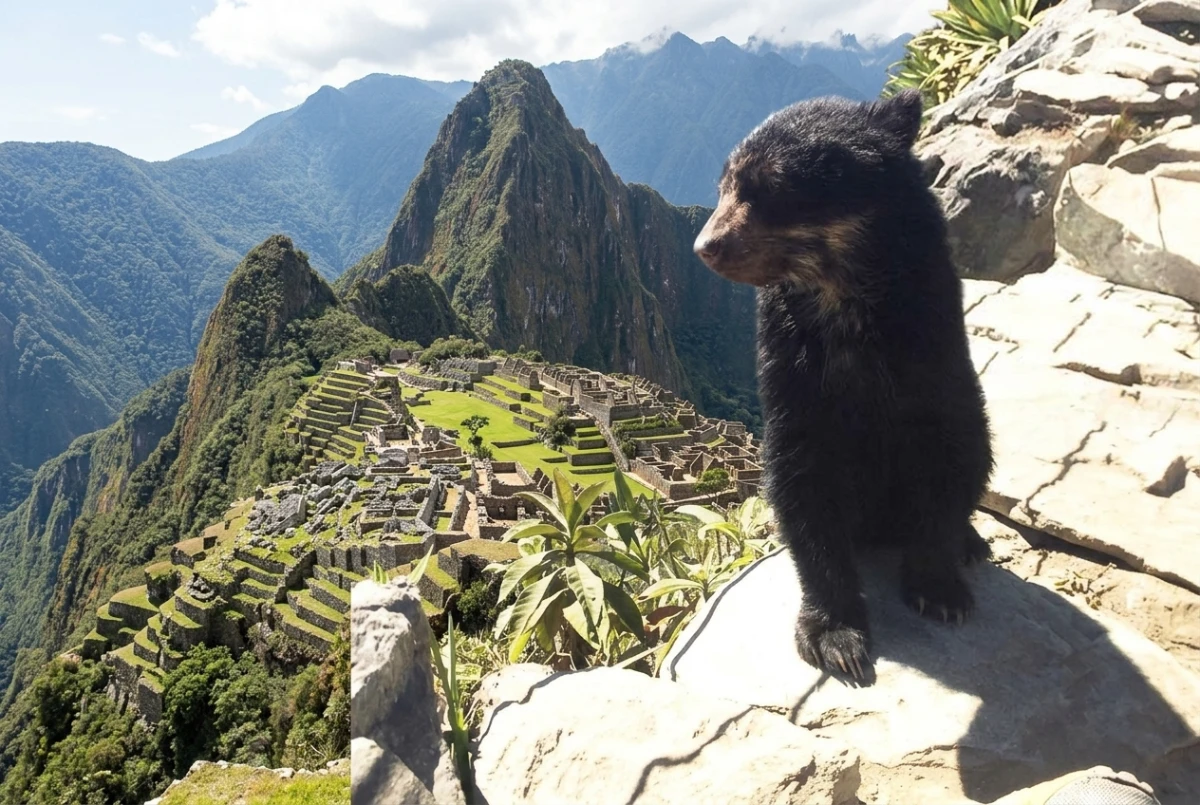
Achieving a spectacled bear sighting in Machu Picchu requires patience and knowing their natural routines. We at Trails to Machu Picchu know that this encounter is one of the most sought-after moments for travelers. For this reason, in this text, we detail the hours with the highest probabilities of success based on the behavior of this species. You will notice that the key lies in silence and choosing the right visiting shifts.
- Biological rhythms and Population of the spectacled bear in Machu Picchu
- Spectacled bear sighting in Machu Picchu: probabilities according to the hour
- Climate and spectacled bear sighting in Machu Picchu
- Tips for seeing wildlife in Machu Picchu
- Frequently asked questions about spectacled bear sighting in Machu Picchu
- Organize your expedition with us
Biological rhythms and Population of the spectacled bear in Machu Picchu
To understand when the bear will appear, we must first know its daily habits within the sanctuary. This species is primarily diurnal, although it prefers to avoid direct contact with large groups of people. For this reason, its movements usually occur when the noise in the citadel is at a minimum.
Feeding in the cloud forest and foraging areas
The diet of this mammal is based mainly on plants such as bromeliads and orchids. Due to the high amount of food in the cloud forest, the bear moves constantly looking for fresh shoots. You will see that these animals prefer areas where the vegetation is dense to feel protected while they eat.
Additionally, the behavior of the Andean bear varies according to the availability of fruits in each season of the year. During the rainiest months, they usually descend to lower altitude areas to look for tender food. Of course, they always return to the treetops to rest away from predators.
Data from the last census and estimated bear population
Data from the last census carried out in the area confirms a gradual recovery of individuals in the area. Currently, the estimated population of bears within the Historic Sanctuary of Machu Picchu ranges between 75 and 80 adult specimens. This figure is positive considering the pressure that exists on mountain ecosystems in other parts of the Andes.
Furthermore, these studies indicate that the reproduction rate remains stable in the cloud forest sectors. Knowing these figures helps us better understand the behavior of the local fauna. In this way, we can accurately inform you about the state of the biodiversity surrounding the Inca citadel. 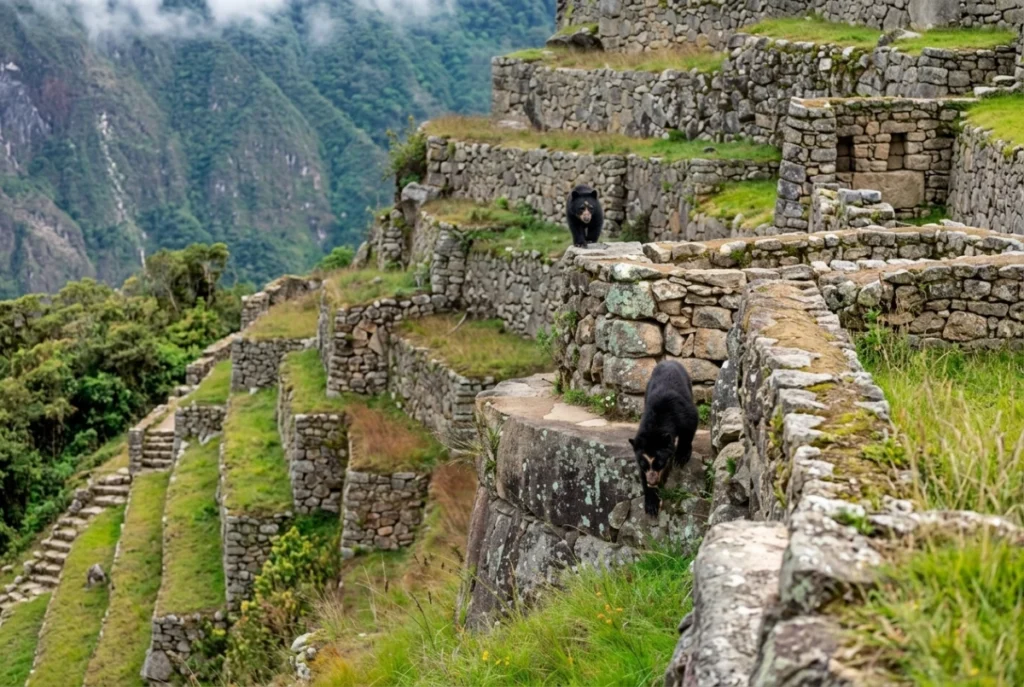
Spectacled bear sighting in Machu Picchu: probabilities according to the hour
The probabilities of seeing this animal change drastically as the day progresses and the flow of visitors increases. According to the most recent reports from 2026, moments of calm are the most effective for encounters. Here we explain how the options for seeing it are divided according to your entry time.
Morning encounters and spectacled bear sighting in Machu Picchu
The first entry shift offers the best opportunities because the environment is fresh and quiet. During this time, the most memorable morning encounters occur, just when the bear comes out to look for food. Many specimens cross the agricultural areas of the citadel before the largest groups arrive.
To take advantage of this, we recommend choosing the six o’clock in the morning entry. At Trails to Machu Picchu we organize your tour so that you are among the first to enter the circuit. Once inside, walk calmly and avoid making loud noises that could scare the local fauna.
Here are three reasons why the morning is ideal:
- There is less environmental noise interfering with their natural activities.
- The temperature is lower, which favors the bear’s movement.
- The spectacled bear in Machu Picchu is usually more active after its nightly rest.
Midday activity and frequent visibility sectors
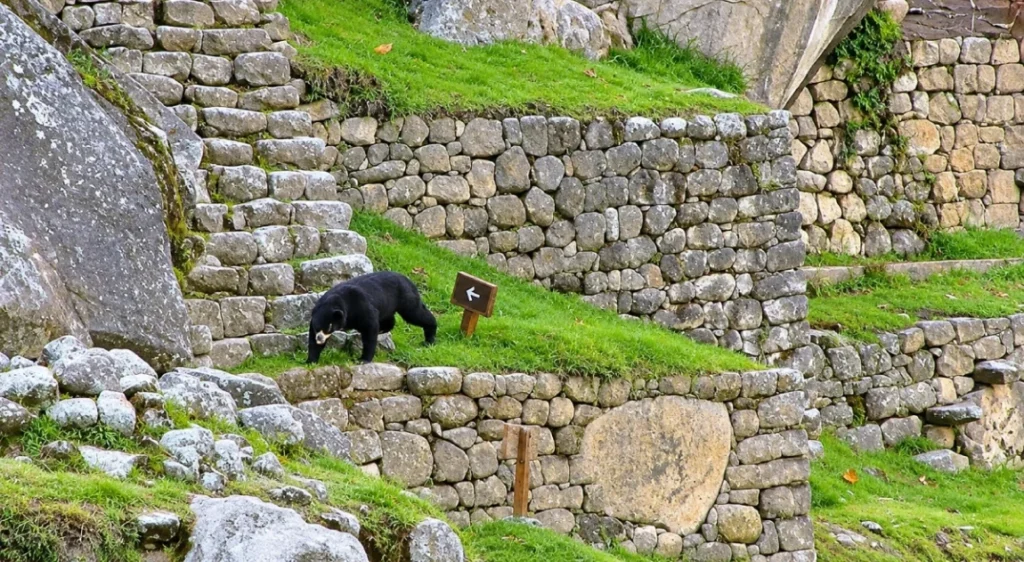
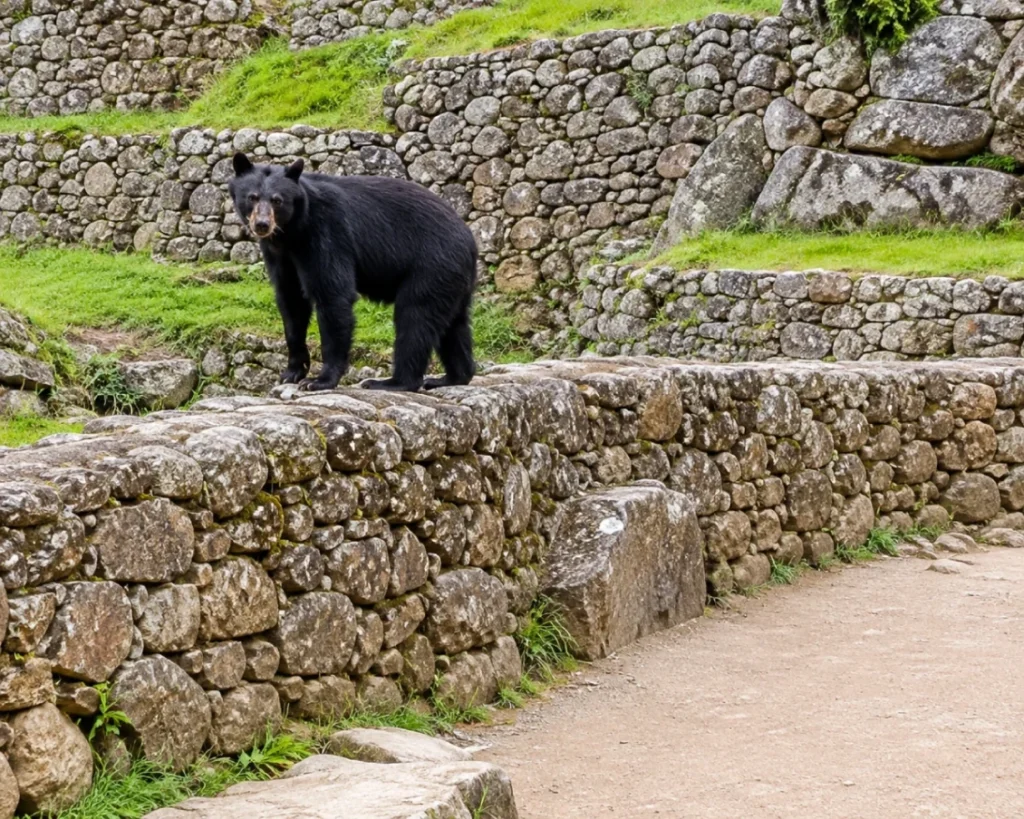
When the sun is at its highest point, bear activity usually decreases significantly. However, you can still have success if you watch frequent visibility sectors such as the upper terraces. During these hours, the animals prefer to stay under the shade of large trees near the walls.
Even with many people, some young bears venture near the paths in search of fresh bromeliads. However, these sightings are usually shorter and occur in areas where vegetation touches the structures. Keep your eyes on the trees growing on the lateral cliffs of the mountain.
Sunset and spectacled bear sighting in Machu Picchu in high areas
Starting at three in the afternoon, the number of tourists drops and silence returns to the sanctuary. It is at this moment when sightings in high areas occur frequently, especially near the Sun Gate. The bears feel safer walking through the open trails when they perceive less human presence.
If you stay until the last shift, the probabilities notably increase again for you. We consider this to be the best time for those who prefer a quieter and more solitary experience. Additionally, the sunlight at dusk highlights the animal’s dark fur against the green of the hills.
Climate and spectacled bear sighting in Machu Picchu
Weather conditions influence the appearance of this Andean mammal as much as the time of day. The weather in the historic sanctuary is very changeable, moving from dense clouds to radiant sun in a few minutes. Learning to read these signals will help you be more attentive at the precise moment.
Probabilities according to the climate in the historic sanctuary
A day with light mist is usually excellent, as the bear feels protected by the lack of visibility. According to the probabilities according to the climate observed this 2026, soft rain also motivates their movement towards the terraces. The water cleans the dust off the plants and makes the shoots more attractive to them.
On the contrary, days of extreme heat usually keep them hidden in the deepest parts of the forest. If the sky is very clear, we advise you to look for them in areas with dense shade and near water sources. With us at Trails to Machu Picchu you will learn to identify these microclimates during your guided walk.
Traces of the species and signals of nearby presence
Many times you will not see the bear directly, but you will find clear evidence that it was there recently. Learning to identify the traces of the species is vital to understanding its current location within the protected area. Look for broken bromeliad branches or claw marks on trunks.
To detect their proximity, follow these practical tips during your tour:
- Look for remains of chewed leaves at the base of large trees.
- Observe if there are fresh droppings on the less traveled forest trails.
- Listen carefully for the crackling of branches on the steep slopes of the mountain.
- Pay attention to the behavior of birds, which often alert to their presence.
Frequency of recent encounters and best sectors
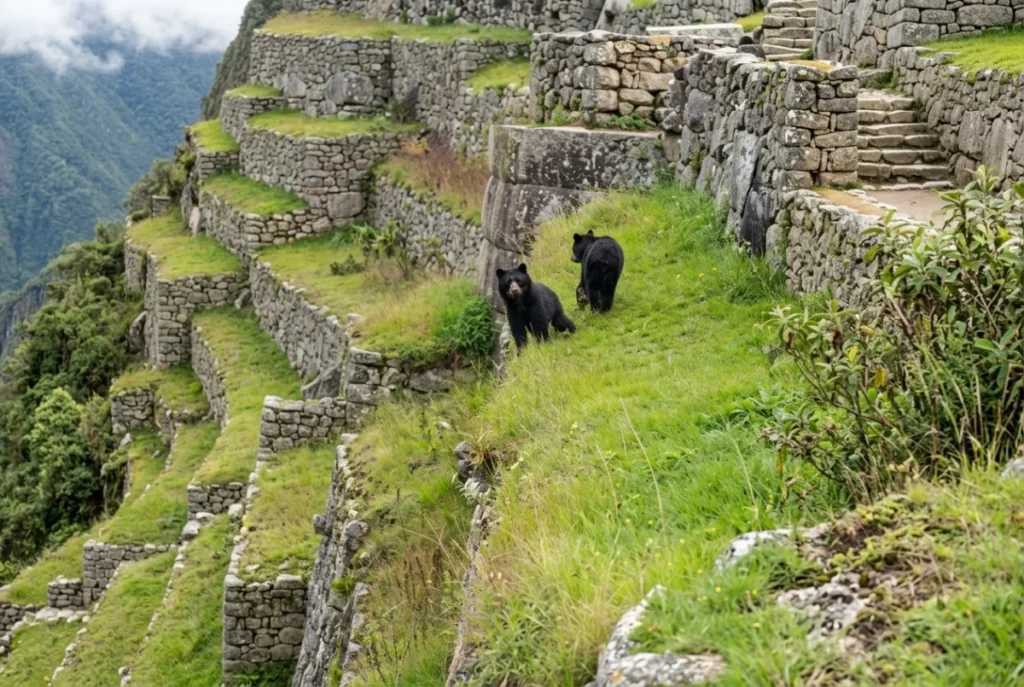
The frequency of recent encounters has increased in the sectors of the Lower Terrace and near the Inca Bridge. During 2026, many travelers have reported sightings even from the buses that go up to the citadel. This proves that the animals have adapted to the controlled presence of people in the established circuits.
If you want to optimize your chances, we advise you to have expert wildlife guides who know the fresh tracks. They know how to identify broken branches or chewed bromeliad remains that indicate the nearby presence of a specimen. To move safely, we recommend following these basic guidelines:
- Always walk on the trails marked by the Ministry of Culture.
- Speak in a moderate tone of voice so as not to unnecessarily alert the fauna.
- If you see a bear, stop and allow the animal to continue its way without obstructing it.
- Follow the instructions of the park rangers who guard each sector of the site.
By following this order, your visit will be safe and you will contribute to maintaining order within the archaeological area.
Tips for seeing wildlife in Machu Picchu
The wildlife in Machu Picchu is diverse, but the bear is undoubtedly the most elusive inhabitant of all. For this year, authorities have reinforced the trails with greater visibility to protect both the traveler and the animal. Following the sanctuary rules ensures that these species continue living in harmony with tourism.
Best hours for photos and environmental ethics
If your goal is to capture an image, the best hours for photos are early in the morning or at sunset. At these times the light is soft and does not generate harsh shadows on the bear’s face. Remember that it is forbidden to use flash or get too close so as not to stress the wildlife of the historic sanctuary.
We recommend bringing a lens with good zoom to get details without invading the animal’s space. You must prioritize conservation and respect for the habitat in the forest. Seeing a bear in the wild is a privilege that we must all take care of when visiting Cusco.
Preparation for the spectacled bear sighting in Machu Picchu
Carrying the right equipment will facilitate your search without getting too tired during the hours of waiting. Good binoculars are essential for checking the treetops on the mountains opposite the complex. Likewise, wearing neutral colors like green or gray will help you blend in better with the environment.
Additionally, you must be prepared to walk during the times of greatest activity under different weather conditions. We suggest bringing a light waterproof layer and shoes with good grip for the stone stairs. If you want to live this experience, at Trails to Machu Picchu we organize it for you with all the necessary care.
Frequently asked questions about spectacled bear sighting in Machu Picchu
Is it dangerous to encounter a bear on the citadel trails?
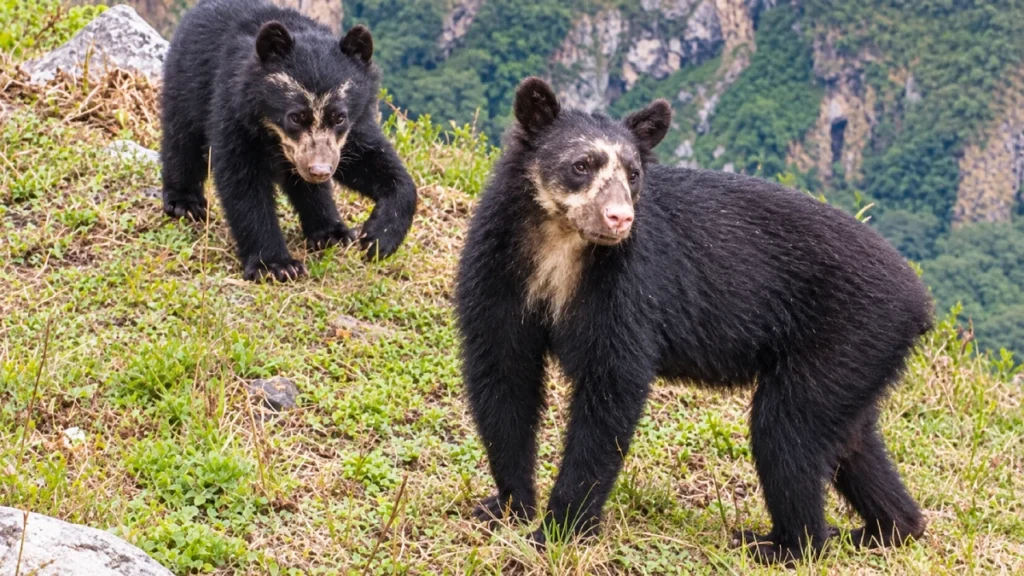
The spectacled bear is a shy animal that avoids conflict with human beings. Generally, if it detects your presence, it will simply move away towards the cloud forest to seek refuge. You should always maintain a prudent distance and never attempt to feed it or call it to come closer to you.
Which is the best month of the year to see them?
The transition months, such as April or November, are usually ideal due to the beginning or end of the rains. In these times, forage is abundant and animals move closer to tourist areas. However, the spectacled bear sighting in Machu Picchu occurs randomly throughout the calendar year.
In which circuit of Machu Picchu are there more chances of seeing the bear?
The circuits that cover the high areas, such as the upper platforms and the quarry sector, are the best. These points offer a panoramic view of the forested slopes where bears usually feed on bromeliads. We recommend consulting with us to choose the circuit that best fits this objective.
Organize your expedition with us
Now that you know the key schedules and behaviors, you are closer to experiencing this natural encounter. Remember that nature does not follow fixed rules, but being in the right place at the right time increases your options. We at Trails to Machu Picchu accompany you so that your visit is respectful and very complete.
From Trails to Machu Picchu we usually suggest that you take the necessary time to observe the details of the landscape. The spectacled bear sighting in Machu Picchu is a reward for the most attentive and calm travelers. If you are ready to plan your trip to Cusco, we are here to help you design the best itinerary, contact us.