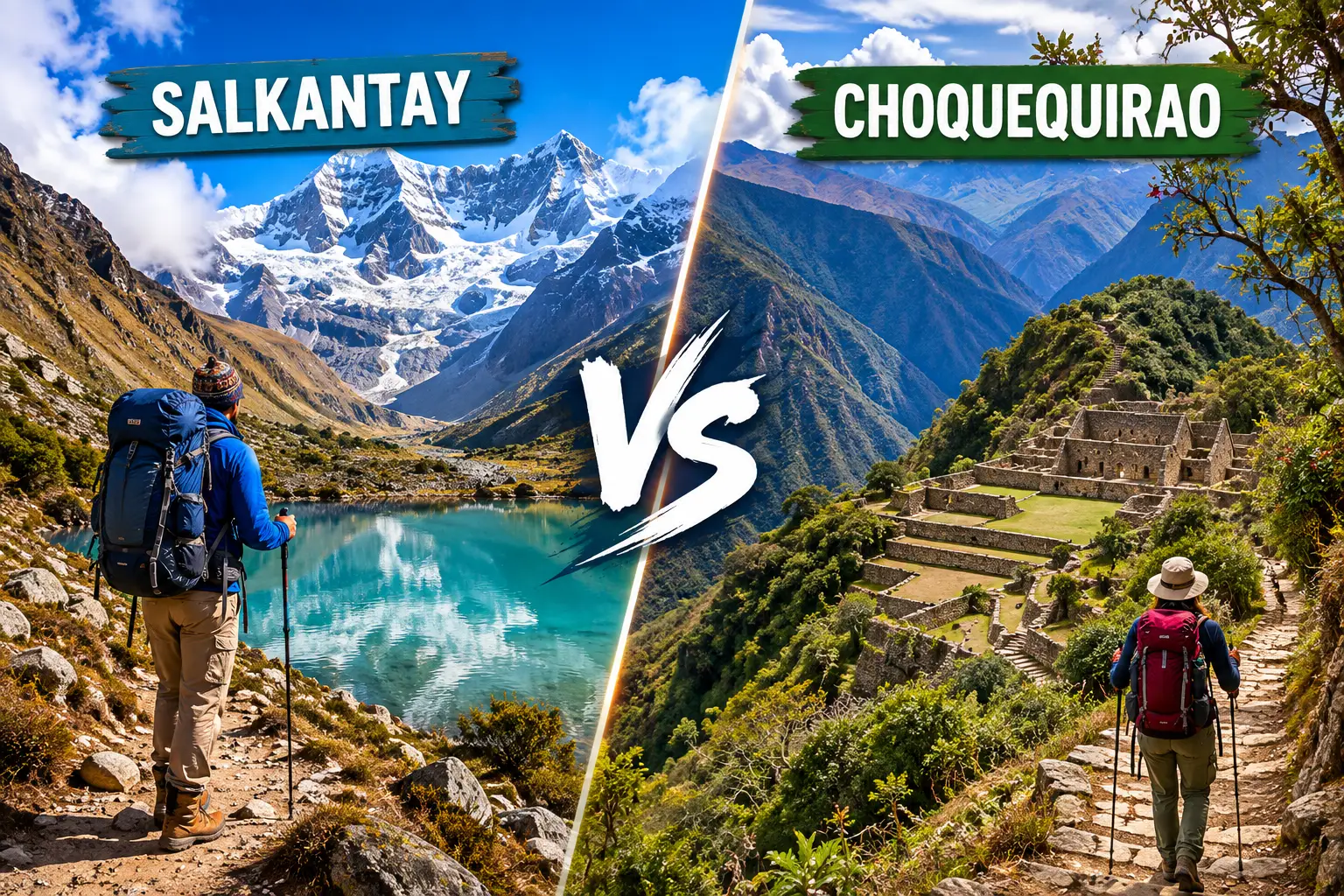
Choosing between Salkantay vs Choquequirao is a common decision when planning a trek in Cusco. Both options stand out among the best treks in Cusco. However, they offer very different experiences in terms of landscapes, physical demand, and visitor crowd numbers. For those looking for an alternative trek to Machu Picchu, these two trekking routes in Peru offer a memorable journey through the Andes range.
Trails to Machu Picchu offers trekking options to enjoy these routes with specialized assistance.

General Profile of Each Route
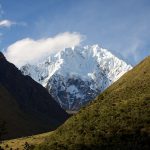
The Salkantay route loops around the imposing snow-capped peak of the same name in the Vilcabamba mountain range. This trek stands out for its diversity of landscapes. In a few days, you travel from high mountain passes to temperate cloud forest regions. The trek usually ends in Aguas Calientes, allowing direct entry to the sanctuary of Machu Picchu.
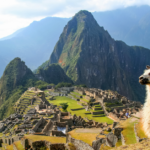
On the other hand, the trail to Choquequirao leads to an Inca archaeological complex located above the Apurímac River canyon. Unlike the Salkantay path, this route focuses on exploring a lesser-frequented ancient Inca citadel. Although there are extended itineraries connecting Choquequirao with Machu Picchu, the standard trek consists of a round trip to the ruins.
Physical Difficulty and Terrain: Differences Between Salkantay and Choquequirao
When comparing the differences between Salkantay and Choquequirao, the terrain’s difficulty is a key factor. Both itineraries require good physical fitness, but the type of effort varies considerably.
The highest altitude point on the Salkantay route is the Salkantay Pass, located at 4,630 meters above sea level. The main challenge lies in the altitude and cold mountain temperatures. Despite the elevation, much of the trail follows wide paths and gradual ascents.
In contrast, the trek to Choquequirao involves terrain with constant elevation changes. Hikers must descend steeply to the bottom of the Apurímac River canyon and then climb back up steep slopes. The heat in the lower canyon and the continuous muscle effort make this route technically more demanding.

Visitor Crowds and Route Services
The infrastructure and volume of travelers mark a clear contrast in this Cusco treks comparison.
The path to Salkantay features a well-established tourist infrastructure. Along the route, there are private campsites, mountain domes, and small local shops. This makes luggage organization easier and offers greater comfort at night. Due to its popularity, it is common to cross paths with various groups of hikers during the trek.
In contrast, Choquequirao maintains a remote and unspoiled environment. Services are simple and limited to basic campsites managed by local families. The number of daily visitors is low. This lower foot traffic allows you to enjoy peaceful landscapes and an experience of isolation in nature. You can also consult Trails to Machu Picchu to organize your next adventure.
Main Highlight and Final Destination
The final choice often depends on what each hiker is looking for on their trip.
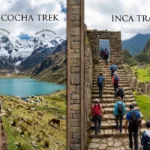
- Salkantay Route: Ideal for combining snow-capped mountains, glacial lakes like Humantay Lake, and cloud forests. Its main highlight is ending the trek by entering Machu Picchu.
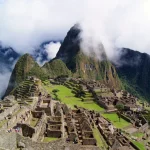
- Choquequirao Route: Ideal for archaeology enthusiasts and off-the-beaten-path routes. Its main highlight is exploring Choquequirao, a sprawling Inca citadel that still has sections partially covered by vegetation.

Salkantay or Choquequirao: Which is Better for Your Trip?
Determining which is better, Salkantay or Choquequirao, depends on each hiker’s profile. When analyzing traveler Choquequirao or Salkantay reviews, clear recommendations emerge for each option.
The Salkantay route is recommended if:
- You want to finish the route visiting the citadel of Machu Picchu.
- You prefer accommodations with a higher level of comfort.
- You are looking for a route with gradual ascents and well-marked trails.
- You enjoy a social environment with other hikers.
The Choquequirao route is recommended if:
- You prefer to avoid crowded trails.
- You are seeking a challenging physical test with steep elevation changes.
- You wish to explore a large archaeological site in a peaceful setting.
- You have prior experience in multi-day mountain trekking.

Tips to Prepare for Trekking in Cusco
To successfully complete either option between Salkantay vs Choquequirao, proper preparation is key.
First, set aside at least two full days to acclimatize in the city of Cusco or the Sacred Valley. Adapting to the altitude significantly reduces the risk of altitude sickness during the trek.
Second, pack suitable clothing for changing weather conditions. Temperatures drop considerably at night in high-altitude areas, while daytime hiking requires light clothing and sun protection. Using trekking poles is very helpful to protect joints on steep descents.
Third, consider booking the itinerary through an authorized agency like Trails to Machu Picchu. Having professional guides and operational support ensures safe equipment transport and accurate interpretation of the geographic and historical environment.
Both routes are rewarding alternatives for discovering the natural and cultural heritage of Peru. Assessing your physical fitness, available time, and personal preferences will help you choose the right trek for your trip.
Trails to Machu Picchu can help you arrange the necessary services for your trek, contact us.