The best vacation in Manu National Park combines nature, adventure, and connection with biodiversity. This destination is ideal for those who want to travel with friends to Manu National Park, enjoying unique experiences in one of the most fascinating places in the Peruvian Amazon. Its access from Cusco, its vast diversity of fauna and flora, and its ecotourism routes make it a preferred choice among travelers seeking real contact with the jungle.
Therefore, if you’re looking for a place to disconnect from urban noise and share memorable moments with your travel companions, Manu is a strategic choice. In addition to offering unforgettable adventures, this park is a world-renowned example of natural conservation.

- Location, Access, and Features of Manu National Park
- Trip Planning: Organize the Best Vacation in Manu National Park
- Recommended Activities to Enjoy with Friends
- Guided Tours and Organized Experiences
- Essential Tips for Visiting Manu National Park
- Why Manu National Park Is the Ideal Destination for Groups?
- Frequently Asked Questions
- Our Related Tours about Manu and wildlife
Location, Access, and Features of Manu National Park
Where is Manu National Park is one of the first questions that arise when planning the trip. The park is located in southeastern Peru, covering territories in the regions of Cusco and Madre de Dios. It spans over 1.7 million hectares and is one of the most important protected natural areas in the country.
Access from Cusco and Recommended Transportation
The trip to Manu National Park from Cusco generally begins by road. There are routes that cross the Andes before reaching the high and then the low jungle. The journey can take between 8 and 12 hours depending on the itinerary. Many agencies organize guided tours in Manu National Park with land and river transport, making it easier to access the areas open to visitors.
Climate, Best Season, and Regulations
The climate in Manu varies between the high and low jungle. Temperatures range from 10°C (50°F) in the Andean part to 35°C (95°F) in the tropical jungle. The dry season, from May to October, is ideal for taking excursions in Manu National Park. During this time, rainfall is scarce, and the trails are more passable.
Due to its status as a nature reserve, access to the park is regulated. Entry is only allowed in certain tourist areas and always with authorized guides. That’s why it’s advisable to book tours to Manu National Park that comply with official regulations.
Trip Planning: Organize the Best Vacation in Manu National Park
Organizing the best vacation in Manu National Park requires defining the type of experience you’re looking for. There are short and long tour options, ranging from three to seven days or more. Trip logistics should include transportation, lodging, guides, and meals.
Choosing the Duration and Type of Tour
The most popular options are tours of 4 to 7 days. These allow for a better understanding of the biodiversity in Manu National Park and engaging in activities without rushing. In groups of friends, this option is convenient because it allows a deeper immersion into the natural and cultural environment.
In addition, many agencies offer customized Manu National Park itineraries, tailored to the group’s interests. They can include hikes, birdwatching, river navigation, visits to clay licks, or animal observation zones.
Estimated Budget and What to Pack
The budget for a vacation in the Manu jungle can range between $300 and $1000 per person, depending on the duration, service quality, and type of accommodation. Due to the distance and conditions of the environment, this expense should be seen as an investment in a high-value natural experience.
Essential items include insect repellent, lightweight quick-dry clothing, headlamp, trekking boots, hat, sunscreen, and a waterproof backpack. It is also recommended to bring basic medication and a copy of personal documents.

Recommended Activities to Enjoy with Friends
Traveling with friends to Manu National Park allows for sharing unique activities. The park offers many ways to interact with nature, from trekking routes to observing animals in their habitat.
Featured Routes and Excursions
- Cloud Forest: Ideal for birdwatching and orchids.
- Cocha Salvador: A lake where giant river otters can be seen.
- Macaw Clay Lick: Morning gathering site for birds.
- Observation Tower: Perfect for seeing the jungle from above.
Taking part in adventures in Manu National Park like crossing hanging bridges, canoeing, or jungle camping makes the trip dynamic and fun. These experiences strengthen the bonds between friends and create lasting memories.
Fauna and Flora of Manu National Park
The fauna and flora of Manu National Park is among the richest on the planet. Over one thousand bird species, 200 mammals, 1300 butterfly species, and 15,000 types of plants have been recorded. It’s possible to see jaguars, tapirs, monkeys, snakes, birds like toucans and macaws, as well as giant trees like the kapok or shihuahuaco.
This direct contact with wildlife makes Manu a key spot for ecotourism in Manu National Park, promoting conservation and environmental education.
Guided Tours and Organized Experiences
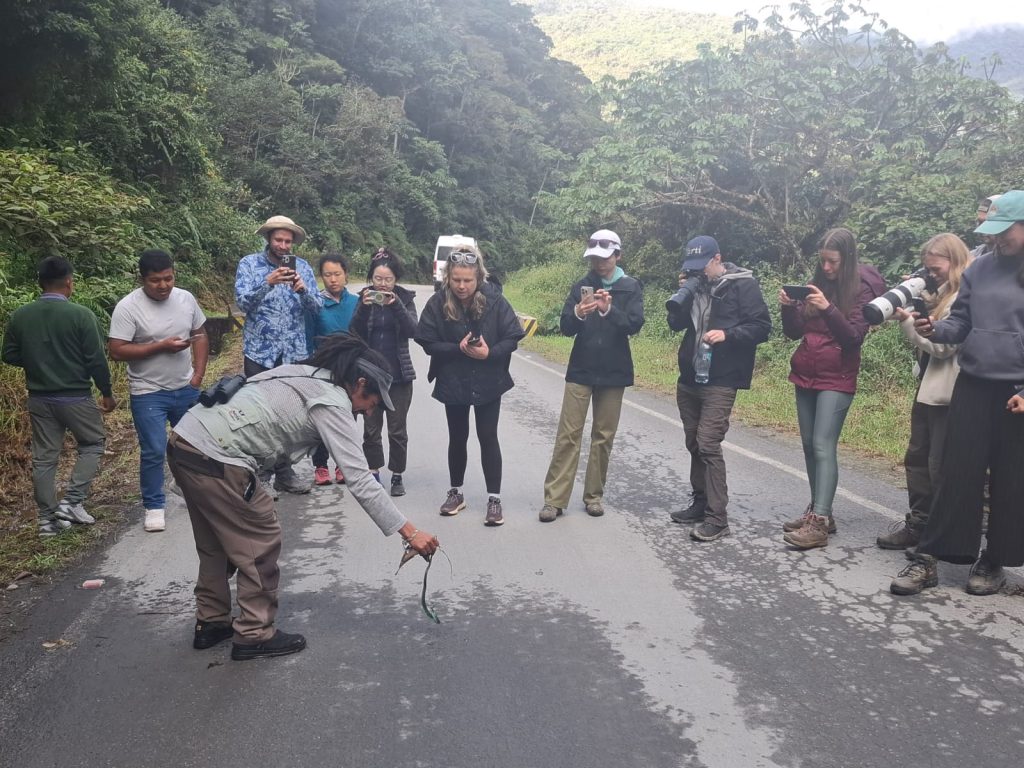
To ensure a complete experience, it is advisable to book guided tours in Manu National Park. These excursions guarantee safety, in-depth knowledge of the area, and access to key zones.
Reliable Agencies and Operators
Choosing a certified operator is key. Serious agencies work with trained local guides, follow environmental regulations, and provide appropriate equipment. This is essential since the Amazonian environment presents logistical and navigation challenges.
Some operators include visits to Indigenous communities, which adds a cultural dimension to tourism in Manu National Park. These interactions offer insight into how native peoples coexist with their environment without harming it.
Benefits of an Organized Tour
Besides comfort, well-planned tours to Manu National Park optimize time and maximize wildlife sightings. They also ensure that activities occur at appropriate times to avoid crowds or negative environmental impact.
Traveling in a group also allows for discounted rates. This makes it more accessible to organize the best vacation in Manu National Park with friends, sharing costs and fully enjoying each day.
Essential Tips for Visiting Manu National Park
Having reliable recommendations for visiting Manu National Park helps avoid setbacks and promotes respect for the environment.
Practical Advice for Responsible Tourists
- Follow signage: Some areas are restricted and should not be crossed.
- Leave no waste: Everything you bring in must be taken out.
- Avoid loud noises: Wildlife is easily disturbed.
- Always stay with your guide: Never separate from the group.
- Do not touch animals: Even if they seem harmless, they may be endangered.
These practices ensure a responsible and sustainable visit. They also help future travelers continue enjoying the area without causing harm.
Health, Safety, and Precautions
In the jungle, there are natural risks such as insect bites, falls, or waterborne infections. Therefore, it is important to be vaccinated (especially against yellow fever), wear proper clothing, and use insect protection. Bringing a small first-aid kit and following the guide’s instructions is essential for a safe visit.
Why Manu National Park Is the Ideal Destination for Groups?

The best vacation in Manu National Park is perfect for groups of friends because it offers variety, adventure, and learning. Each day brings different activities, changing landscapes, and opportunities for connection both with nature and among travelers.
Shared Experiences That Strengthen Bonds
Exploring the jungle, sharing a night under the stars, facing a hike together, or spotting a jaguar are moments that last. Traveling in a group allows for shared responsibilities, constant companionship, and enjoying diversity from multiple perspectives.
A Destination That Promotes Respect and Environmental Awareness
Beyond recreation, Manu teaches. It’s a place where one understands the balance between humans and the environment. Every visitor who respects the rules, learns, and spreads awareness of conservation becomes an ally of the planet.
Frequently Asked Questions
1. How many days are recommended for visiting Manu National Park?
Ideally, 4 to 7 days are recommended to explore the main areas without rushing. This duration allows travelers to experience different ecosystems, participate in multiple guided activities, and increase their chances of wildlife sightings in a safe and organized manner.
2. Is it mandatory to go with a guide to enter the park?
Yes, it is mandatory to enter with an authorized guide. The Peruvian government, through SERNANP, requires all visitors to participate in guided tours in Manu National Park to ensure safety, environmental education, and the protection of the ecosystem.
3. Is camping allowed inside the park?
Certain zones within Manu National Park allow supervised camping, but only in designated areas and as part of a registered tour. These zones have basic facilities and follow rules to minimize environmental impact, ensuring a safe and controlled camping experience.
4. What kind of food is included in the tours?
Most tours include full meals prepared with local and seasonal ingredients. Dishes are often light, nutritious, and suitable for the jungle environment. Agencies usually provide options that support energy during hikes and accommodate common dietary restrictions when requested in advance.
5. Is it possible to visit Manu all year round?
Yes, the park is open year-round, but the dry season from May to October offers the best conditions for outdoor activities. In the rainy season (November to April), access can be more difficult due to rising rivers and muddy trails, which may affect some itineraries.
For more information, please contact us.
Our Related Tours about Manu and wildlife
- Machu Picchu Inca Trail Tours – 4 Day Inca Trail
- Manu National Park 2 Days Tour – Discover the Heart of the Peruvian Amazon
- Manu National Park 3 Days Tour – Discover the Heart of the Peruvian Amazon