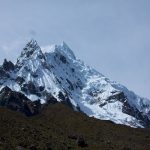
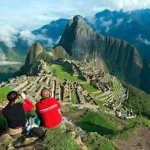
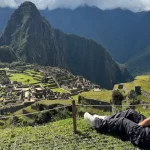
The Andean legends about Salkantay reveal that the snow-capped peaks are living ancestors with great power. You will notice that this summit is not just a block of granite and ice. To the local inhabitants, it represents a deity that protects your path to Machu Picchu. We at Trails to Machu Picchu organize this tour so that you understand this spiritual legacy while you walk.
The sacred meaning of Salkantay in the Andes
You will learn that the name of this summit describes a nature that does not accept human ties. That is why understanding what Salkantay means will allow you to respect the sudden changes in weather at high altitudes.
The wild mountain in Quechua
You will notice that the term comes from words that highlight the independence and indomitable character of the snow-capped mountain. This wild mountain in Quechua evokes a warrior that remains pure in the face of civilization.
To understand its identity, we suggest you review these traditional concepts:
- It represents that which cannot be controlled by the hand of man.
- It indicates a natural force that demands respect and constant offerings.
- It suggests a direct connection to the primordial forces of the earth.

Hierarchy of the Andean gods
Within the Incan pantheon, not all peaks possess the same rank or spiritual influence. However, this mountain occupies a privileged place in the hierarchy of the Andean gods due to its altitude.
This position is defined by the following cultural factors:
- First, its capacity to visually dominate the nearby valleys is considered.
- Then, its role as the primary provider of water for irrigation is evaluated.
- Finally, its link to the centers of power in Cusco is analyzed.
Ancient tales and the brotherhood of the peaks
Stories passed down through generations explain why certain snow-capped mountains seem to collaborate with each other to sustain life. These Andean legends about Salkantay narrate conflicts and alliances between the forces of nature.
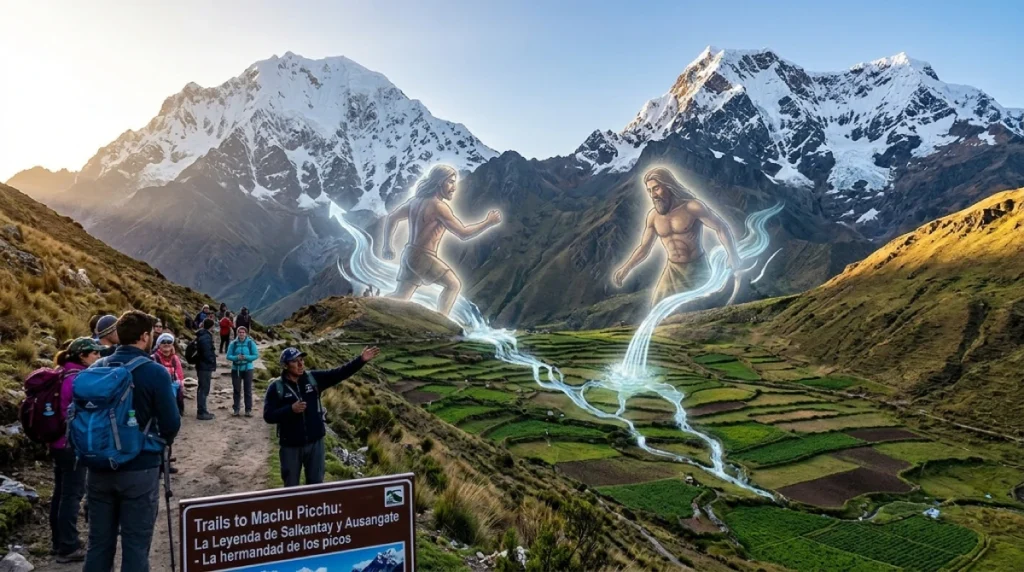
Legend of Salkantay and Ausangate
The elders say that these two peaks were brothers who decided to save the people from a great drought. The legend of Salkantay and Ausangate describes how one traveled south and the other north.
Thanks to their sacrifice, water flowed again through the region’s cultivated fields. At Trails to Machu Picchu, we often tell this story while we gaze at both peaks from the highest areas.
Myths about the Andean climate
Local residents believe that the mood of the snow-capped peaks defines the rains and frosts. Therefore, myths about the Andean climate warn against disturbing the silence of the heights.
If the mountain gets angry, it can send storms to hide the path from careless travelers. Likewise, it is said that the clouds are the breath of the spirit that watches over the slopes.
The role of the Apu in the balance of the cosmos
You will understand that every important mountain houses a protective spirit that regulates harmony between worlds. These beings act as mediators between human beings and the higher forces of the universe.
Role of the protective Apu
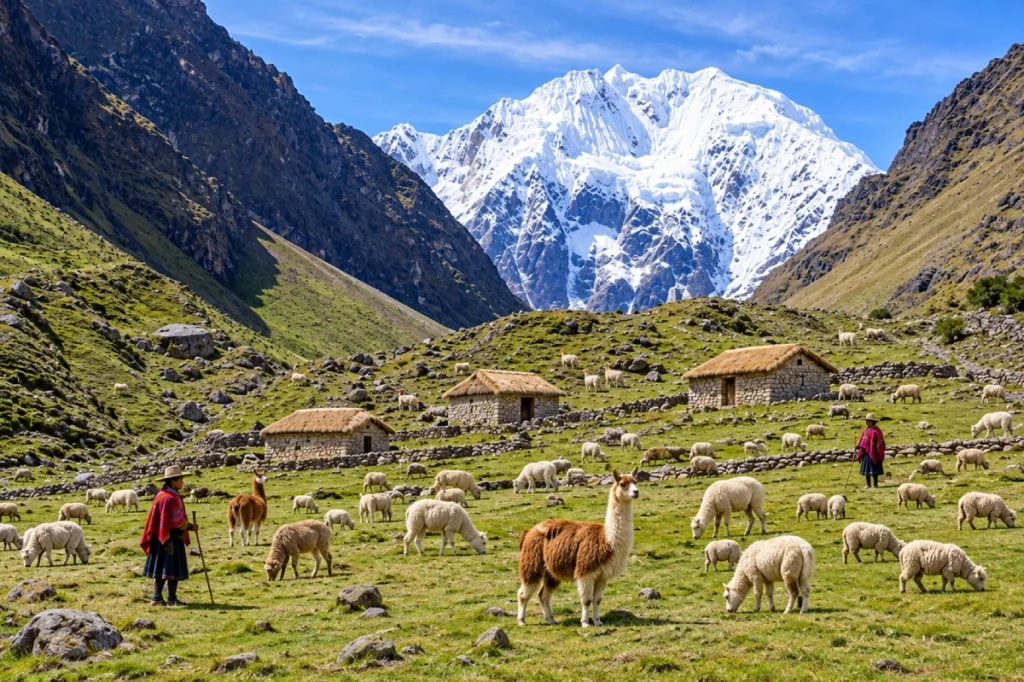
The figure of the mountain acts as a father who watches over the health of animals and people. This role of the protective Apu is essential for you to feel safe during your trek through the mountain range.
For herders, the functions of the mountain spirit include these benefits:
- It watches that the alpaca herds do not get lost in the thick fog.
- It guarantees that the water springs do not dry up during the winter.
- It protects travelers who show respect when crossing high passes.
Duality in the Incan worldview
You will notice that sacred mountains are often presented in pairs to represent the balance between the masculine and the feminine. Duality in the Incan worldview explains that nothing in the Andean world exists in isolation.
In this system, the snow-capped mountain represents the masculine force that fertilizes the earth with its waters. Conversely, deep valleys act as the receiving space where life flourishes with abundance.
Water and fertility at the foot of the snow-capped mountain
You will learn that the survival of the high-Andean peoples depends entirely on the snow that crowns the peaks. For this reason, there is a religious importance of the snow-capped mountain that transcends mere observation of the landscape.
Link between Apus and water
The ancient Peruvians understood that mountains were the true owners of water resources. This link between Apus and water made the summits the most important centers of worship.
You will notice this relationship in the following elements of your trip:
- The stone channels that run from the glaciers down to the terraces.
- The small turquoise lagoons that form at the foot of the eternal ice.
- The constant flow of the Urubamba river that surrounds the mountain massif.
Salkantay and agrarian fertility
Local communities still perform ceremonies to ensure that potato and corn harvests are successful. The relationship between Salkantay and agrarian fertility is evident during planting and harvest seasons.
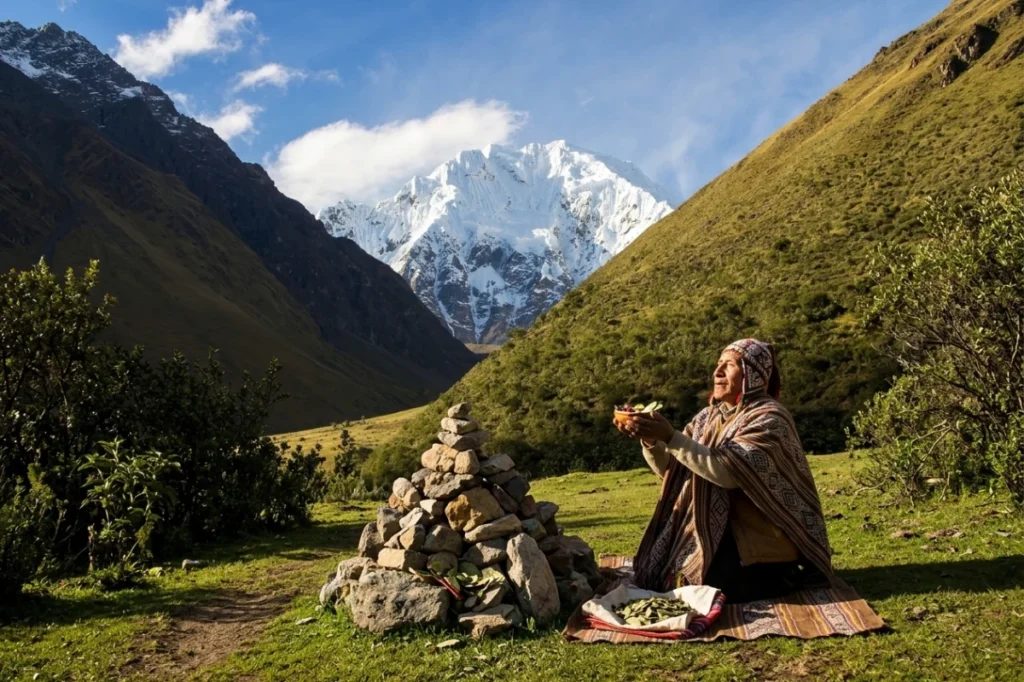
At Trails to Machu Picchu, we recommend you observe the small apachetas (cairns) that farmers build on their plots. Each stone placed there is an act of gratitude for the moisture the mountain sends from its summits.

Cultural heritage in local communities
Millennial traditions have not disappeared but have adapted to modern life in the Andes. You will notice that the Andean legends about Salkantay continue to guide the decisions of current residents.
How local mythology influences
Ancestral beliefs determine the way muleteers and guides interact with the natural environment. Understanding how local mythology influences will allow you to connect better with the people you will meet on the route.
These are some ways in which tradition manifests today:
- First, permission is asked of the divinities of the Vilcabamba mountain range before starting the ascent.
- Then, unnecessary shouting is avoided in high areas so as not to disturb the spirit.
- Finally, coca leaves are shared as a symbol of respect and spiritual communication.
Tales from high-Andean communities
If you talk to the inhabitants of Soraypampa, you will hear unique versions about the origin of the world. These tales from high-Andean communities enrich your experience beyond the physical activity of walking.
They often mention that offerings to the mountains are necessary to maintain the balance of nature. Without this symbolic exchange, the earth would lose its strength and the sun would cease to shine with intensity.
Cultural preparations for your trip
Now that you know the spiritual background of the trail, you can enjoy your trek with a deeper perspective. Remember that every step you take brings you closer to a history that has survived for more than five centuries.
We at Trails to Machu Picchu accompany you so that this connection with the Andean culture is authentic. We suggest you follow these tips to respect the sacred environment:
- Show respect for the apachetas or stone cairns you find.
- Avoid leaving waste that could contaminate the sacred waters of the snow-capped mountain.
- Listen carefully to the stories your guides will share about the ancestors.
With this knowledge, your arrival at the sanctuary of Machu Picchu will have a much more special and complete meaning. If you have any questions about how to prepare, at Trails to Machu Picchu we are ready to help you plan your journey, contact us.