The Snow-capped mountain Ausangate Cusco rises as one of the most imposing destinations in the Peruvian Andean region, attracting tourists, mountaineers and travelers in search of nature and spirituality. From its precise location to the tips for reaching its trails, this text brings together all the updated information for those planning to visit the Snow-capped mountain Ausangate Cusco, integrating geographical detail, trekking routes, logistics and key recommendations for a safe and memorable experience.
- Geographical location of Snow-capped mountain Ausangate Cusco
- Altitude of Nevado Ausangate and its significance
- Landscapes, lagoons and natural features around Ausangate
- Main routes and tours to Ausangate from Cusco
- Logistics to reach Ausangate: transport and planning
- Weather conditions and best months to visit Ausangate
- Safety and health considerations for the trip
- Contact with communities around Ausangate and local culture
- Comparison with other local attractions and combined routes
- Suggested itinerary overview and duration
- Final recommendations to make the most of the experience
- Frequently asked questions About Snow-capped mountain Ausangate
- Our tours related to Ausangate and others
Geographical location of Snow-capped mountain Ausangate Cusco
The Snow-capped mountain Ausangate Cusco is located within the Vilcanota mountain range, in the southern region of Peru. It belongs to the department of Cusco, specifically between the provinces of Quispicanchi (Ocongate district) and Canchis (areas of Pitumarca and Checacupe). According to official sources, the snow-capped mountain is located approximately 100 to 120 kilometers southeast of the city of Cusco.
Within this mountainous environment, Ausangate is part of the Ausangate Regional Conservation Area, a protected area created in 2019 that includes the districts of Ocongate, Marcapata, Pitumarca and Checacupe, with more than 66,000 hectares destined to preserve its slopes, glaciers and high-altitude ecosystems.
This strategic location allows the Snow-capped mountain Ausangate Cusco to visually dominate multiple glacial valleys, meltwater rivers and high lakes, offering a perfect setting for adventure routes and for exploring little-intervened Andean landscapes.
Altitude of Nevado Ausangate and its significance
The Nevado Ausangate Cusco rises to an official altitude of 6,384 meters above sea level, although some official sources state 6,385 meters depending on local cartographic data.
With this height, Ausangate is considered the highest snow-capped peak in Cusco, and ranks as the fifth highest mountain in Peru, surpassed by peaks such as Huascarán, Yerupajá, Coropuna and others.
This altitude also makes it a clear challenge for those planning to do Nevado Ausangate trekking or technical climbing attempts. Therefore, visitors must be prepared for the effects of altitude, intense cold and changing weather conditions in the high areas.
Landscapes, lagoons and natural features around Ausangate
One of the main reasons why the Snow-capped mountain Ausangate Cusco is so attractive to tourists is the landscape diversity that surrounds it. While walking the route to Ausangate Cusco or during a hike to Ausangate Peru, travelers encounter:
- Numerous Ausangate lagoons with turquoise waters and glacial reflections, such as Sibinacocha lagoon, one of the largest high-altitude lakes in the region.
- High mountain fields, grasslands, smaller glaciers, snowmelt streams and rocky plateaus that create striking panoramas.
- The presence of typical Andean fauna: llamas, alpacas, viscachas and occasionally condors, especially at higher sections.
- Ecosystems that allow observing how water, snow and life interact at high altitude, reinforcing Ausangate’s symbolic role as a sacred mountain.
For these reasons, the adventure in Ausangate is not limited to the trail itself, but involves direct contact with natural elements that few destinations allow.
Main routes and tours to Ausangate from Cusco
To access the snow-capped mountain Ausangate Cusco, there are various options for tours to Ausangate from Cusco and trekking routes with different levels of demand. Below are the most used:
Classic 5-day circular trekking route
This is the best-known itinerary for a complete Nevado Ausangate trekking experience. It starts from the hamlet of Tinki and passes through communities such as Upis, covering about 70 kilometers approximately in its circular route. Over these days, hikers cross high passes (some above 5,200 meters), glacial areas and enjoy continuous views of the snow-capped peak.
4-day variant or combined route with Vinicunca
A more compact version reduces the journey and returns including a visit to Vinicunca (Rainbow Mountain). This route adapts to those with less time but who still want to experience much of the route to Ausangate Cusco.
One-day tour: 7 lagoons + Ausangate
For those seeking to experience part of the environment without doing the full circuit, there is a 1-day tour that visits the 7 Ausangate lagoons, starting early from Cusco, passing through Pacchanta and returning at the end of the day. This option allows viewing the Ausangate lagoons without assuming the demands of prolonged trekking.
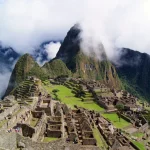
Ausangate to Machu Picchu combined trekking
Some excursions integrate the Ausangate area with routes leading to Machu Picchu, mixing high mountain hiking with intermediate valley paths. In these cases, the tour to Ausangate from Cusco is part of a longer journey lasting several days.
Each path has its level of difficulty, different landscapes and unique points of interest, but all allow tourists to contemplate the snow-capped mountain Ausangate from different perspectives.
Logistics to reach Ausangate: transport and planning
To undertake the experience towards the snow-capped mountain Ausangate Cusco, it is essential to plan transportation and logistics beforehand.
Transport from Cusco and starting point
Most tour operators offer private transportation from Cusco city to Tinki or Pacchanta, as starting points for trekking. The route combines paved road and dirt tracks. The trip takes several hours, depending on the tour’s starting point and road conditions.
There is also the option of public transportation or shared vehicles to Ocongate and then a local connection to the base communities for trekking. However, many prefer organized tourist transport for convenience and to avoid logistical complications.
Acclimatization and prior days
Before starting the route to the snow-capped mountain Ausangate Cusco, it is advisable to spend 2 or 3 days in Cusco to acclimatize to the altitude. Those coming from lower areas should ascend gradually and take light walks beforehand. Acclimatization helps reduce the risk of altitude sickness.
Essential gear and camping equipment
When planning the hike to snow-capped mountain Ausangate, proper gear is essential:
- Waterproof, comfortable trekking boots
- Thermal clothing, windproof outer layer, gloves and hat
- Sleeping bag suitable for sub-zero temperatures
- Trekking poles, sunglasses and sunscreen
- Drinking water system (tablets, filter or purifier)
- Backpack with enough capacity for several days
- Headlamp, first aid kit and basic camping equipment
Additionally, if the tour involves areas over 5,000 meters, some operators carry oxygen tanks or emergency kits, since atmospheric pressure is very low.
Permits, guides and regulations of the protected area
As it is within the Ausangate Regional Conservation Area, it is necessary to respect environmental regulations. Many tours already include entry permits, specialized local guides and basic insurance. It is essential to request these services to ensure the route is legal, safe and sustainable.
Experienced operators also coordinate with local communities, since several sections of the trek cross communal territories and protected areas.
Weather conditions and best months to visit Ausangate
The climate in Ausangate Cusco is typically cold and dry, with strong variations between day and night. In the high areas, it can drop to –10 °C at night. During the day, in intermediate zones, temperatures can range between 0 °C and 10 °C, although under the sun in certain sections the heat may feel moderate.
There are two well-defined seasons:
- Dry season (May to October): this is the recommended period to visit. During these months, rainfall is scarce and the sky is usually clear, favoring trekking conditions.
- Rainy season (November to April): frequent rains, possible snowfall at high altitude and slippery trails make some routes dangerous or inaccessible.
Therefore, the best months to visit Ausangate are between June and September, when the weather is more stable and visibility and route conditions are optimal.
Safety and health considerations for the trip
Doing the Nevado Ausangate trekking involves exposure to demanding conditions. To reduce risks and enjoy the journey, it is vital to keep in mind:
- Proper acclimatization: ascend gradually, rest in Cusco beforehand and consider light days at the start.
- Hydration and energetic food: consume plenty of water and carbohydrate-rich food during the trek.
- Monitoring altitude sickness symptoms: dizziness, nausea, excessive fatigue may indicate the need to stop or descend.
- Avoid overexertion in the first days: do not rush the pace; high-altitude terrain requires steady, constant walking.
- Terrain conditions: in high passes there may be snow or ice; use poles and be careful in slippery areas.
- Unpredictable weather: bring gear for storms, rain and strong winds.
- Guides and communication: always go with experienced local guides and communication devices (radio, satellite phone).
- Respect for communities: move respectfully through local cultural practices and the natural environment.
These recommendations help ensure that the experience with the Nevado Ausangate Cusco is safe and rewarding.
Contact with communities around Ausangate and local culture
During the tour to Ausangate from Cusco, several Quechua communities living on the slopes of the snow-capped mountain are visited. Some offer community lodging, logistical support and maintain living traditions related to the sacred mountain Ausangate.
An example is the community of Upis, located at about 4,300 meters altitude, which serves as a base point for trekking. There, traditional accommodation, cultural experiences and contact with local producers are available. In these communities, rituals of offerings to Pachamama and Apu Ausangate are also performed, highlighting the spiritual nature of the landscape.
The relationship between the Nevado Ausangate Cusco and its communities has been symbiotic for centuries. For the inhabitants, Ausangate is a protective Apu, source of water and fertility. Therefore, responsible tourism must integrate respectfully, contributing to the local economy without interfering with traditional practices.
Comparison with other local attractions and combined routes
The snow-capped mountain Ausangate does not compete with Machu Picchu or the Inca Trail, but offers a high mountain alternative with a different natural setting. Unlike traditional archaeological routes, the route to Ausangate Cusco requires more physical preparation but allows exploring remote and less-traveled areas.
Additionally, some routes combine trekking in Ausangate with a visit to the Rainbow Mountain (Vinicunca). In these versions, reddish and multicolored landscapes are integrated into the route, enriching the journey. Some itineraries also combine segments toward Machu Picchu, linking high mountain trails with intermediate paths leading to historical sites.
For tourists who prefer adventures off mass routes, the hike to Ausangate Peru represents a differentiated and authentic option, capable of offering cultural depth, extreme landscapes and an intimate experience with Andean nature.
Suggested itinerary overview and duration
A typical itinerary for the 5-day route to the snow-capped mountain Ausangate Cusco could be structured as follows:
- Day 1: transfer from Cusco to Tinki, then hike to the community of Upis.
- Day 2: gradual ascent through Andean valleys and approach to high-altitude lagoons.
- Day 3: pass by glaciers, access to Ausangate’s main corridor, panoramic views of the peak.
- Day 4: progressive descent toward the exit point, crossing local communities.
- Day 5: return by transport to the city of Cusco.
Some 4-day or combined variants reduce mileage but keep high and spectacular sections. The one-day tours, focused on the Ausangate lagoons, allow a quick but intense look at the surroundings of the snow-capped peak.
The ideal duration depends on the traveler’s physical condition, the group’s pace and prior acclimatization, but 4 to 5 days is the recommended standard to fully experience snow-capped mountain Ausangate trekking.
Final recommendations to make the most of the experience
- Book the tour in advance, especially for dry season.
- Check that the operator includes certified guides, permits, transport and camping gear.
- Plan extra days in Cusco to adapt to altitude.
- Bring travel insurance that covers high mountain activities.
- Avoid fast ascents without acclimatization.
- Travel with a light backpack, carrying only essentials.
- Respect communities and nature; leave no waste.
- Be mentally prepared for physical and weather challenges, maintaining a respectful and conscious attitude toward the environment.
With these measures and good planning, tourists will have the opportunity to closely contemplate the Nevado Ausangate Cusco, immerse themselves in less-explored routes, learn about Andean spirituality and live a unique mountain adventure.
Frequently asked questions About Snow-capped mountain Ausangate
1. Is it possible to climb to the summit of Ausangate without mountaineering experience?
It is not recommended to attempt reaching the summit without technical mountaineering experience. The ascent requires the use of ropes, crampons, ice axes and glacier navigation skills. For most visitors, the safest option is to enjoy the trekking circuits around the Nevado Ausangate Cusco, which do not require advanced climbing knowledge.
2. How many meters of altitude gain are covered approximately on the full route?
On the classic 5-day trekking circuit, hikers cover an approximate altitude gain of 2,500 to 3,000 meters in total. Daily stages often include passes above 5,000 meters, which requires good physical preparation and proper acclimatization to avoid altitude-related issues.
3. How difficult is the section that exceeds 5,000 meters during the trek?
The stretches that exceed 5,000 meters are considered challenging due to the thin air, steep ascents and cold conditions. The difficulty level is moderate to high, depending on the traveler’s acclimatization. With gradual pacing and the support of local guides, most hikers with prior trekking experience can complete these sections safely.
4. Can the route be done with children or teenagers?
The full circuit of the Nevado Ausangate Cusco is not recommended for young children, as the altitude and long walking days can be physically demanding. However, teenagers with good physical condition and prior high-altitude experience may be able to complete shorter versions or day tours to the Ausangate lagoons, always accompanied by experienced guides and proper acclimatization.
5. What type of insurance is recommended for trekking Ausangate?
It is advisable to have travel insurance that specifically covers high-altitude trekking and medical evacuation. Standard travel insurance often does not include activities above 4,000 meters, so choosing a policy that covers mountain activities, altitude sickness treatment and emergency transport is strongly recommended.
For more information, please contact us.
Our tours related to Ausangate and others
- Machu Picchu Day Trip from Cusco: Explore the Ancient Wonder
- Machu Picchu Inca Trail Tours – 4 Day Inca Trail
- 5 Day Salkantay Trek to Machu Picchu – Salkantay Trek Peru
- Lares Trek to Machu Picchu – Lares Peru