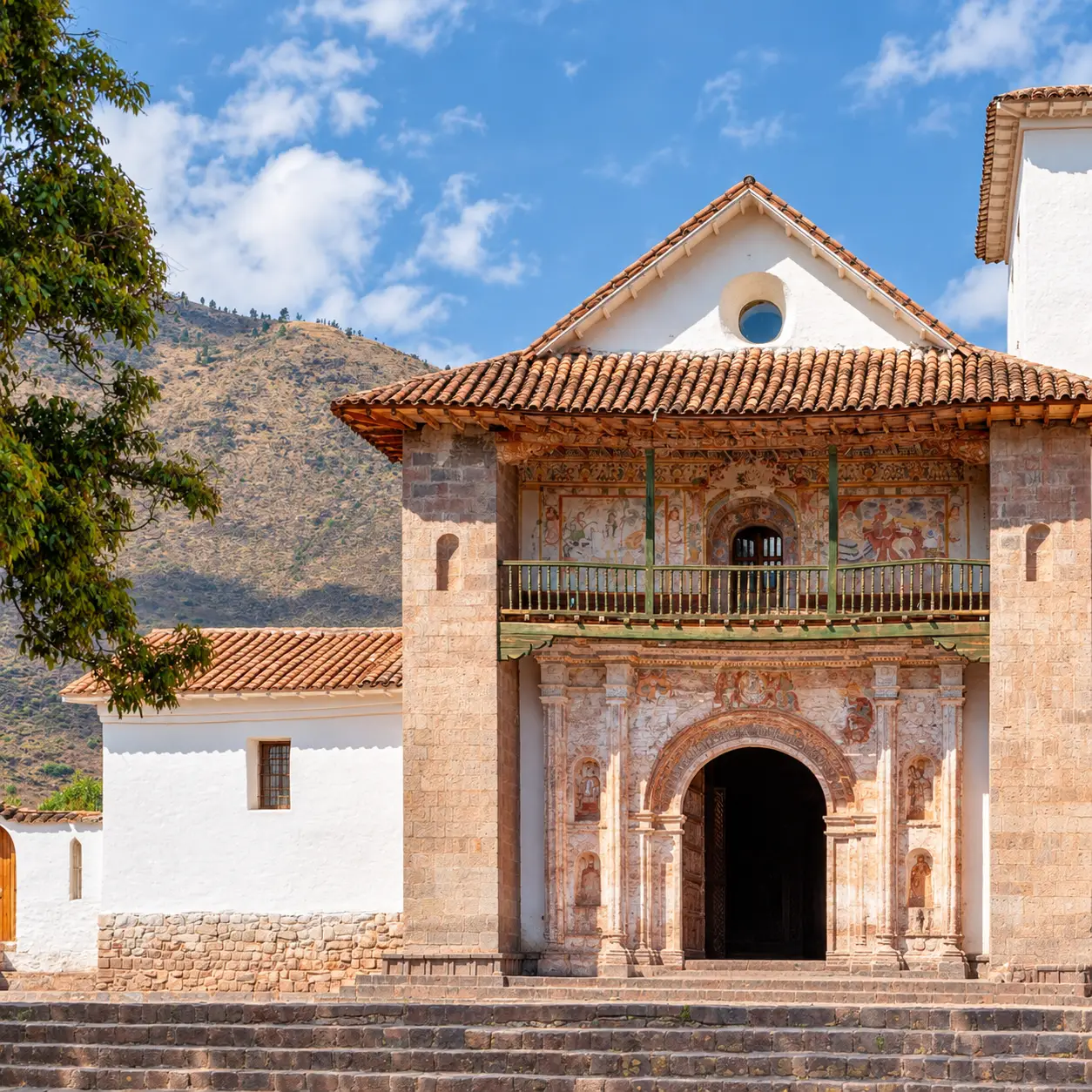
The construction of the Andahuaylillas chapel represents one of the greatest artistic and technical feats of the Peruvian colonial period. You will notice that the San Pedro Apóstol temple stands out due to the direct participation of local artists. We at Trails to Machu Picchu usually recommend this destination to understand the true Andean identity. For this reason, we explain how the talent of the native masters defined this monument.
- The social context of the construction of the Andahuaylillas chapel
- Techniques and materials of the construction of the Andahuaylillas chapel
- Decorative art in the construction of the Andahuaylillas chapel
- Artisans and specialists at the San Pedro Apóstol temple
- The temple building process and its structure
- Frequently asked questions about the construction of the Andahuaylillas chapel
- The legacy of the construction of the Andahuaylillas chapel
The social context of the construction of the Andahuaylillas chapel
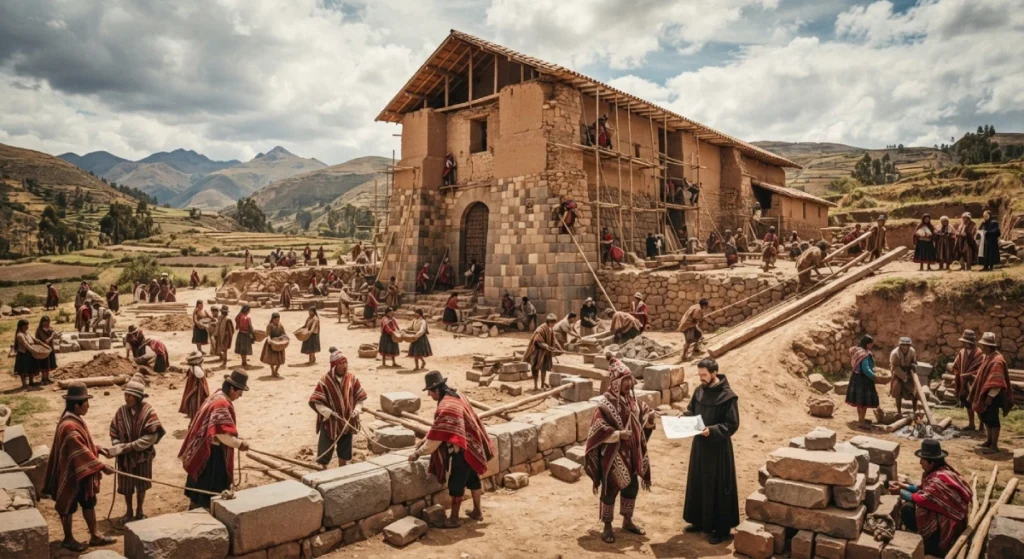
During the 16th century, the social organization system was key to erecting large religious structures. During this period, indigenous labor was the main engine of architectural works in Cusco. Spanish architects brought European plans, but the knowledge of the terrain was entirely Andean.
Communal work organization in the construction of the Andahuaylillas chapel
The mita or mandatory labor system allowed for the mobilization of large groups of people for the work. However, in the case of Andahuaylillas, the organization of communal work allowed for an exceptional level of detail. Local families not only contributed physical effort but also ancestral soil management techniques. Thanks to this system, the temple was raised with a solidity that has withstood centuries of earthquakes.
Furthermore, this form of collaboration allowed knowledge to be passed down between generations of builders. You will notice that the structure is not a simple copy of Western models. Instead, it reflects a social agreement between religious authorities and the leaders of neighboring communities. That is why the building is a symbol of the collective strength of the Quispicanchi province.
The role of Andean master builders in the construction of the Andahuaylillas chapel
The site managers were not always European, as highly skilled local experts soon emerged. The Andean master builders (alarifes) mastered both structural design and the management of heavy materials. They adapted the proportions of the naves so that the building would be more stable on seismic terrain. If you observe the base of the walls, you will understand the intelligence with which they planned every support.
We at Trails to Machu Picchu value the history of these specialists, who rarely signed their works, very much. Even so, their style is recognizable in the harmony of the volumes and the inclination of the walls. These professionals knew how to integrate stone with other more flexible materials to prevent cracks. Without their technical intervention, the temple would hardly have survived the major historical earthquakes.
Techniques and materials of the construction of the Andahuaylillas chapel
The use of nearby resources was an intelligent strategy to reduce transport times and costs. First, the builders identified the best clay-rich soil deposits in the surroundings of the town. Then, they processed these materials following recipes that combined vegetable fibers with dense mud. This mixture ensured that the walls had superior thermal and structural resistance.
Innovations in adobe construction techniques
The blocks used in the upper walls are perfect examples of the engineering of the time. These adobe construction techniques allowed for raising high walls without compromising the safety of the faithful. The masters added straw and horsehair to prevent the mud from cracking as it dried. You will notice this detail if you look closely at the areas that have been exposed for restoration purposes.
Likewise, the walls have a considerable thickness that helps maintain a stable temperature inside. This technique was fundamental for preserving the delicate mural paintings that cover almost the entire surface. In practice, the adobe functioned as a natural insulator against the changing climate of the highlands. Thanks to this technical decision, the original colors have remained vivid for more than four hundred years.
The use of local stone quarries
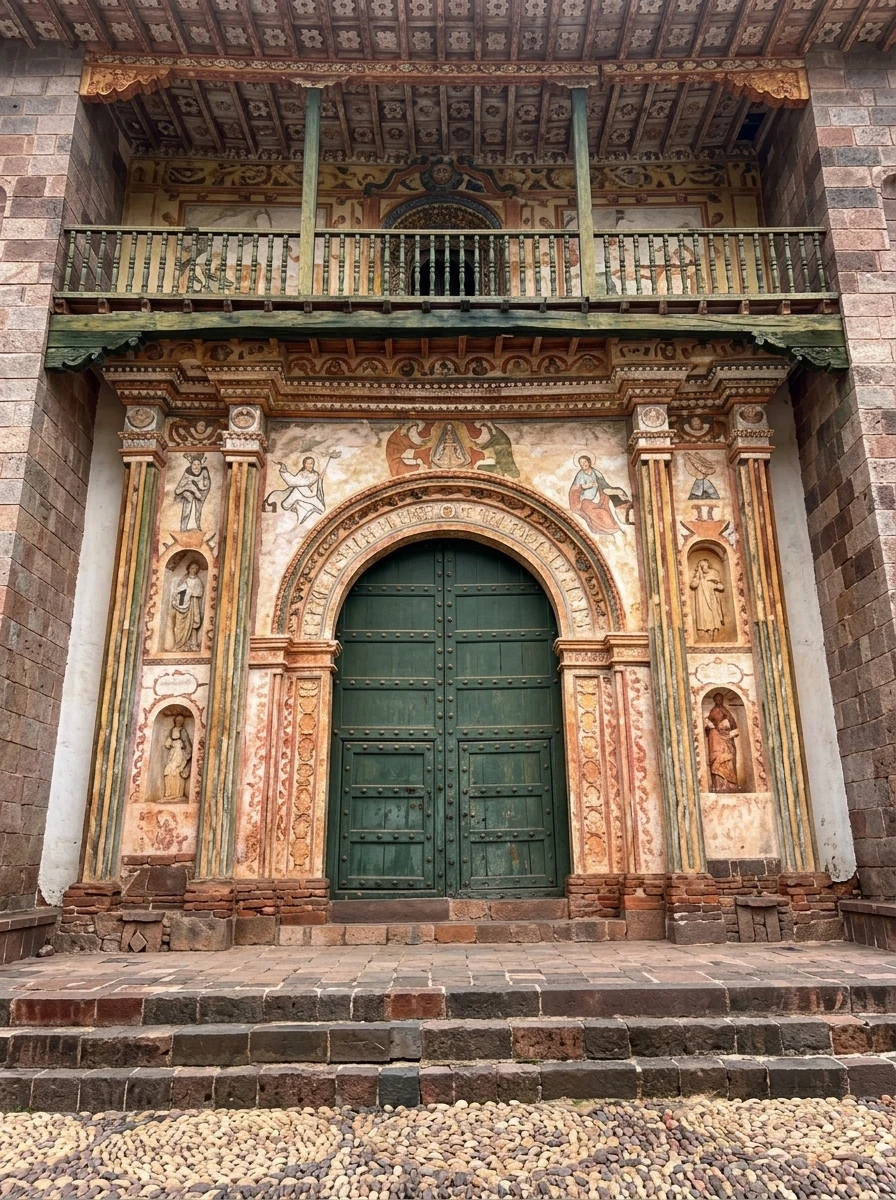
For the facade and the main foundations, the builders preferred materials more durable than mud. Local stone quarries supplied the andesite and limestone blocks necessary for the portico. The artisans carved these pieces with such precision that the joints are barely visible to the naked eye. For this reason, the entrance to the temple has such an imposing and solemn appearance.
To make good use of these resources, follow these observations during your visit:
- Observe the base of the bell tower, where the stone supports the entire weight of the structure.
- Look at the lintel of the main door, carved by expert stonemason hands.
- Look for tool marks on blocks that were not fully polished.
- Note how the color of the stone changes according to the sunlight during the afternoon.
Decorative art in the construction of the Andahuaylillas chapel
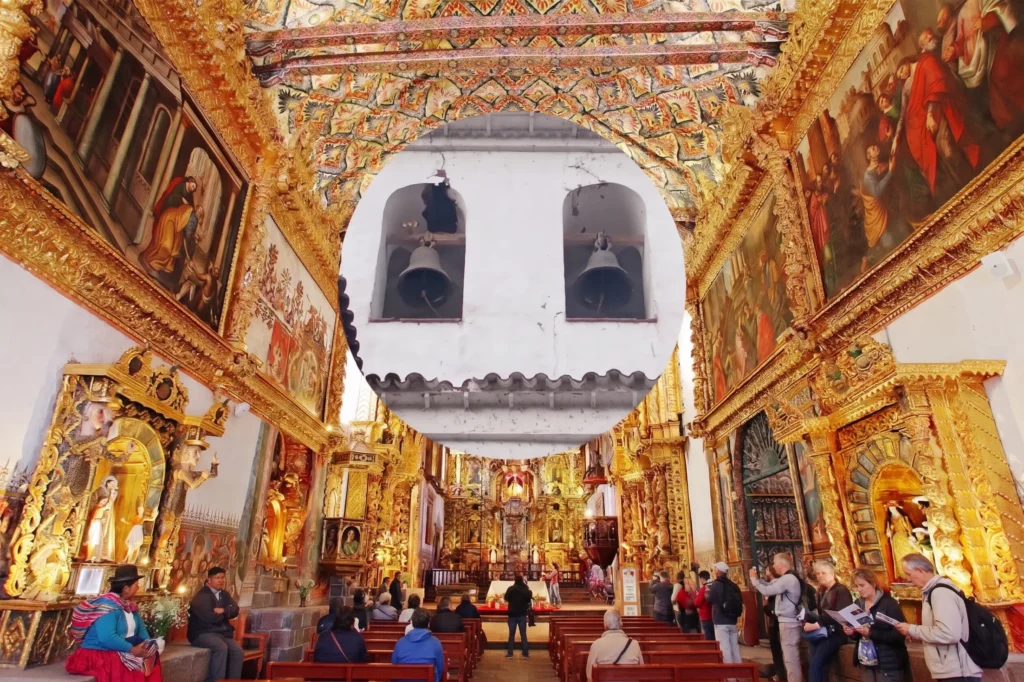
The visual richness of the interior is the result of meticulous work carried out by finishing specialists. Once the basic structure was finished, the more complex stage of ornamentation began. Here, the talent of native artists shone with its own light through paintings and reliefs. We at Trails to Machu Picchu suggest that you dedicate at least one hour just to see the ceilings.
The influence of the Cusco School on the murals
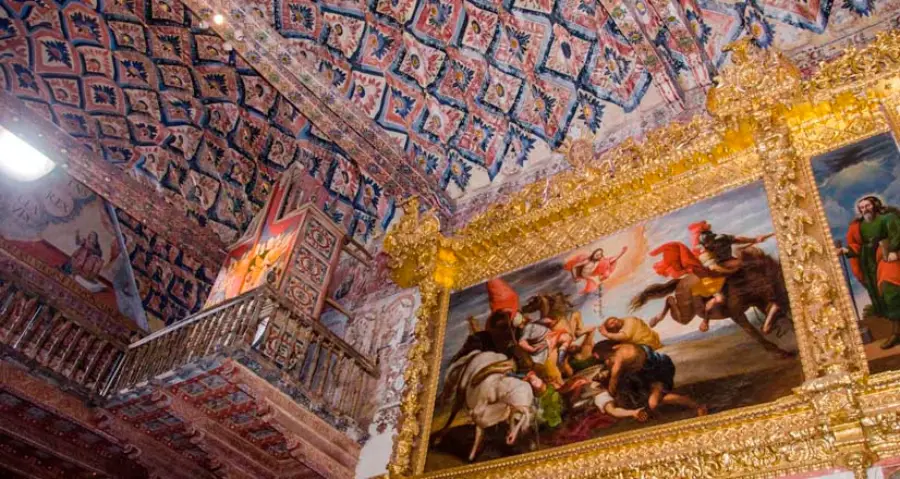
The temple’s pictorial style combines European themes with elements of Andean flora and fauna. The clear influence of the Cusco School is manifested in the abundant use of gold leaf and floral motifs. Anonymous indigenous painters were in charge of covering every square centimeter with religious and symbolic scenes. They added details such as local birds and fruits that did not exist in the original Spanish iconography.
On the other hand, these murals had a very important educational function for the evangelization of the time. The artists used faces and gestures with which the local population could feel identified. In this way, art became a cultural bridge between two very different worlds. As you walk through the nave, you will notice how the characters’ gazes seem to follow you at all times.
Why the construction of the Andahuaylillas chapel used natural pigments
The intensity of the reds and blues on the walls comes from mineral and biological sources in the environment. The use of natural pigments, such as cochineal and indigo, guaranteed a durability that modern paints do not have. The masters prepared the mixtures using vegetable oils and organic binders to ensure fixation on the plaster. This process required deep knowledge of natural chemistry and drying times.
Below, we detail the steps they followed to decorate the walls:
- They applied a thin layer of lime and sand over the wet adobe to smooth the surface.
- They drew the outlines of the figures using charcoal or dark-colored earth.
- They mixed the mineral powders with clear water and natural fixatives like cactus.
- They painted the main areas before the support dried completely.
- They added the final details and gilding once the base was firm.
Artisans and specialists at the San Pedro Apóstol temple
The level of specialization of the workers was similar to that of the most important guilds in Europe. Each type of material had its own group of experts who dedicated years to perfecting their craft. From the carpenter to the gilder, everyone contributed to making the temple a space of superior beauty. You will notice that there is not a single corner that lacks detailed manual work.
The outstanding woodcarvers of Andahuaylillas
The main altarpiece and the frames of the paintings are masterpieces of colonial sculpture. The woodcarvers of Andahuaylillas primarily used cedar and other resistant woods brought from the jungle. They created voluminous shapes with motifs of acanthus leaves and cherubs with Andean features. If you approach the altar, you will be able to appreciate the depth of the carvings and the fineness of the details.
Furthermore, these artisans designed the assembly system for the pieces without using metal nails in many sectors. This technique allowed the wood to expand and contract without breaking due to humidity. The legacy of the native builders is felt in the warmth that these elements bring to the interior space. Without a doubt, this is one of the best examples of cabinetmaking you will see in all of Peru.
The local artisan guild and the Mudejar ceiling
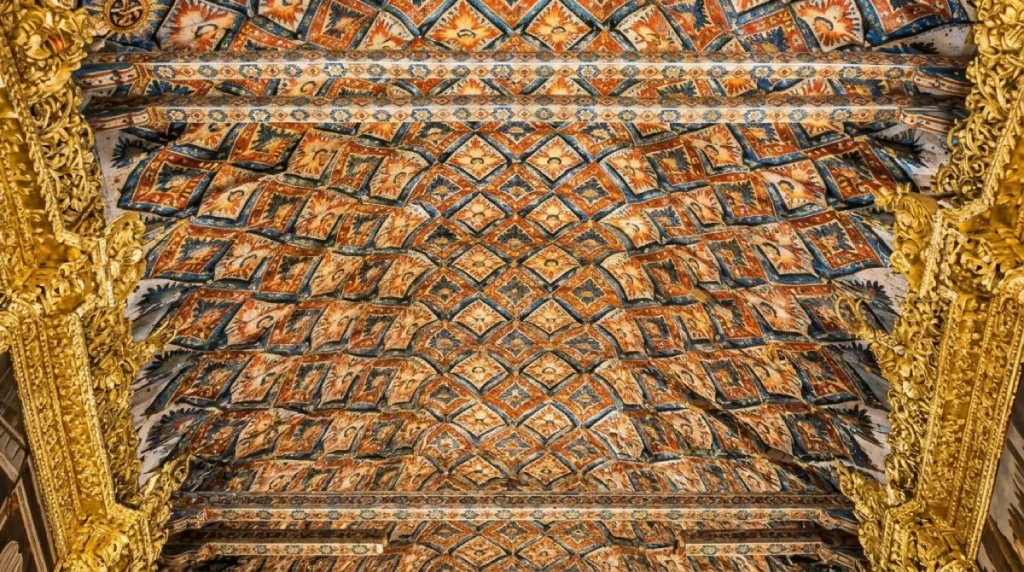
The structure of the ceiling is one of the most amazing parts due to its geometric complexity. The local artisan guild worked for decades to assemble thousands of pieces of polychromed wood. This Mudejar style requires absolute mathematical precision for each element to fit perfectly in place. You will notice that the design forms stars and repetitive patterns that seem endless.
To better understand this ceiling, we recommend you follow these points:
- Look for the points of union where the beams cross to form geometric figures.
- Observe the colors of the coffered ceiling, which remain vibrant thanks to ancient protection techniques.
- Notice how the light from the side windows highlights the reliefs on the ceiling.
- Note the sense of height generated by the visual patterns towards the center of the nave.
The temple building process and its structure
Erecting a structure of this size in a rural area was a huge logistical challenge. The temple building process lasted several decades, going through different phases of expansion and improvement. At first, the church was much simpler, but it grew as the town’s importance increased. You will notice that there are subtle style changes that mark the different stages of its development.
The use of scaffolding in the colonial era
To work on the heights of the ceiling and towers, the masters devised ingenious support systems. The use of scaffolding in the colonial era depended on leather ropes and flexible wooden logs. Workers had to lift heavy materials, such as beams and buckets of mixture, using very simple manual pulleys. This work required perfect coordination and admirable physical courage on the part of the workers.
Even so, safety was a constant concern, so the structures were checked daily. The masters ensured that the lashings were firm before the painters climbed onto the platforms. Thanks to this system, it was possible to decorate the ceiling with a meticulousness that still surprises us today. Truly, every centimeter of art you see above represented considerable physical and technical effort.
The complex plaster and wood decoration
The reliefs that adorn the arches and moldings were made with a special mixture of lime and plaster. This plaster and wood decoration served to give an appearance of marble or precious stone to common materials. The artisans modeled the figures while the material was still soft to achieve smooth, natural curves. Afterward, they applied layers of paint and varnish to protect the work from air erosion.
To preserve these finishes, in 2026, very strict humidity control protocols are applied in the temple. We recommend not touching the surfaces, as the grease from hands can damage the ancient pigments. We at Trails to Machu Picchu support these measures to ensure that future generations enjoy the place. By respecting the rules, you directly help in the preservation of this Andean religious architectural treasure.
Frequently asked questions about the construction of the Andahuaylillas chapel
Who were mainly in charge of the construction of the Andahuaylillas chapel?
Management was in the hands of the Jesuit order, but the actual execution depended on the Andean master builders. These local experts led hundreds of indigenous workers who contributed ancestral techniques in adobe and stone. For this reason, the building perfectly combines European plans with the structural resistance necessary in the Andes.
What materials were used most in the construction of the Andahuaylillas chapel?
The predominant materials were adobe for the walls, cedar wood for the ceilings, and stone for the foundations. Additionally, artists used natural pigments and gold leaf for interior decoration. This combination of local resources and imported techniques allowed for creating a structure that was durable and aesthetically impressive for its time.
How long did the construction of the Andahuaylillas chapel take?
The main building was constructed between the end of the 16th century and the mid-17th century, although it had subsequent renovations. During this time, local artisan guilds worked in several stages to complete the murals and the coffered ceiling. The process was gradual, which allowed each decorative detail to reach a very high level of perfection.
What is the legacy of the construction of the Andahuaylillas chapel today?
The temple is a living testimony to cultural syncretism and the technical talent of Peruvian native builders. Today, it is considered one of the most important monuments in the Andean Baroque circuit. Its architecture and art continue to be the subject of study for their seismic resistance and unique iconographic richness in the world.
The legacy of the construction of the Andahuaylillas chapel
Ultimately, the participation of indigenous masters was not just labor, but an invaluable intellectual and artistic contribution. Thanks to their knowledge, Andean religious architecture achieved its own identity that differentiates it from any other colonial style. Upon visiting this temple, you will notice that every detail tells a story of very deep resistance and cultural adaptation.
Now that you know the role of these great artisans, your visit to Andahuaylillas will have a much richer meaning. With us at Trails to Machu Picchu, you can plan your tour through the South Valley to see this and other incredible monuments. We recommend visiting it calmly to appreciate the effort of those who raised this building centuries ago. It is an experience that will change the way you see Peruvian art! contact us.