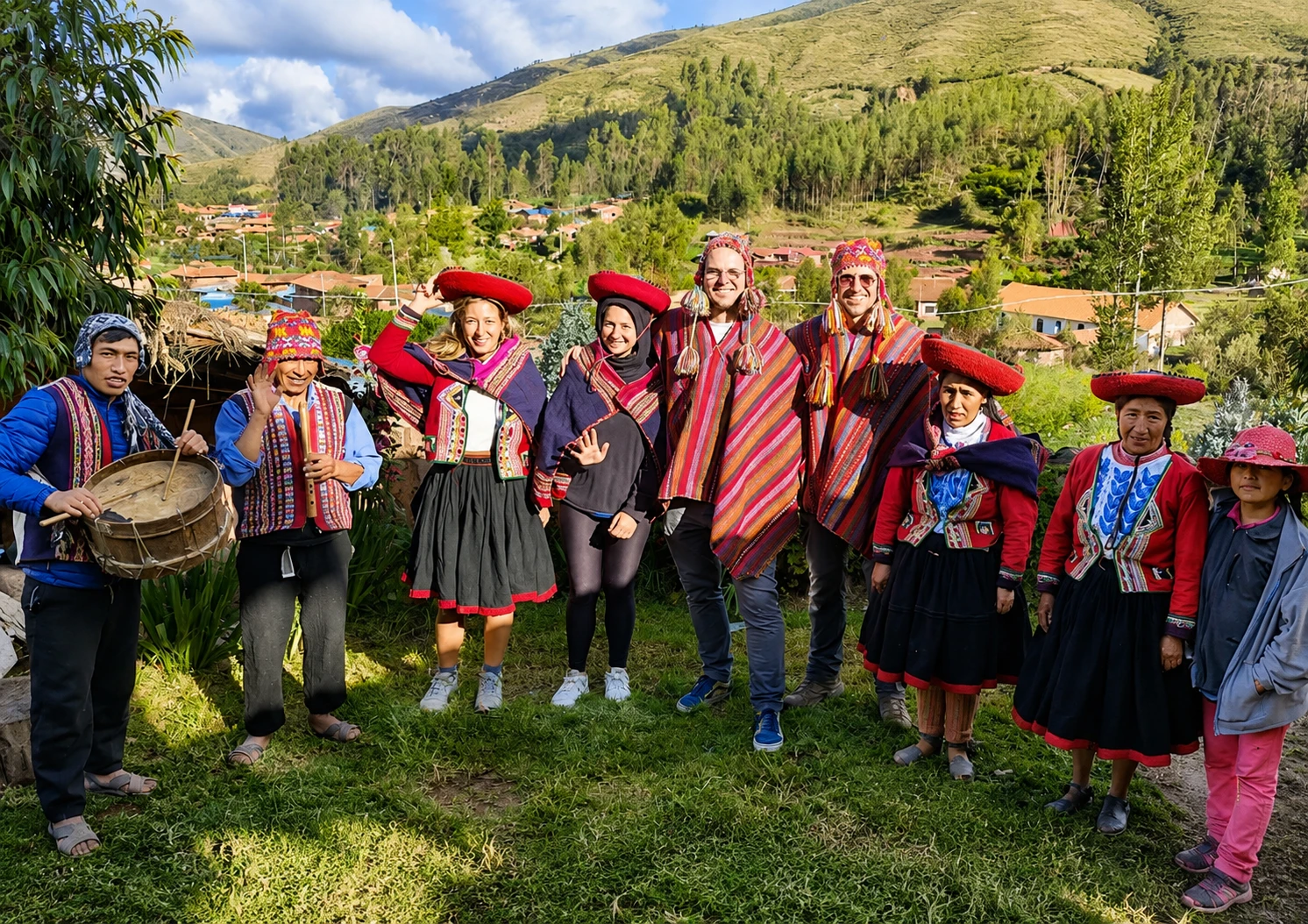
Experiential tourism in Cusco offers a deep and respectful way to explore the Peruvian Andes. Unlike conventional tours, this approach invites travelers to stay with local families. In this way, it is possible to learn about their daily customs while sharing food and working the land.
Discover experiential tourism experiences in Cusco with the support of Trails to Machu Picchu.
Living culture and hospitality characterize the Andean region. Therefore, more and more people are seeking alternatives away from mass tourism. This guide gathers essential information to organize an authentic and responsible stay in the Cusco region.

What is experiential tourism and why choose it?
To understand this travel style, it is helpful to know exactly what experiential tourism is. It is a travel model based on direct interaction between visitors and local residents. In this context, the community opens the doors of their homes to share their traditions without artificial representations.
Community-based rural tourism in Cusco promotes the preservation of ancestral customs. In addition, it boosts local economies by generating direct income for host families. By participating in these dynamics, travelers contribute to rural development while enjoying an enriching human experience.
Top communities to enjoy authentic experiences
The region of Cusco is home to various villages dedicated to hosting visitors and shared learning. Each has unique features linked to its geography and cultural heritage.
Willoc and Patacancha
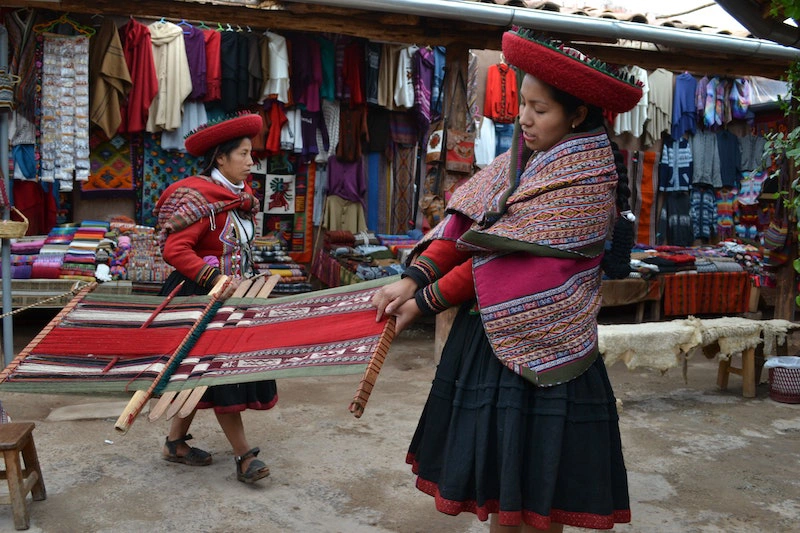
Located high in the Sacred Valley, near Ollantaytambo, these communities stand out for their textile tradition. The locals maintain the use of handwoven red garments. There, visitors can learn the shearing, spinning, and natural dyeing process of alpaca wool.
Chinchero and the surrounding lakes
Near the Piuray and Huaypo lakes, several families welcome travelers interested in Andean agriculture. In Chinchero, Cusco’s living culture is demonstrated in the cultivation of native potatoes, oca, and quinoa. Likewise, pre-Hispanic weaving techniques remain fully alive in this area.
Raqchi
Located in the province of Canchis, near the famous Inca temple of Wiracocha, the community of Raqchi stands out for its pottery. Community members teach how to shape ceramics using traditional techniques passed down through generations. Furthermore, rural homestays here allow visitors to experience daily life in southern Cusco.
Discover these Andean communities with a tour organized by Trails to Machu Picchu.

Experiential tourism activities in the Andean environment
During their stay in Andean villages, visitors carry out daily chores alongside their hosts. Experiential tourism activities vary depending on the time of year and the location of the community.
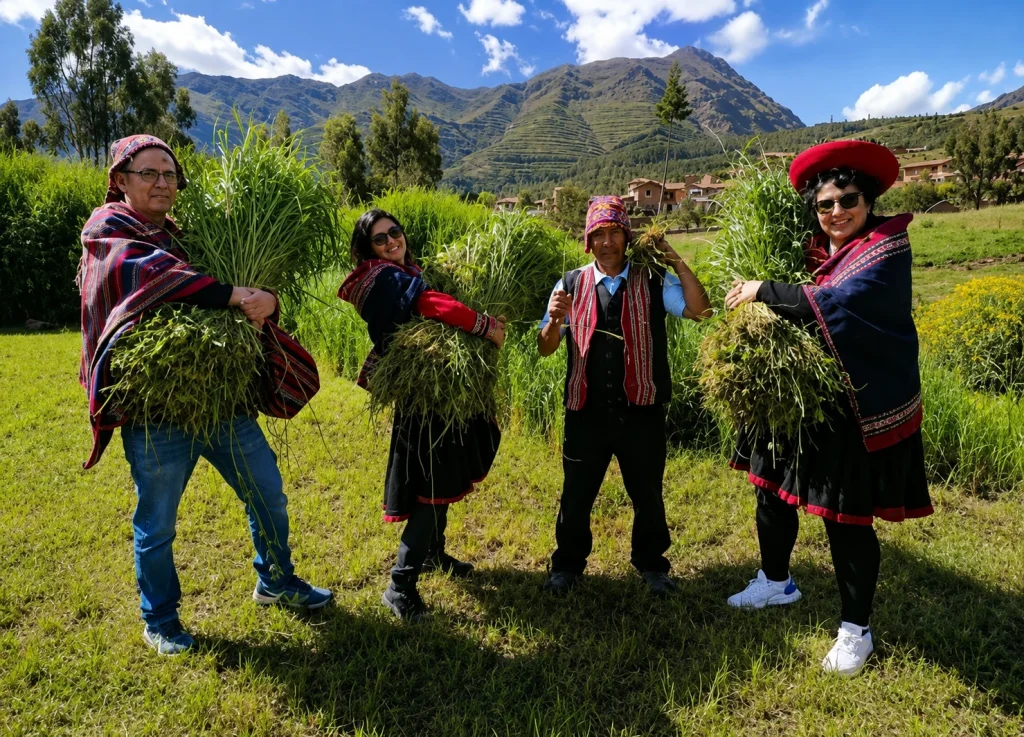
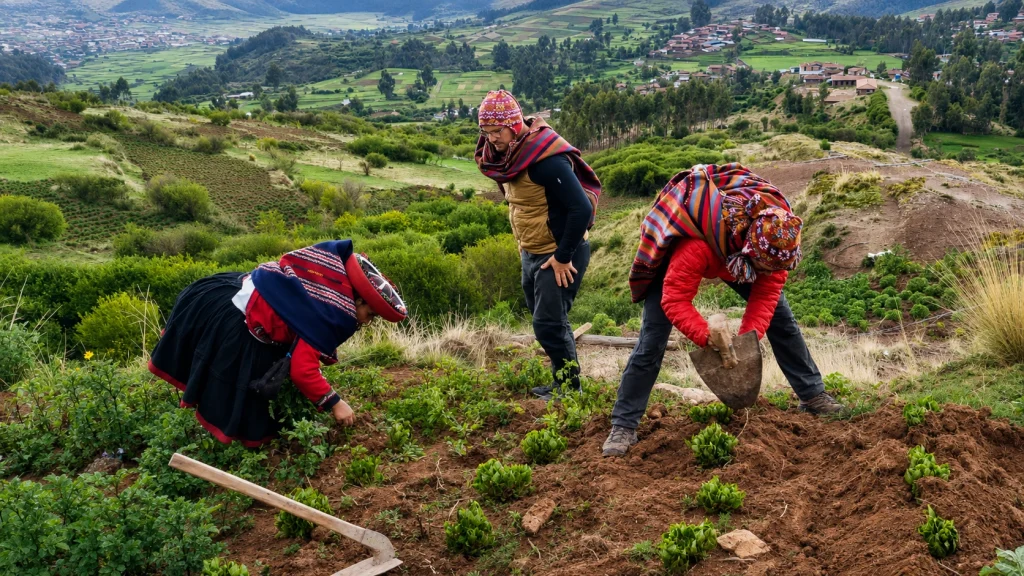
Agricultural tasks play a central role in the daily routine. For example, it is common to participate in planting or harvesting various tubers. Similarly, visitors learn to prepare traditional dishes such as pachamanca, using underground earth ovens and hot stones.
Other common activities include:
- Participation in weaving workshops and using dye plants.
- Hikes along ancient Inca trails accompanied by local guides.
- Observing llama and alpaca herding.
- Sharing stories around the fireplace at night.
Living alongside Andean communities allows travelers to appreciate the deep knowledge local residents have about the climate and the land.
Trails to Machu Picchu can help you organize authentic and responsible cultural activities.
Benefits of community-based tourism for local populations
The benefits of community-based tourism go beyond the economic aspect. Certainly, the income received helps improve basic household infrastructure and fund education for young people.
Likewise, this type of travel strengthens the cultural identity of local residents. Seeing visitors value their Quechua language and traditions motivates younger generations to preserve their heritage. Similarly, rural women assume leadership roles in managing craft workshops and homestays.
Recommendations for planning your trip
To fully enjoy experiential tourism in Cusco, it is essential to maintain an open and respectful attitude. The pace of life in the mountains is serene and governed by nature.
Consider the following practical tips:
- Altitude acclimatization: Spend at least one rest day in the city of Cusco before heading up to high-altitude communities.
- Appropriate clothing: Bring warm clothes for the nights and lightweight garments for the day, along with comfortable walking shoes.
- Cultural openness: Show willingness to try local food and adapt to simple yet comfortable facilities.
- Communication: Although many hosts speak Spanish, learning basic Quechua words fosters interpersonal connection.
When planning your route, it is convenient to rely on agencies committed to sustainability. Companies like Trails to Machu Picchu facilitate contact with local communities, ensuring that the visit adheres to standards of respect and positive impact. Contact us.
A different way to discover the Andean region
Choosing experiential tourism in Cusco transforms the traveler’s perspective. It allows one to understand the mountain range not only as a stunning landscape, but as a space inhabited by communities protecting an ancestral legacy.
By choosing these community experiences in Cusco, you contribute directly to the well-being of rural families. At the same time, you return home with meaningful lessons about living in harmony with the earth.