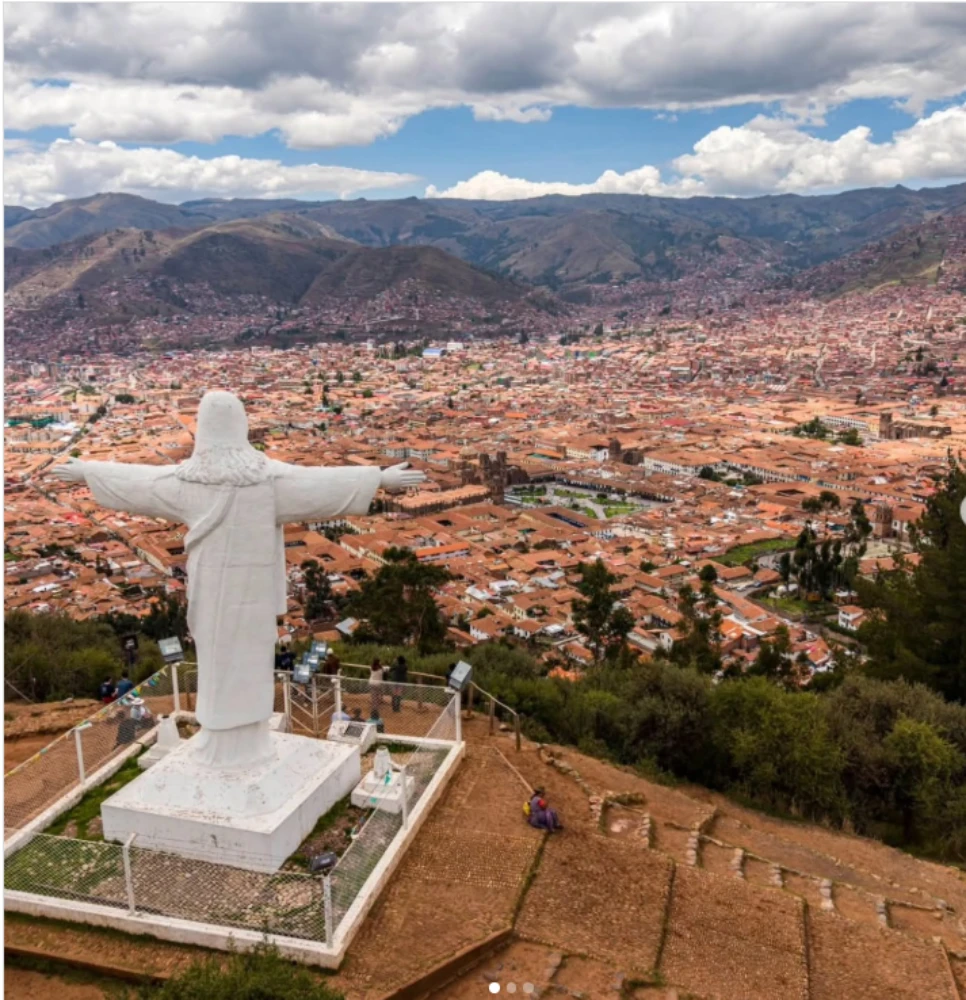
The History of the White Christ of Cusco is a story of faith, gratitude, and brotherhood that watches over the city from above. Strategically located at the top of Pukamuqu Hill. This imposing monument has become a symbol of peace and protection for the inhabitants of the imperial city. Its presence not only enhances the landscape, but also serves as a constant reminder of the harmony between diverse cultures that have made this land their home. With Trails to Machu Picchu, you can learn about the history of the White Christ and discover the beauty of Cusco from a unique perspective.
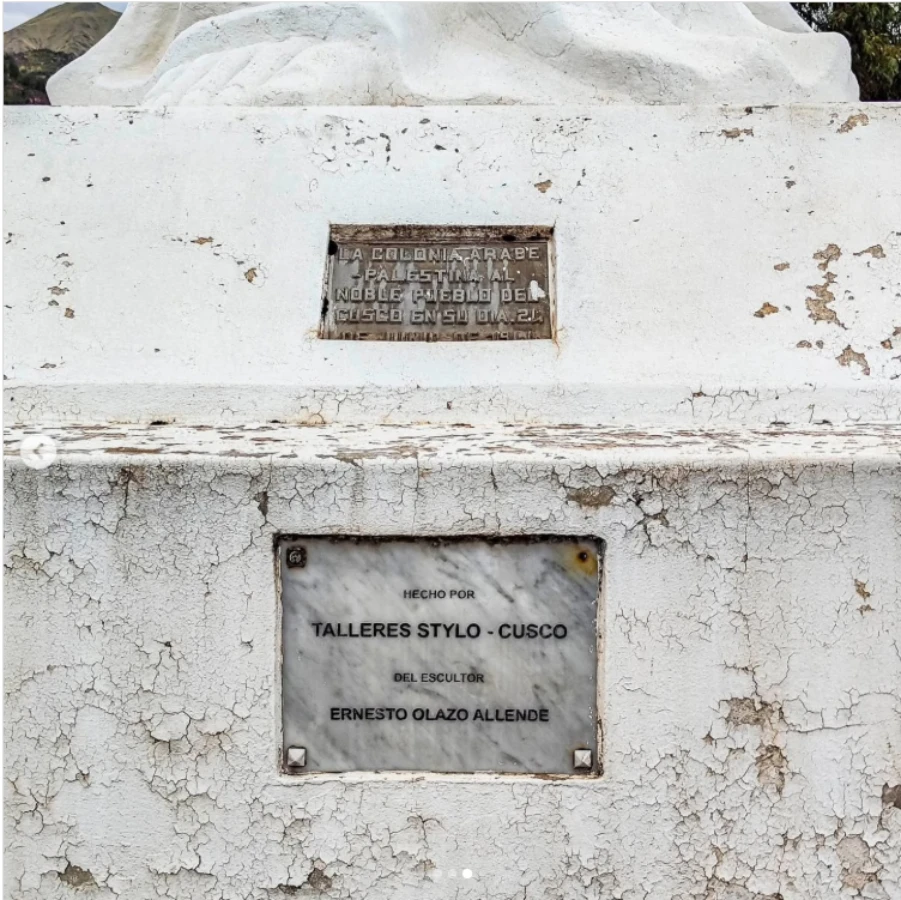
To understand its origins, we must look back to the mid-20th century, when the city received an unprecedented gesture of generosity. The monument was a gift from the Palestinian community residing in the city, who sought to repay the hospitality offered by the Peruvian people. From its privileged location, the White Christ extends its arms toward the valley, blending perfectly with the historical and spiritual surroundings of Cusco.
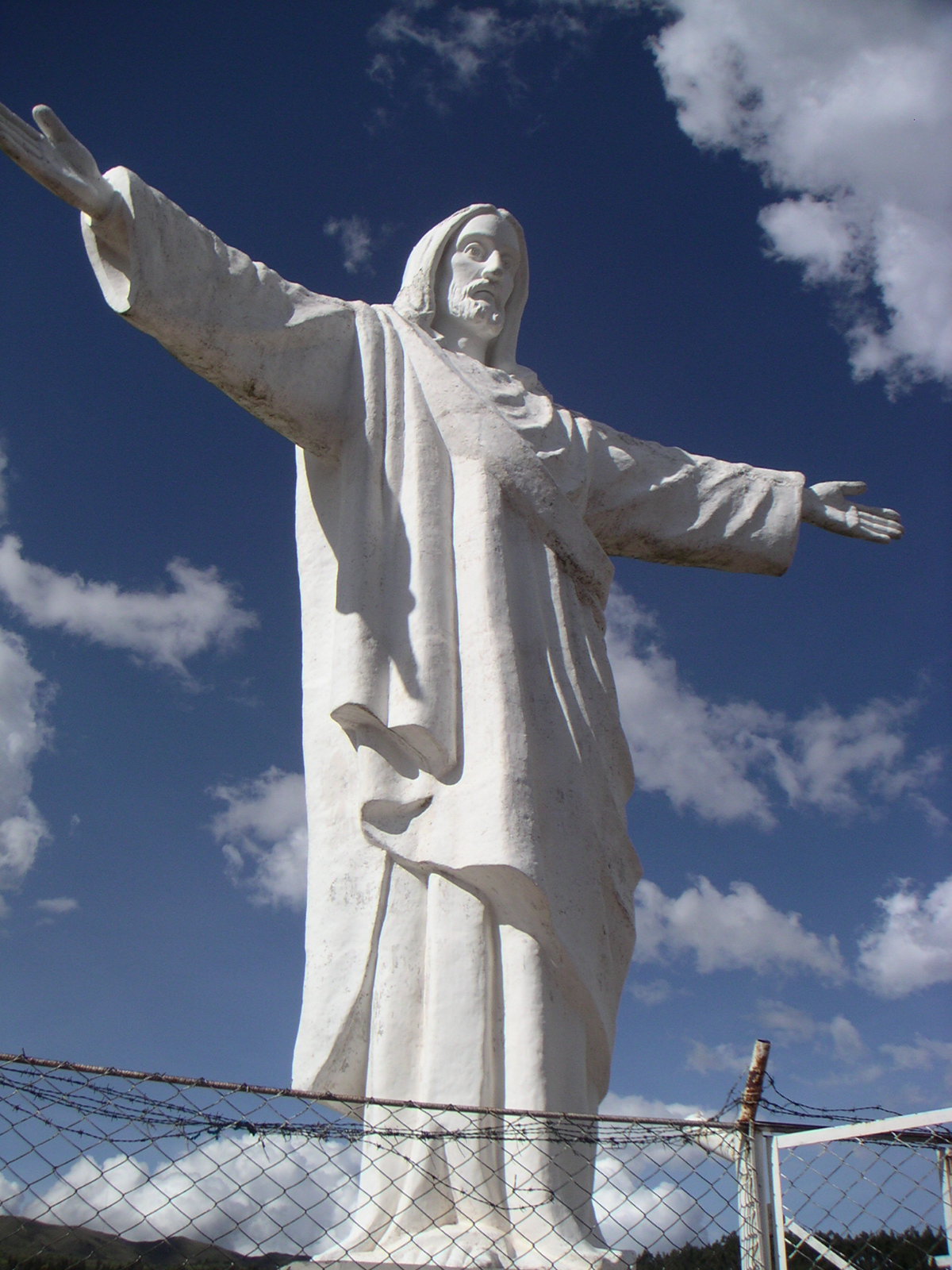
- A Gift of Gratitude: The Origin of the Statue in 1945
- The Construction Process and the Vision of Francisco Olazo Olivera
- Technical Information: Dimensions and Materials of the Work
- The Inauguration of the Monument and Its Place Among Cusco’s Historical Milestones
- Artistic Significance: Modern Religious Architecture in the Andes
- The White Christ as Regional Cultural Heritage
- Tips for Visiting This Cusco Icon
A Gift of Gratitude: The Origin of the Statue in 1945
The origins of this monument date back to 1945, a year marked by the strengthening of international ties following periods of global migration. The Arab-Palestinian community, which had settled in the imperial city decades earlier, decided to express its gratitude through a monumental work. This gesture symbolized their deep respect and gratitude for the welcome they had received in Peru, allowing them to prosper and become part of Cusco’s social fabric.
The construction in the mid-20th century was not a coincidence; it coincided with a period of renewed appreciation for local identity. By choosing the figure of a Christ with open arms, the donors sought a universal language of welcome and protection that would resonate with the faith of the majority of the people who had welcomed them. Thus, the White Christ was born as a cultural bridge between the Middle East and the Andes.
The Construction Process and the Vision of Francisco Olazo Olivera
The execution of this masterpiece was entrusted to the renowned local sculptor Francisco Olazo Olivera. The artist took on the challenge of designing a figure that conveyed serenity and benevolence, moving away from expressions of suffering. The construction process involved considerable technical challenges, especially due to the geographical location of Pukamuqu Hill, which required materials to be transported to a considerable altitude above sea level.
Olazo Olivera employed a technique that combined structural strength with a detailed artistic finish. Working tirelessly at the summit, the sculptor managed to capture an expression of absolute peace on the statue’s face. The artist’s vision was not only to create a visual landmark, but also a spiritual landmark that would harmonize with Cusco’s intense blue sky and the clouds that often surround the mountain.
Technical Information: Dimensions and Materials of the Work
| Characteristic | Detail |
|---|---|
| Total height | Approximately 8 meters |
| Materials | Reinforced concrete and granite structure |
| Color | Radiant white |
| Exact location | Top of Pukamuqu Hill, Cusco |
A Concrete and Granite Structure Designed to Last
To ensure that the monument would withstand the harsh Andean climate, a concrete and granite structure was chosen. The use of local granite was not only a logistical decision, but also an aesthetic and symbolic one. By incorporating stone from the area into the mixture, the monument is directly connected to the geology of the region. This combination of modern and traditional materials ensures that the statue can withstand both torrential rains and intense solar radiation at high altitude. Maintaining its characteristic white color throughout the decades.
The Inauguration of the Monument and Its Place Among Cusco’s Historical Milestones
The monument officially took place in 1945, immediately becoming an event of great social significance. The ceremony brought together civil and ecclesiastical authorities, as well as the Palestinian community, sealing a bond of brotherhood that continues to this day. At that time, Cusco was beginning to emerge as the world-renowned tourist destination it is today, and the White Christ joined the list of attractions that amazed the first modern visitors. Therefore, many agencies offer tour packages to visit and enjoy the majestic White Christ of Cusco. However, Trails to Machu Picchu offers you a different and unique experience, where you can not only appreciate the beauty of this important attraction, but also learn about its history, meaning, and the cultural value it represents within the imperial city.
This event stands among other historical milestones of Cusco, serving as a prelude to the modernization the city would experience after the 1950 earthquake. While much of the colonial infrastructure suffered damage years later, the White Christ remained standing, becoming a beacon of hope during the reconstruction. Its presence also reinforced the appreciation of the neighboring Inca heritage, such as Sacsayhuamán, by creating a highly valuable cultural corridor that connects different eras.
Artistic Significance: Modern Religious Architecture in the Andes
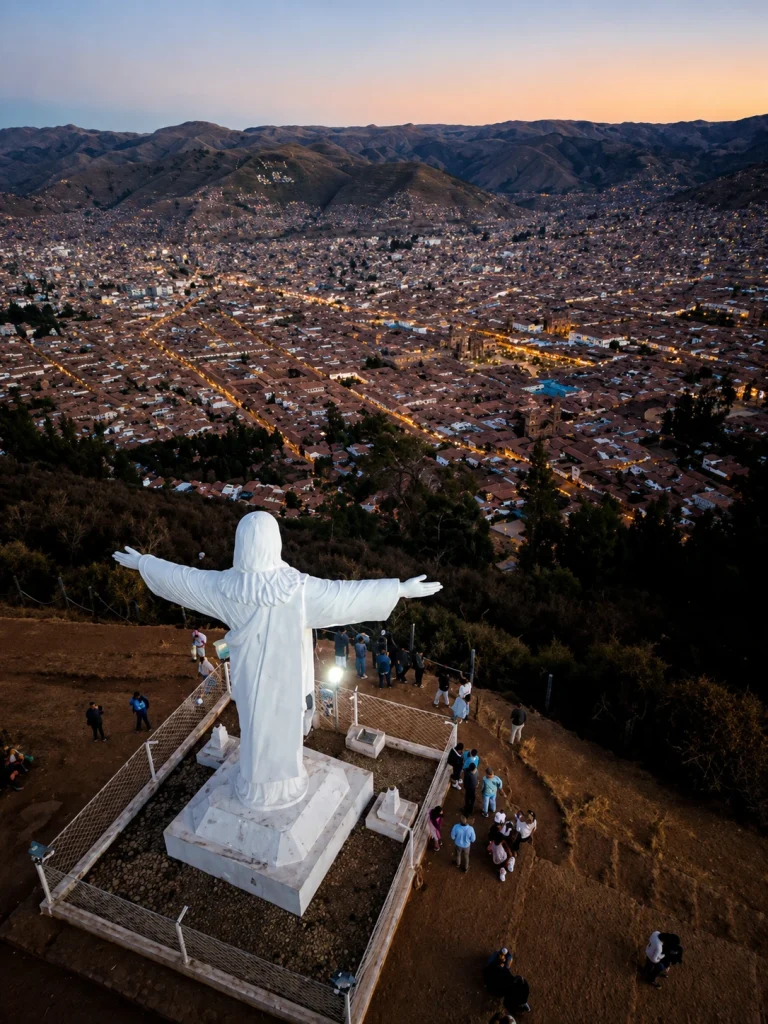
From an aesthetic perspective, the White Christ represents a notable example of modern religious architecture adapted to the Andean context. Although it shares conceptual similarities with other redeemer statues in the region, its scale and style are unique. The simplicity of its lines and the use of the color white. Allow the work to stand out without visually competing with the complexity of the nearby Inca walls. Achieving a respectful balance with pre-Hispanic history.
As an emblematic monument of the Andes, it is fully visible from almost any point in the historic center. This integration with the urban and natural landscape makes it a key part of Cusco’s skyline. When sunlight hits it, it creates shadows that highlight its volume and its intention of symbolic protection. Making it an unavoidable visual landmark for any traveler.
The White Christ as Regional Cultural Heritage
Today, the statue is recognized as a fundamental part of the regional cultural heritage. Beyond its artistic or architectural value, its importance lies in the intangible value given to it by the local population. The people of Cusco have adopted the figure as a spiritual protector. That is why locals and visitors often climb to its base for a moment of reflection. It is also useful for orienting oneself within the city’s geography.
The preservation of this space is a priority for local authorities. Since it represents the peaceful coexistence of the identities that make up present-day Cusco. Its cultural inventory status preserves its history of generosity for future generations. Keeping alive the legacy of the Palestinian community and the talent of Francisco Olazo Olivera. Making this monument a pillar of contemporary Cusco identity.
Tips for Visiting This Cusco Icon
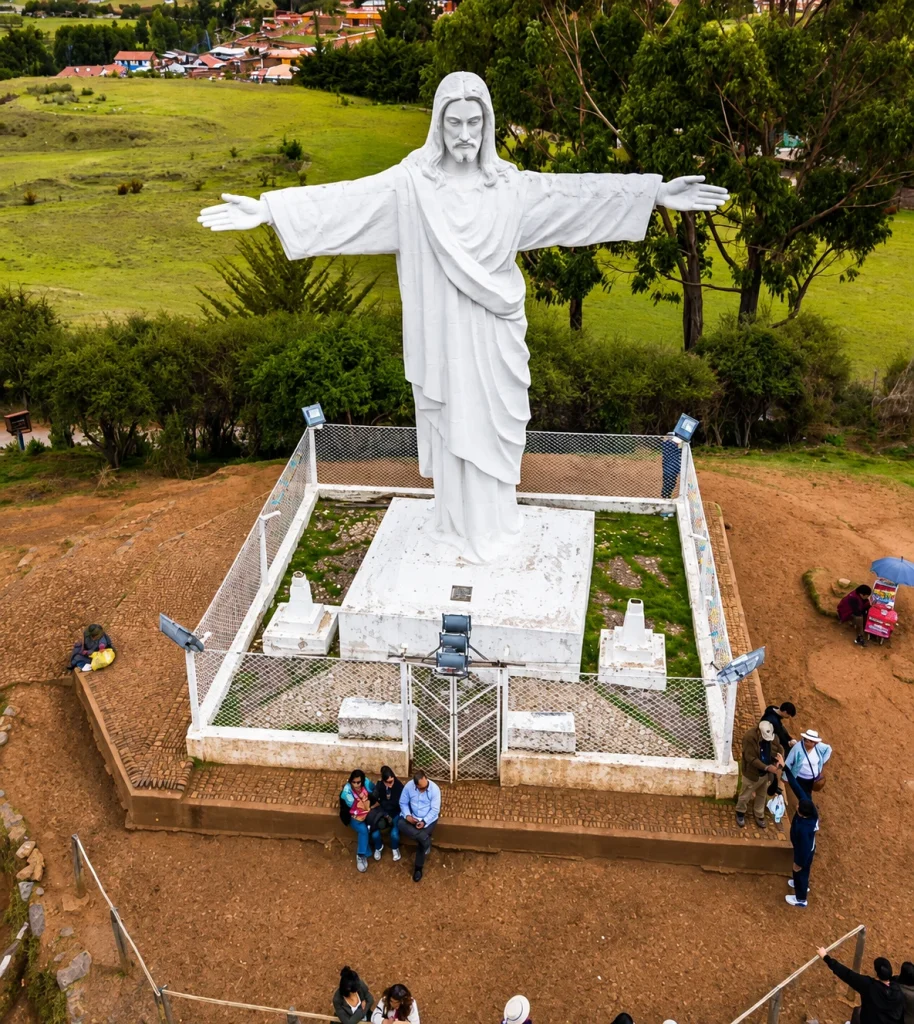
- The best time to go up is during sunset, when the city lights begin to turn on. This offers you an unparalleled panoramic view of the Plaza de Armas.
- You can easily reach it on foot from the San Blas neighborhood in a 20-minute walk. You can also take public transportation heading toward the Sacsayhuamán sector.
- Access to the White Christ viewpoint is free. This makes it an excellent option for enjoying the best views at no additional cost.
- It is essential to respect the surrounding archaeological environment. Remember that you are in an area of high historical sensitivity. Similar to the routes operated by Trails to Machu Picchu.
- Always bring a light jacket. The wind at the top of Pukamuqu Hill can be cold, even if the day has been sunny.
The History of the White Christ of Cusco is much more than the story of the construction of a statue. It is the testimony of a city that embraces diversity and gratitude. This monument continues to be a point of connection between the Inca past, colonial influence, and migrant communities. Viewing the imperial city from its base. Is an experience that connects visitors with the spiritual essence of the Andes. Reinforcing its value as an eternal symbol of unity between cultures.