The History and Meaning of Pallay Punchu represents one of the most interesting aspects of cultural tourism in Cusco. This destination has gained notoriety for its unique appearance and its connection to Andean tradition. The History and Meaning of Pallay Punchu relates not only to its geological formation but also to the cultural interpretation that local communities have developed over time. Additionally, this place stands out for its resemblance to traditional textiles. This resemblance has sparked the interest of travelers seeking authentic experiences. Therefore, understanding the History and Meaning of Pallay Punchu allows us to better appreciate its value as a tourist and cultural attraction in southern Peru.
- Origin of Pallay Punchu Cusco and formation of the mountain
- Cultural meaning of Pallay Punchu and its relation to Quechua culture
- Interpretation of the colors of Pallay Punchu
- Legends of Pallay Punchu Peru and oral tradition
- Location of Pallay Punchu in Layo and tourist importance
- How to visit Pallay Punchu from Cusco and access to the destination
- Best season to visit Pallay Punchu and weather conditions
- Tips for traveling to Pallay Punchu and practical recommendations
- Frequently asked questions
Origin of Pallay Punchu Cusco and formation of the mountain
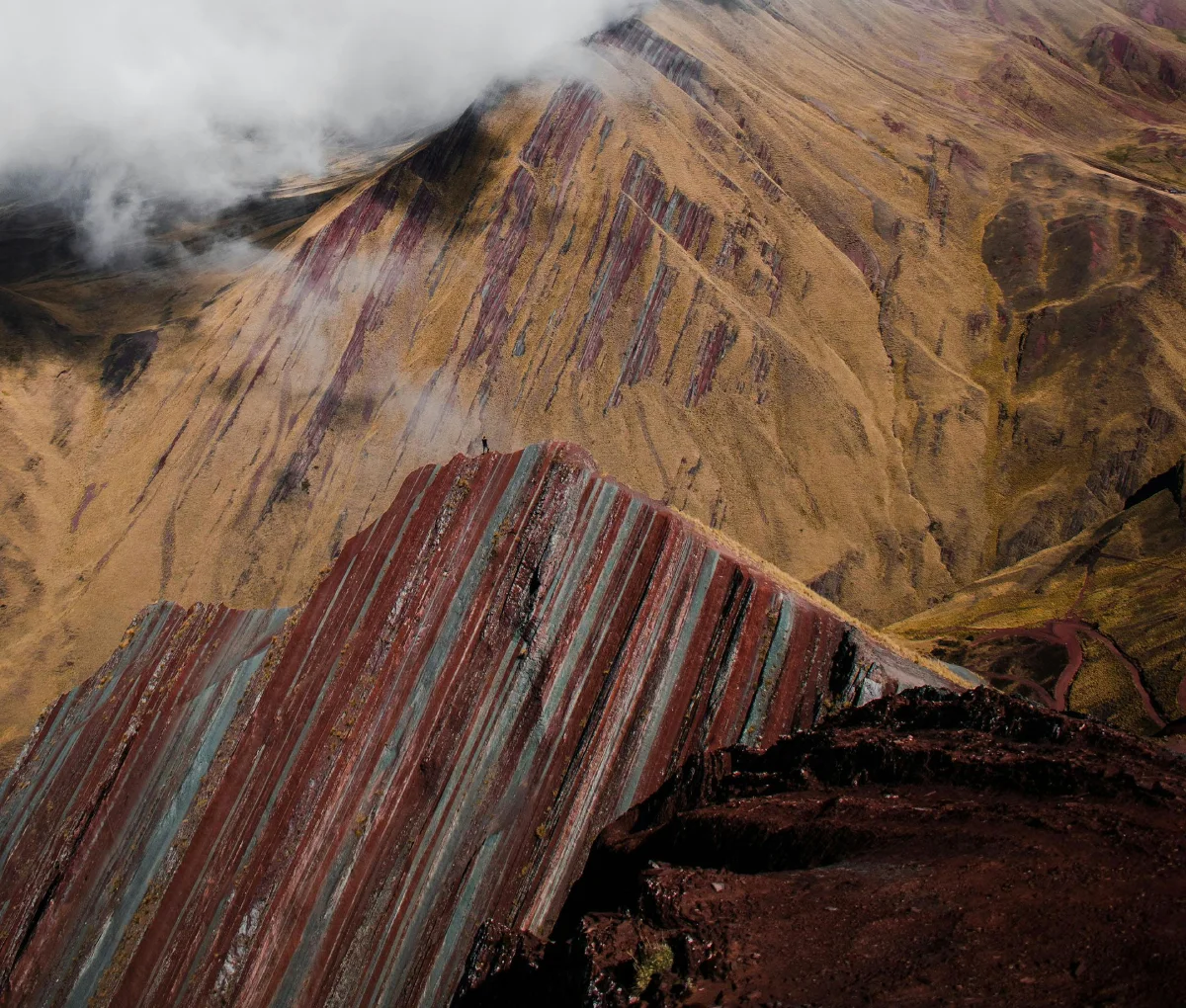
The origin of Pallay Punchu Cusco is linked to geological processes that occurred over millions of years in the Andean mountain range. The History and Meaning of Pallay Punchu connects directly with the sedimentation of minerals. Over time, these minerals created its characteristic colored stripes. These layers formed from the accumulation of marine and continental sediments. Later, tectonic plate movements lifted them upward. Additionally, erosion from wind and water shaped the surface into its current appearance.
History of the colorful mountain Pallay Punchu
The history of the colorful mountain Pallay Punchu is relatively recent in the tourism sector. However, local communities have known this place for generations. The History and Meaning of Pallay Punchu has been passed down orally. This oral tradition has helped preserve its cultural value. Furthermore, limited access in the past kept this destination away from mass tourism. That limited access contributed to its natural conservation. Therefore, its recent tourism discovery has increased its importance in the region.
Cultural meaning of Pallay Punchu and its relation to Quechua culture
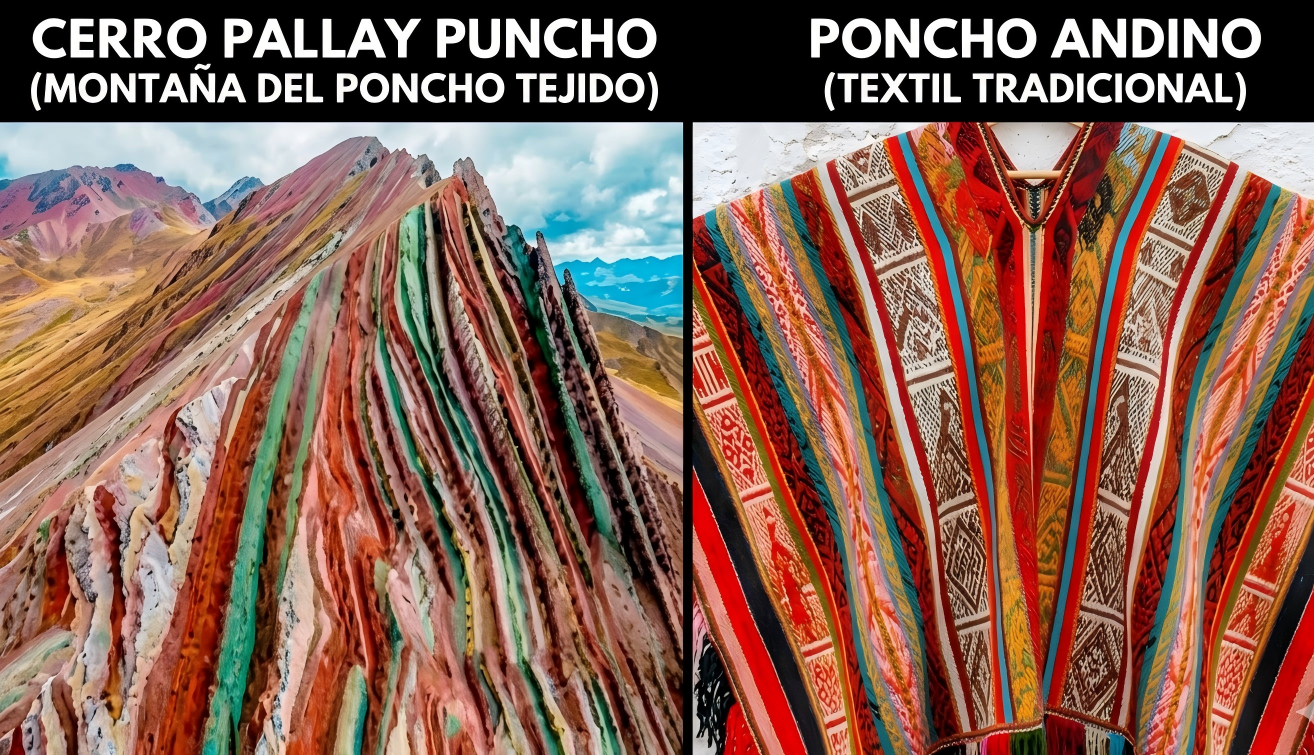
The cultural meaning of Pallay Punchu is deeply tied to Quechua culture in Pallay Punchu. Local communities interpret the mountain as a natural representation of their textile traditions. The History and Meaning of Pallay Punchu reflects the connection between nature and daily life in the Andes. Moreover, the term “Pallay Punchu” refers to the woven designs found in traditional garments. This linguistic connection reinforces its symbolism.
Andean symbolism in Pallay Punchu
The Andean symbolism in Pallay Punchu appears in its colors and shapes. Each shade can be associated with natural elements like earth, water, or vegetation. The History and Meaning of Pallay Punchu also incorporates the Andean worldview. In this worldview, nature holds spiritual value. Therefore, this destination is not only visually striking but also culturally significant.
Connection between Pallay Punchu and Andean textiles
The connection between Pallay Punchu and Andean textiles is evident in its appearance. The History and Meaning of Pallay Punchu becomes stronger when you observe how its stripes resemble traditional clothing patterns. Additionally, these designs carry specific meanings within Andean culture. This adds an extra layer of interpretation for visitors.
Interpretation of the colors of Pallay Punchu
The interpretation of the colors of Pallay Punchu is an essential part of its appeal. The History and Meaning of Pallay Punchu relates to the presence of minerals like iron, copper, and other elements. These minerals create red, yellow, and green tones. Each color reflects specific natural processes. This makes the mountain an example of geological diversity.
Furthermore, local communities attach symbolic meanings to these colors. For example, some shades may represent fertility or a connection to the earth. Therefore, the History and Meaning of Pallay Punchu combines scientific explanations with cultural interpretations. This combination enriches the visitor experience.
Legends of Pallay Punchu Peru and oral tradition
The legends of Pallay Punchu Peru are an important part of its identity. The History and Meaning of Pallay Punchu includes stories passed down from generation to generation. These tales often explain the mountain’s origin from a symbolic perspective. They link it to the lives of the region’s ancient inhabitants.
Moreover, these narratives reinforce the relationship between the community and its environment. The History and Meaning of Pallay Punchu stays alive thanks to these oral traditions. Locals continue to share them with visitors interested in learning about local culture.
Location of Pallay Punchu in Layo and tourist importance
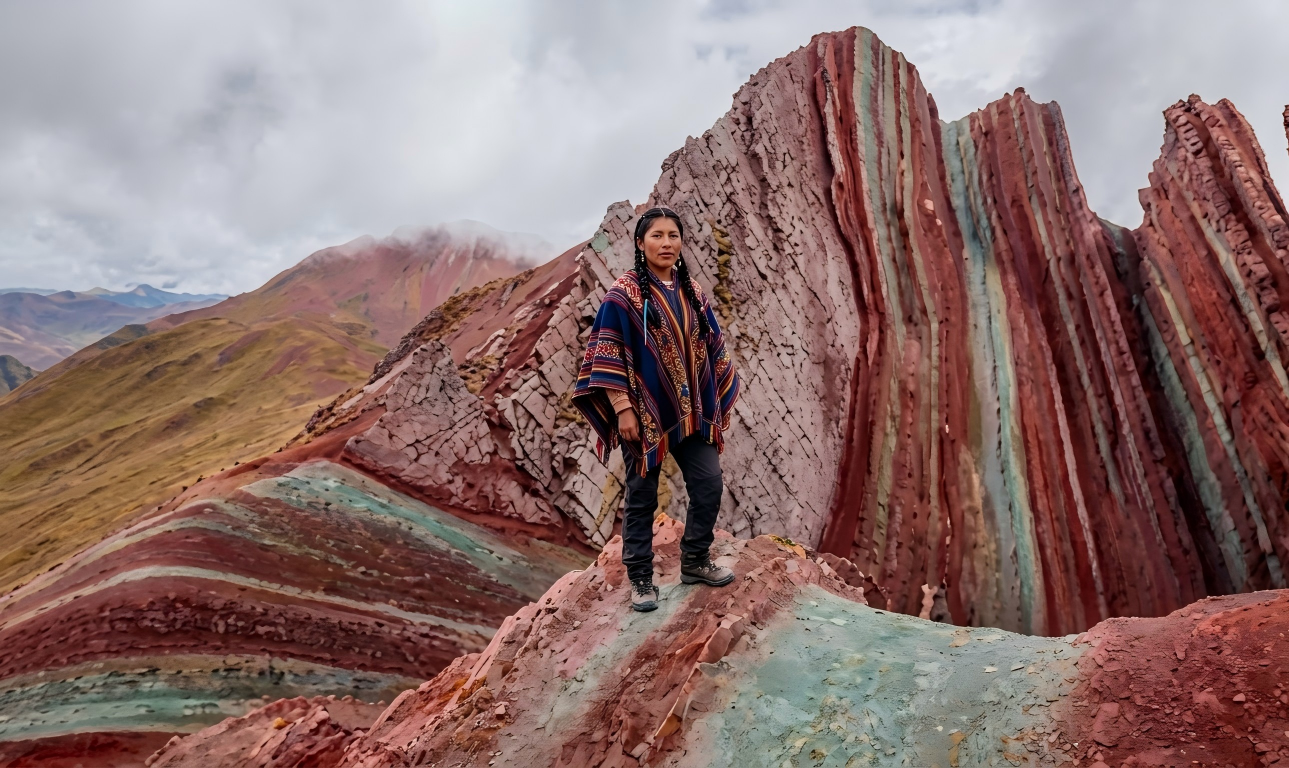
The location of Pallay Punchu in Layo is found in the province of Canas, within the Cusco region. This destination sits near the Langui-Layo lagoon. The lagoon adds landscape value to the surroundings. The History and Meaning of Pallay Punchu also influences its growing tourism recognition.
Tourist importance of Pallay Punchu Cusco
The tourist importance of Pallay Punchu Cusco has increased in recent years. The History and Meaning of Pallay Punchu attracts travelers interested in culture and nature. Additionally, its lower visitor flow compared to other destinations allows for a calmer experience.
- Unique landscapes with striking geological formations
- Connection with local communities and traditions
- Accessible trekking experiences
Therefore, this destination positions itself as a relevant alternative within Cusco tourism.
How to visit Pallay Punchu from Cusco and access to the destination
Knowing how to visit Pallay Punchu from Cusco is essential for trip planning. Learning the History and Meaning of Pallay Punchu motivates many travelers to include this destination in their itinerary. The journey generally involves a road trip to the Layo district. After that, a hike leads to the mountain.
Trekking experience at Pallay Punchu
The trekking experience at Pallay Punchu is one of the main attractions. Additionally, Pallay Punchu is best appreciated during the ascent. The climb allows you to observe its formations up close. Furthermore, the route offers panoramic views of the lagoon and surrounding mountains.
- Moderate difficulty hike
- Altitude above 4,700 meters
- Approximate duration of several hours
Therefore, proper physical preparation is recommended before visiting.
Best season to visit Pallay Punchu and weather conditions
The best season to visit Pallay Punchu is usually during the dry season, between April and October. During this season, Pallay Punchu is best appreciated. The weather allows for greater visibility of the colors.
Additionally, weather conditions can vary considerably due to altitude. The History and Meaning of Pallay Punchu also relates to these changes. These changes influence the perception of the landscape. Therefore, it is important to consider factors like temperature and rainfall probability when planning your trip.
Tips for traveling to Pallay Punchu and practical recommendations
Having tips for traveling to Pallay Punchu is key to enjoying the experience. Pallay Punchu can be better appreciated when the visitor is prepared for the environment’s conditions.
- Wear appropriate clothing for cold weather
- Use sunscreen due to high radiation
- Stay hydrated during the hike
- Acclimate to altitude before trekking
- Respect the instructions of local communities
Moreover, early planning allows you to make better use of your time. Learning about Pallay Punchu becomes a richer experience when you have adequate information.
Frequently asked questions
- Is it necessary to hire a guide to visit Pallay Punchu?
Having a guide can make the experience easier, especially for those unfamiliar with the area. Guides also provide relevant cultural information and help interpret the environment better. - Are there tourist services in the Pallay Punchu area?
The service offer is limited compared to other destinations. However, you can find basic options in nearby communities. Therefore, planning ahead is recommended. - Can you visit Pallay Punchu in one day?
Yes, it is possible to visit in one day from Cusco, although it involves a long trip. For this reason, some travelers prefer to stay overnight in nearby areas for a more comfortable experience. - What level of acclimatization is needed for the trek?
It is advisable to spend at least two days in Cusco or another high-altitude area before the hike. This helps reduce the effects of altitude sickness. - Is Pallay Punchu suitable for all types of travelers?
The destination is accessible for people in good physical condition. However, the altitude and required effort may pose a challenge for some visitors.
Check out our travel packages in Peru and let us organize the perfect adventure for you. Quote your trip to Cusco today!