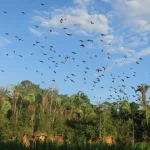
Deep in the southern Peruvian Amazon, one of the most impressive natural spectacles on the planet takes place: hundreds of macaws and parrots simultaneously descending upon a natural clay wall to feed on essential minerals. This phenomenon occurs at Collpa Chuncho, located in the Tambopata National Reserve in Madre de Dios.
Every dawn, the tranquility of the Amazon rainforest transforms into a spectacle of colors and sounds as dozens of tropical birds arrive from the forest to consume mineral-rich clay. This natural behavior makes Collpa Chuncho one of the best places in the world to observe macaws in their natural habitat.
If you are planning a trip to the Peruvian Amazon, experiencing this natural phenomenon will help you understand why thousands of travelers visit Tambopata every year to witness this unique experience.
- What is a clay lick (collpa) in the Amazon?
- Where is Collpa Chuncho located?
- The macaw ritual in Tambopata
- Biodiversity around Collpa Chuncho
- Tourist infrastructure at the clay lick
- Tips for observing macaws in Tambopata
- How to visit Collpa Chuncho
- Why Collpa Chuncho is one of the best places to see macaws
What is a clay lick (collpa) in the Amazon?
A collpa, or clay lick, is a natural wall of mineral-rich clay that forms on the banks of Amazonian rivers. These formations appear when river erosion exposes soils with a high content of sodium, potassium, and other minerals.
Many animal species visit these places to supplement their diet and neutralize toxins present in the seeds and fruits they consume in the tropical forest.
Among the animals that visit the Amazonian clay licks are:
- Macaws
- Amazonian parrots
- Parakeets
- Monkeys
- Collared peccaries (Sajinos)
- White-lipped peccaries (Huanganas)
- Tapirs
- Capybaras
However, the true protagonists are the large macaw species, which congregate in huge numbers creating a unique spectacle in nature.

Where is Collpa Chuncho located?
Collpa Chuncho is located in the Alto Tambopata sector within the Tambopata National Reserve, in the Madre de Dios region. This protected area conserves one of the most biodiverse ecosystems on the planet.
The clay lick is located approximately 260 meters above sea level and stretches for several hundred meters along the banks of the Tambopata River. This clay wall daily attracts numerous bird species that arrive to consume essential minerals for their diet.
The Tambopata National Reserve protects more than 274,000 hectares of Amazonian forest, including rivers, lakes, palm swamps (aguajales), and tropical forests inhabited by thousands of species of flora and fauna.
The macaw ritual in Tambopata
The natural phenomenon of the clay lick occurs primarily at dawn. First, small groups of parrots arrive and perch in nearby trees to observe the area.
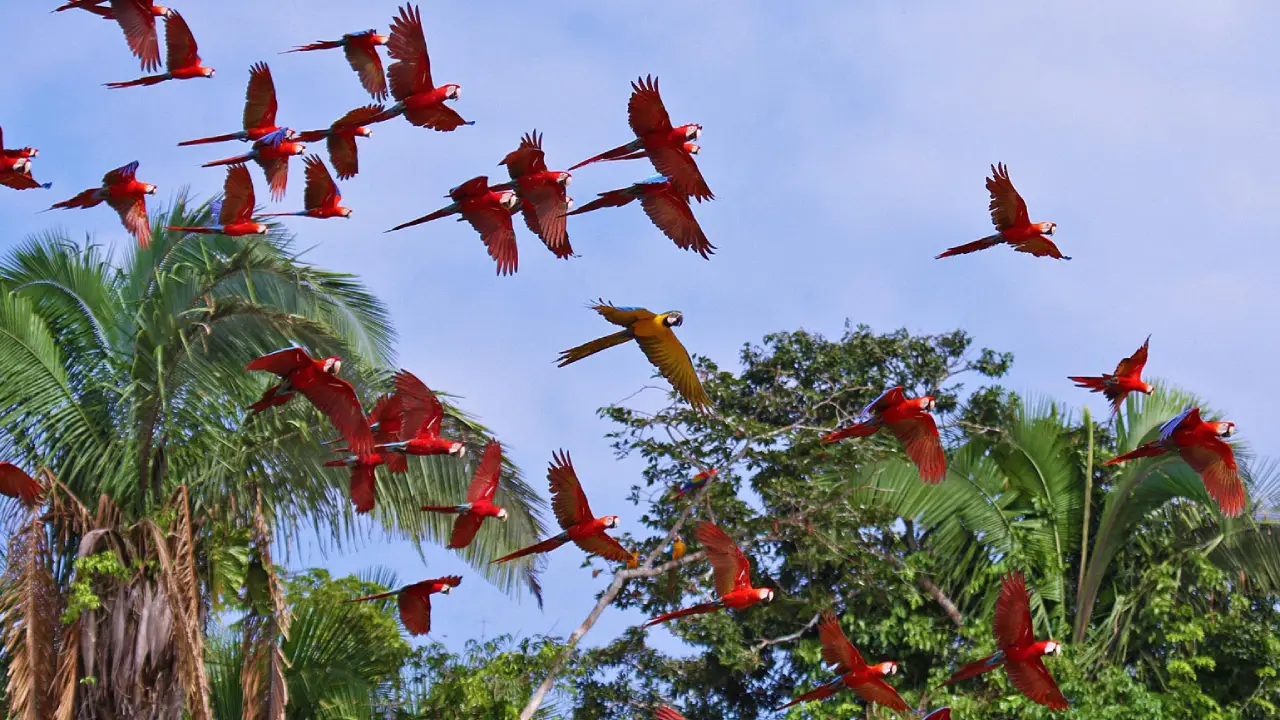
Minutes later, the macaws appear, flying in pairs or small groups before descending onto the clay wall.
Among the most common species that can be observed at Collpa Chuncho are:
- Scarlet macaw (Ara macao)
- Blue-and-yellow macaw (Ara ararauna)
- Red-and-green macaw (Ara chloropterus)
These birds consume small amounts of clay to neutralize toxins present in their diet based on seeds and fruits of the Amazon rainforest.
On a clear morning, it is possible to observe dozens of macaws and hundreds of parrots feeding simultaneously, creating one of the most impressive natural spectacles in the Amazon.

Biodiversity around Collpa Chuncho
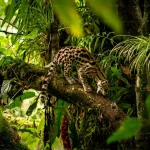
The Alto Tambopata area is considered one of the most biodiverse places on the planet. During a visit to the clay lick, it is also possible to observe different species of Amazonian fauna.
Among the animals that inhabit this region, the following stand out:
- Howler monkeys
- Spider monkeys (Maquisapas)
- Collared peccaries
- White-lipped peccaries
- Capybaras
- Tapirs
- Jaguars
In addition, more than 600 bird species have been recorded in the Tambopata region, making it one of the most important birdwatching destinations in South America.
Tourist infrastructure at the clay lick
To allow for the observation of macaws without affecting their natural behavior, tourist infrastructure has been built within the area.
The facilities include:
- Birdwatching viewpoints
- Elevated access trails
- Controlled observation areas
These facilities allow visitors to observe the natural spectacle while maintaining a safe distance that avoids disturbing the wildlife.
Tips for observing macaws in Tambopata
If you wish to witness this natural phenomenon, consider the following recommendations:
- Arrive very early in the morning
- Maintain silence during the observation
- Bring binoculars
- Wear light, neutral-colored clothing
- Always follow the guide’s instructions
These practices help protect the ecosystem and allow for a better enjoyment of the birds’ natural behavior.
How to visit Collpa Chuncho
Most travelers access Collpa Chuncho from the city of Puerto Maldonado. The trip generally combines land transportation and navigation along the Tambopata River to the areas near the clay lick.
Excursions usually start very early in the morning, as this is the time of day when macaws perform their main activity.
If you want to live this experience in the Amazon rainforest, you can find all the itinerary details here: Chuncho Macaw Clay Lick Tour 2 Days
Why Collpa Chuncho is one of the best places to see macaws
There are many clay licks in the Amazon, but Chuncho stands out for its size, its location within a well-conserved forest, and the large concentration of birds observed daily.
This place allows you to witness one of the most extraordinary natural spectacles in the world: the flight of hundreds of macaws over the Tambopata River as they descend to feed on minerals on the clay wall.
For nature lovers, wildlife photographers, and birdwatchers, visiting Collpa Chuncho is an experience that is hard to forget.
If you are planning your trip to the Peruvian Amazon, you can explore this complete experience in our 2-day Collpa Chuncho tour.