

Can you picture yourself hiking among snow-capped mountains, turquoise lagoons, and trails where the silence is only broken by the Andean wind? The Ausangate Trek in Peru is one of the most stunning routes in the Peruvian Andes, and while many associate it with experienced hikers, it can also be an achievable challenge for beginners with proper preparation. This guide is designed to help you understand every aspect of this adventure: from how to get to Ausangate from Cusco to what to pack for the trek, plus practical tips to make your first high-altitude hiking experience both safe and thrilling.
The Magic of Ausangate for Hiking Newbies
Ausangate isn’t just another snow-capped peak; it’s the sacred Apu protector of the Vilcanota mountain range and Peru’s fifth highest summit at 20,945 ft. A 43-mile circuit winds around it, which most tour companies complete in 4 to 6 days, crossing mountain passes above 16,732 ft, like Palomani Pass (16,945 ft).
Why Choose Ausangate Trekking in Peru
- Less crowded than the Inca Trail
- No special permits required
- Includes option to detour to Rainbow Mountain (Vinicunca) without extra tours
Classic Five-Day Route (Quick Overview)
| Day | Section | Approx. Distance | Highest Point | Main Attraction |
|---|---|---|---|---|
| 1 | Cusco – Tinki – Upis | 7.5 miles | 13,451 ft | Upis hot springs |
| 2 | Upis – Arapa Pass – Hatun Pucacocha | 10 miles | 15,912 ft | Multicolored lagoons |
| 3 | Hatun Pucacocha – Palomani Pass – Pampacancha | 7 miles | 16,945 ft | 360° views of Apu Ausangate |
| 4 | Pampacancha – Qampa Pass – Pacchanta | 10.5 miles | 16,404 ft | Hot springs and Quechua community |
| 5 | Pacchanta – Tinki – Cusco | 7 miles | 13,451 ft | Local market and return to Cusco |
The six-day version adds a Rainbow Mountain detour between days 2 and 3.
Getting to Ausangate from Cusco: Simple Logistics
Travel from Cusco to Tinki (12,631 ft) by public bus or private transport (about 3 hours).
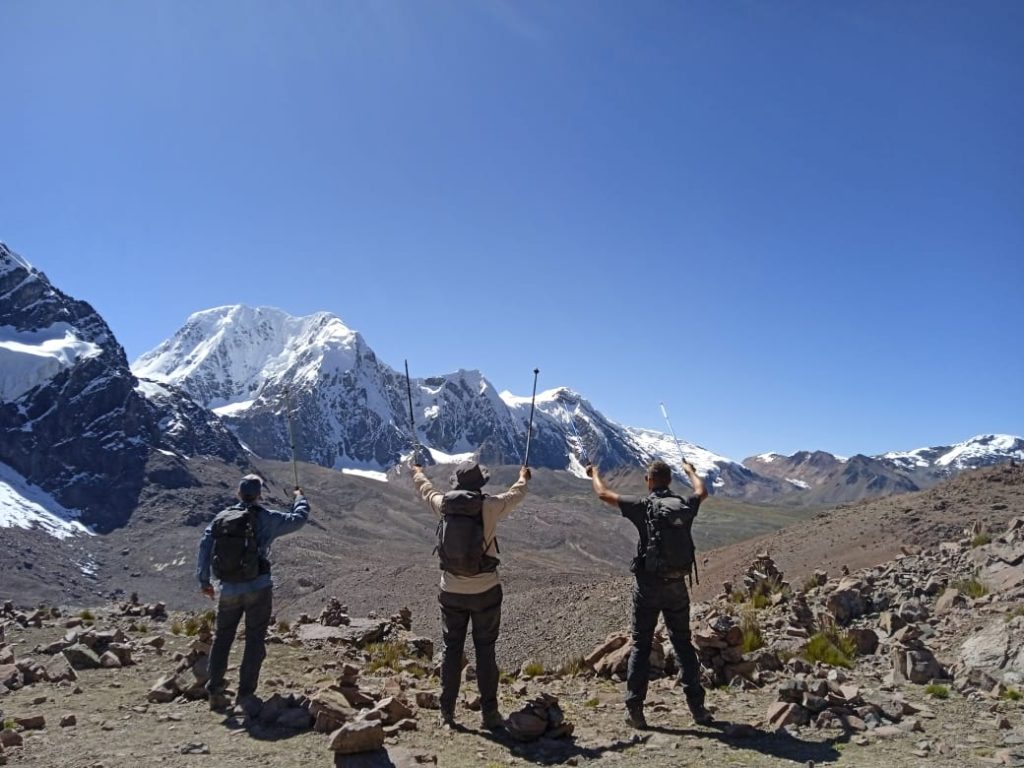
Best Time to Visit Ausangate
- Dry season (May–September): Clear skies, freezing nights
- Shoulder seasons (April and October): Mixed weather, fewer tourists
- Rainy season (November–March): Heavy precipitation
Actual Difficulty of Ausangate Trek in Peru
With 9,186 ft total elevation gain and hiking between 13,123-17,060 ft, the route is considered moderate to difficult.
Suggested Physical Preparation
- Progressive cardio: 2-hour hikes with backpack 3x/week
- Strength training: Squats and lunges for endurance
- Breathing exercises: Diaphragmatic techniques for altitude
Essential Trekking Gear for Peru
- Waterproof mid-ankle boots
- Layered clothing (thermal base, fleece, shell jacket)
- Sleeping bag rated to 14°F
- Trekking poles
- 40L backpack with rain cover
- Water filter or purification tablets
- SPF 50+ sunscreen and UV glasses
- First aid kit with acetazolamide for altitude sickness
- Energy snacks (Andean quinoa and nut mix)
Adapting to Altitude Without Issues
Arrive in Cusco at least 48 hours early, hydrate (3L daily), avoid alcohol, and try coca or muña tea.
Accommodations and Quechua Communities
Basic lodges in Pacchanta and Upis are run by local families. Staying in simple shelters helps conserve warmth and supports Quechua communities, known for alpaca textiles and festivals like Qoyllur Rit’i.
Must-See Natural Attractions
- Pucacocha, Ausangate Q’ocha and Ticllacocha Lagoons: Turquoise, green and red hues
- Hanging glaciers feeding the Vilcanota River
- Andean wildlife: Llamas, alpacas and condors
- Rainbow Mountain (Vinicunca): Photo spot at 16,516 ft
Eco-Friendly Trekking in Peru
Bring reusable bottles, avoid single-use plastics, and hire agencies with proper waste management.
Final Tips for High-Altitude Trekking
- Pace yourself: Hike slow, breathe deep
- Carry cash (soles) for basic facilities and crafts
- Book a guided 5-day Ausangate tour for hassle-free logistics
Motivational Conclusion
Now you know Ausangate Trek in Peru isn’t just for elite mountaineers, but an adventure rewarding prepared beginners with unforgettable landscapes.

Frequently Asked Questions
1. How many days does the Ausangate trek take to complete?
The classic Ausangate circuit takes 5 days to complete (about 43 miles/70km). Many operators offer a 6-day option that includes Rainbow Mountain. For experienced hikers, there are 4-day versions covering 15-18 miles daily.
2. What’s the highest altitude reached during the trek?
The highest point is Palomani Pass at 16,945 ft (5,165 m) on Day 3. Important notes:
– Higher than Everest Base Camp by 1,000 ft
– Contains 40% less oxygen than sea level
– Most hikers take 2-3 hours for the 2.5-mile ascent
You’ll also cross Arapa Pass (15,912 ft) and Qampa Pass (16,404 ft).
3. What essential gear should I pack for dry season trekking?
For May-September (sunny days/freezing nights):
Clothing: Thermal layers, insulated jacket, waterproof shell
Sleeping: Bag rated to 14°F (-10°C), sleeping pad
Health: SPF 50+ sunscreen, UV lip balm, sunglasses
Hydration: 3L capacity, purification tablets
Extras: Trekking poles, headlamp, portable charger
Pro tip: Break in boots with 30+ miles of use first.
4. Is hiring a guide required for the Ausangate trek?
While not mandatory, guides are recommended because:
– They carry oxygen and know evacuation routes
– Trail markers are sparse above 15,000 ft
– Help with Quechua community interactions
– Handle campsites, meals and pack animals
Solo hikers should register with Peruvian police in Cusco.
5. How should I handle altitude sickness symptoms?
Affects 75% of trekkers above 11,500 ft:
Mild: Stop, drink coca tea, take 250mg acetazolamide
Moderate: Descend 1,000-1,500 ft immediately
Severe: Emergency evacuation needed
Prevention: Acclimatize 2-3 days in Cusco (11,152 ft), drink 3-4L water daily, no alcohol.

