The 7 lakes of Ausangate circuit is one of the most impressive trekking experiences in Cusco. This route combines high mountain landscapes, intensely colored lakes, and a deep connection with the Andean worldview. Along the journey, visitors not only challenge their physical endurance but also enter a natural environment considered sacred by local communities.
What is Ausangate?
Ausangate is the second highest snow-capped mountain in Cusco, with an approximate altitude of 6,385 meters above sea level. It is part of the Vilcanota Mountain Range and is considered an Apu, meaning a sacred mountain within the Andean worldview.
Since ancient times, Ausangate has been seen as a protective deity that regulates life and fertility for Andean communities. Important water sources such as the Vilcanota River originate from its glaciers, which are essential for the Sacred Valley of the Incas.
Location of the 7 Lakes of Ausangate
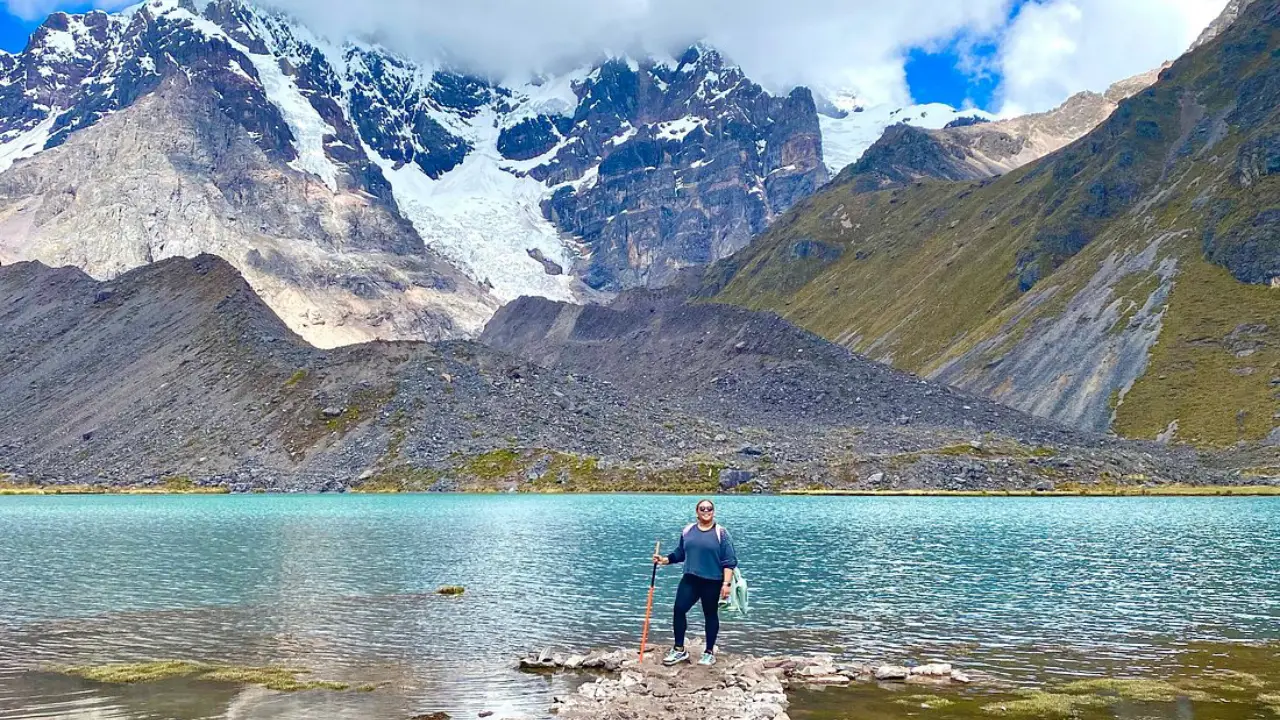
The 7 lakes circuit is located southeast of the city of Cusco, approximately 100 kilometers away, in the province of Quispicanchis, district of Ocongate. This destination lies within the Vilcanota mountain range, surrounded by snow-capped peaks and high Andean landscapes.
How to get to the 7 lakes circuit
Access is by land from Cusco, passing through towns such as Saylla, Huacarpay, Urcos, Ccatca, Ocongate, Tinke, and finally Pacchanta. From this last point, the hike to the lakes begins.
The route combines transportation and trekking, making the experience a complete adventure in the Peruvian puna.
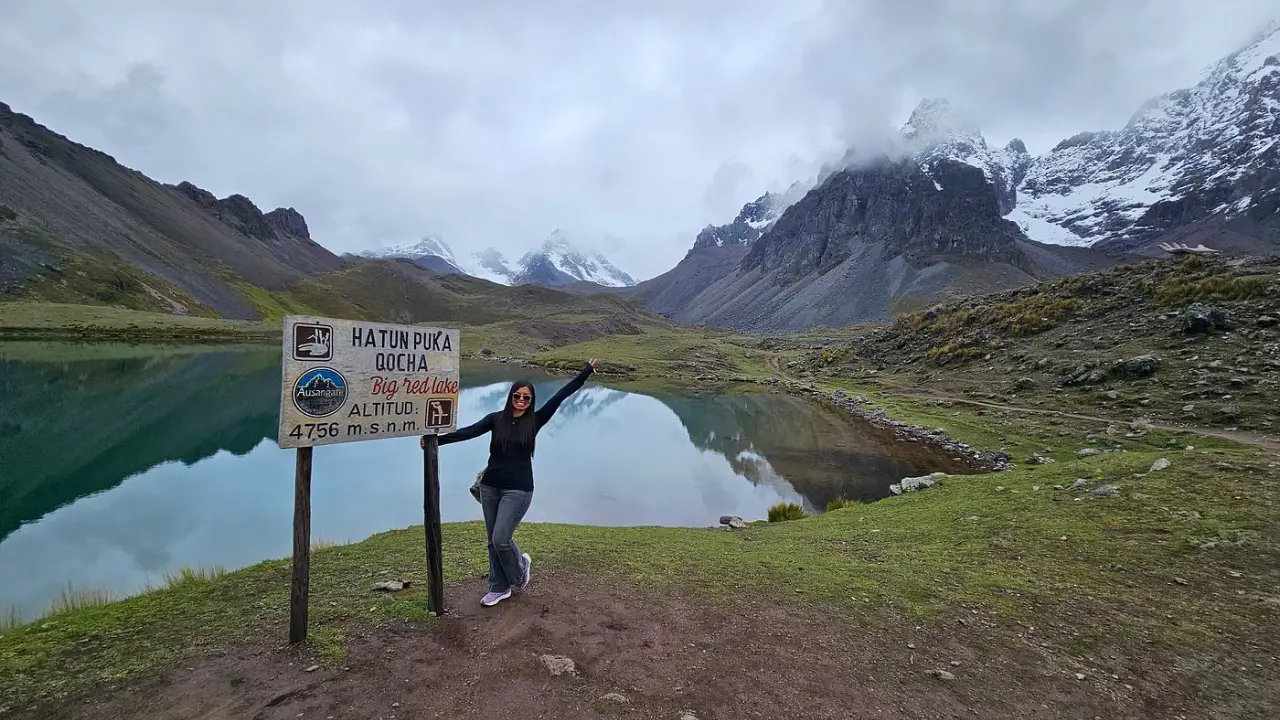
The 7 Lakes of Ausangate and their altitudes
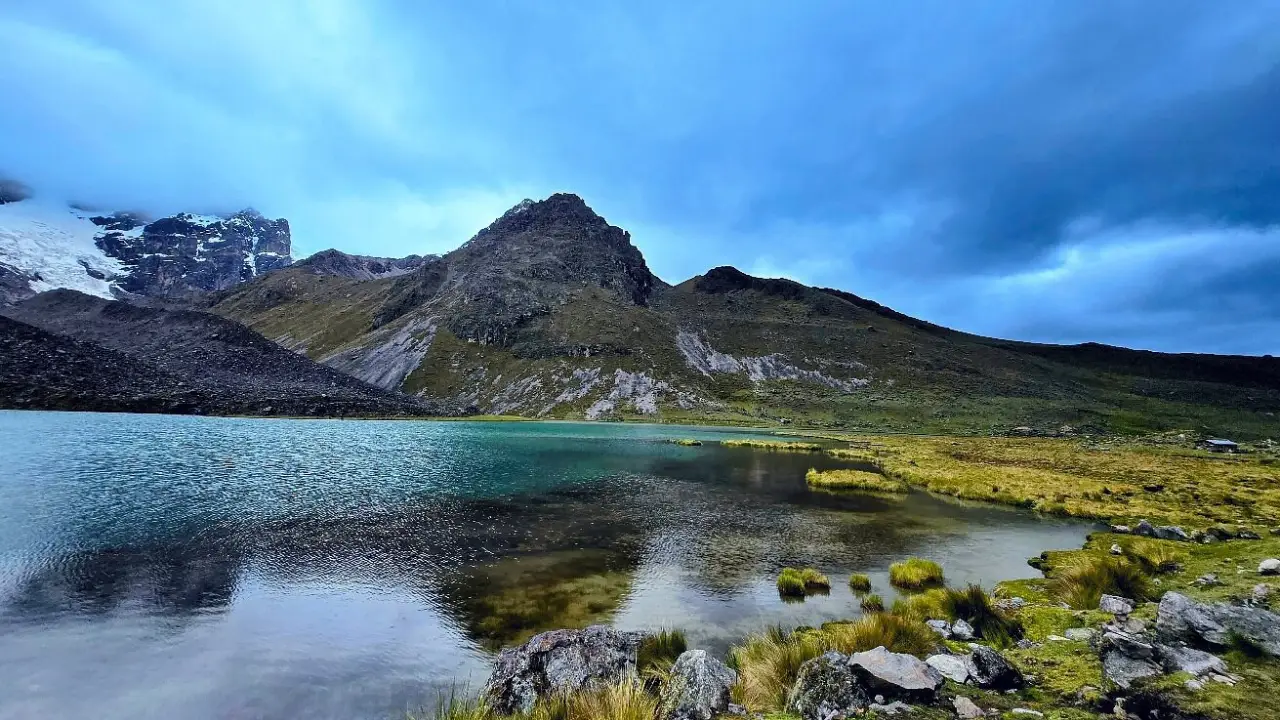
Each lake has unique characteristics, both in color and altitude, making the route a diverse and visually striking experience.
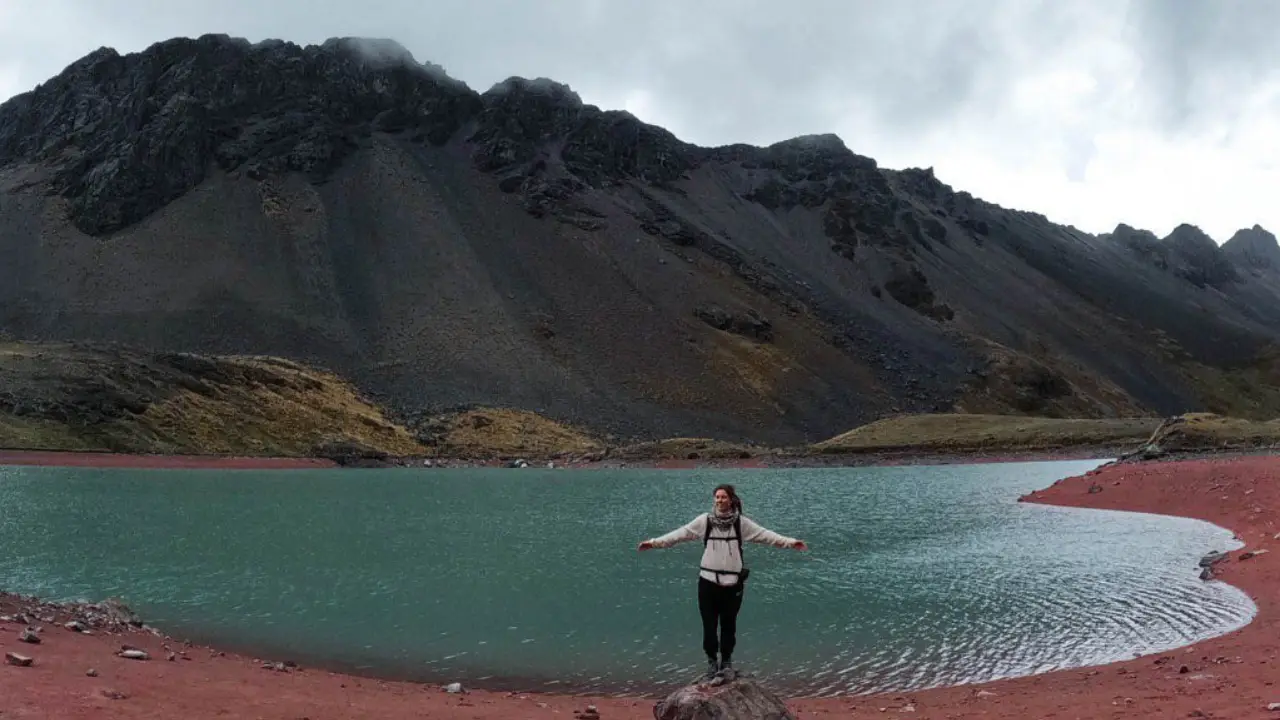
- Pucacocha Lake: It is the first lake of the circuit and is located at 4,500 meters above sea level. Its name means “red lake” due to the tone of its waters. It is also known as Chocolate Lake.
- Patacocha Lake: It is located at 4,860 meters above sea level, being one of the highest on the route. As you ascend, the physical effort increases, but so do the views of the snow-capped mountain.
- Alqacocha Lake: Located at 4,750 meters above sea level, it stands out for the intense cold of the area, requiring proper trekking clothing.
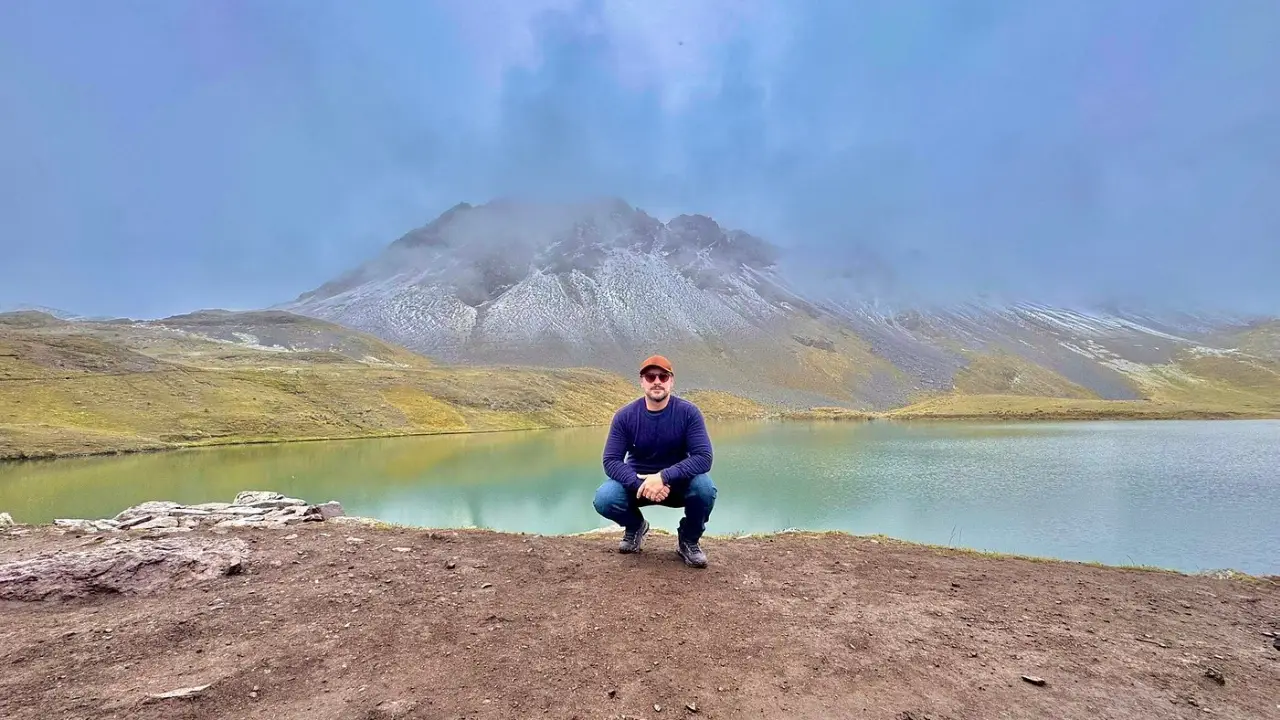
- Q’omercocha Lake: With a characteristic deep turquoise color, this lake is located at 4,666 meters above sea level. It is considered one of the best for observing the Ausangate snow-capped mountain.
- Orco Otorongo Lake: Located at 4,620 meters above sea level, it has a peculiar shape resembling an otorongo. Its colors evoke the feline’s spots.
- China Otorongo Lake: It is located very close to the previous one, at the same altitude. It is considered the “female” otorongo and is ideal for photography.
- Azulcocha Lake: The last one in the circuit, located at 4,610 meters above sea level. It stands out for its intense blue color contrasting with the Ausangate snow-capped mountain.
Difficulty of the hike
The trekking to the 7 lakes has a difficulty level of 4 out of 5, mainly due to altitude and weather conditions. It is a demanding route that requires good physical condition and prior acclimatization.
Weather in the 7 Lakes of Ausangate
The weather in this area is extreme and changeable. During the day there may be intense sun, while at night temperatures can drop to -10 °C and rise up to 25 °C during peak solar radiation hours.
The environment is dry and windy, so it is essential to bring appropriate clothing to withstand both the cold and sun exposure.
Flora and fauna on the route
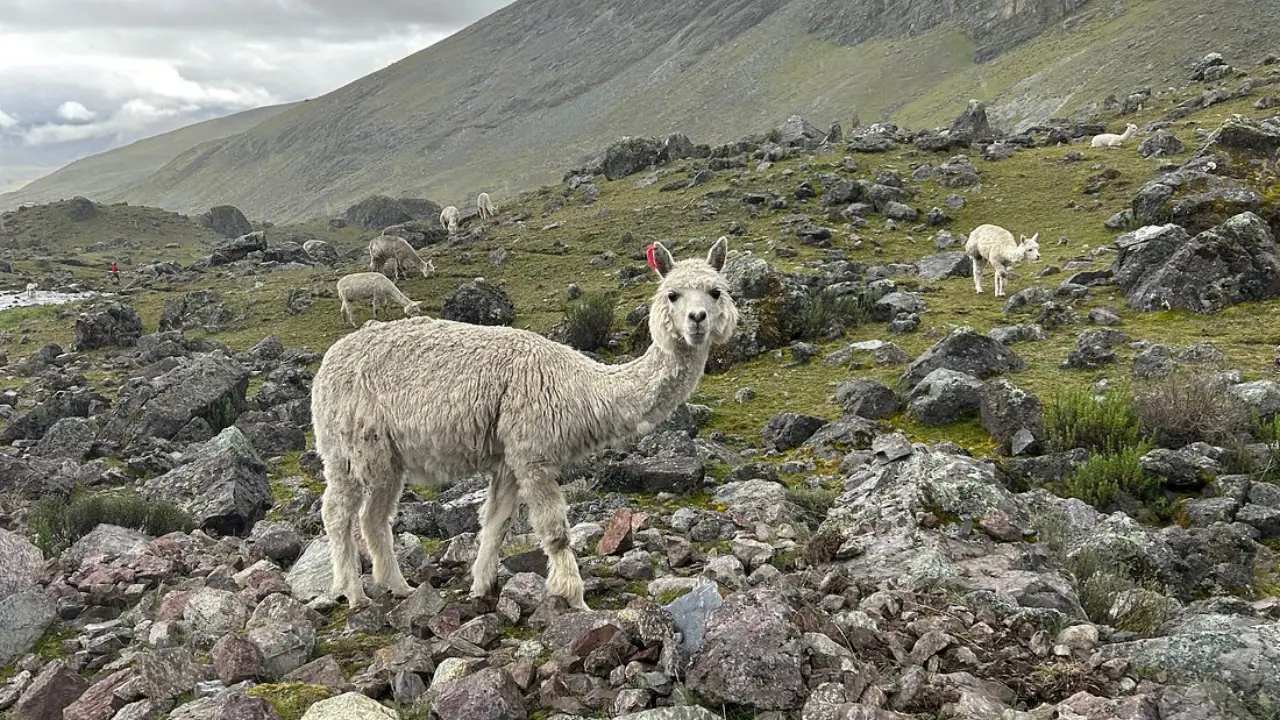
The ecosystem of the Peruvian puna offers unique biodiversity. During the trek, it is common to see llamas, alpacas, and vicuñas, as well as animals such as vizcachas and Andean birds like huallatas.
Vegetation is dominated by ichu, a resilient grass capable of surviving extreme cold and high-altitude conditions.
What the trail is like
Despite being a remote area, the trail is well marked, which makes orientation during the trek easier. Along the route, small stalls can be found where local residents sell water, coca leaves, snacks, and handicrafts.
These spaces allow travelers to interact with local communities and learn more about their culture and traditions.
Ausangate viewpoint
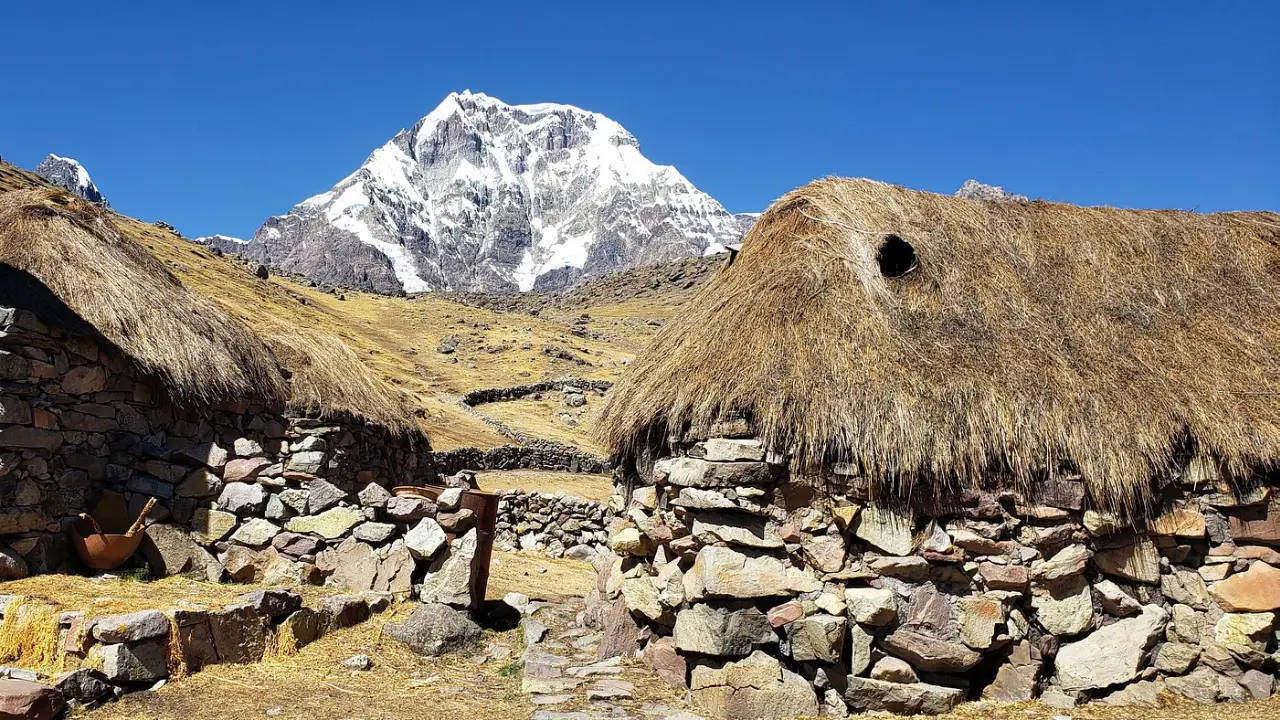
One of the most outstanding points of the route is the Ausangate viewpoint, from where you get a panoramic view of the snow-capped mountain, the Pacchanta River, and the Andean landscape.
In this place, experiential tourism activities are also carried out, where visitors can learn traditional techniques such as wool spinning and backstrap weaving, as well as interact with local communities.
Overall experience of the circuit
Exploring the 7 lakes of Ausangate is much more than a hike. It is an experience that combines nature, culture, and physical challenge. The contrast of colors of the lakes, the imposing snow-capped mountain, and the connection with the Andean worldview make this destination one of the most authentic in Cusco.
It is ideal for travelers seeking to leave traditional routes and live an adventure in direct contact with nature.