

Ausangate Trek – Ausangate Peru 4 Days
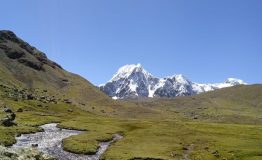
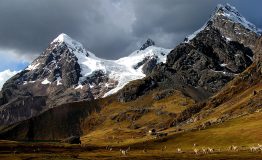
The Ausangate Trek is one of the most impressive trekking experiences in southern Peru, ideal for travelers seeking authentic Andean landscapes, cultural contact, and a moderate to demanding physical challenge. Over four days, the route crosses remote valleys, high mountain passes, glacial lakes, and traditional Quechua communities, always under the imposing presence of the snow-capped Ausangate.
The journey begins in Cusco and gradually delves into the mountain range, offering spectacular views of snow-capped peaks, extensive high Andean plains, and herds of alpacas. During the hike, you will visit emblematic places such as Upis, Ausangate Qocha lake, Q’ampa, and Pacchanta, where the natural hot springs provide a well-deserved rest after the trekking days.
Each day is carefully designed to allow proper acclimatization to the altitude, combining progressive ascents with gentle descents and moments of contemplation. The experience is complemented by campsites in unique natural environments, starry skies, and the warmth of Andean rural life. The return to Cusco marks the end of an unforgettable journey through one of the most majestic landscapes of the Peruvian Andes.
4 Days
Treking
Moderate
Cusco
12 people
Detailed Itinerary
Day 1: First day of the Ausangate trek: Cusco to Upis
Your Ausangate adventure starts very early. Leaving Cusco around 5:00 a.m., you will embark on a scenic drive to Tinqui. Along the way, the majestic peaks of Ausangate will greet you in the distance, announcing the start of an unforgettable trek. The journey to Tinqui, the starting point of the Ausangate trek, takes approximately four hours.
Upon arriving in Tinqui at 9:00 a.m., you will pick up your gear and have a brief meeting with your trekking group. This town offers a glimpse into the local Quechua lifestyle, setting the tone for the cultural experiences that await you. After finishing the preparations and meeting the support staff, your trek begins.
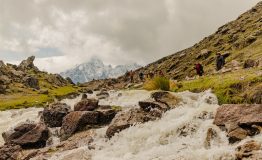
The first part of the hike is over relatively flat terrain. You walk through picturesque valleys, with the murmur of rivers as a backdrop. At noon, you find a perfect spot to have lunch and rest.
After lunch, the journey continues towards Upis. Here, the landscape begins to change, ascending gradually to present the first challenge of the trek.
You will arrive at Upis at 4:00 PM. This small town is located in the shadow of Ausangate and offers hot springs, a perfect remedy for your tired muscles.
As night falls, you set up camp. You will enjoy a hot meal. Then, you prepare for the coming days of the Ausangate trek in Peru.
Statistics for the first day of the Ausangate trek:
- Distance covered: 12 kilometers (7.5 miles)
- Starting altitude in Cusco: 3,400 meters (11,155 feet)
- Maximum altitude in Upis: 4,400 meters (14,435 feet)
- Minimum altitude in Tinqui: 3,800 meters (12,467 feet)
- Difficulty level: Moderate.
Day 2: Second Day of the Ausangate Trek: Upis to Ausangate Qocha Lake
The second day of the Ausangate trek promises excitement and stunning landscapes. You wake up in Upis to a cool morning, and the silhouette of Ausangate outlines the horizon. After a good breakfast at 6:00, you put on your hiking boots, eager to face the day’s challenges.
Starting from Upis, the trail begins with a steady ascent. As you climb, the panoramic views of the rolling highlands of Ausangate, Peru, captivate the senses. The diverse ecosystem of the area is a sight to behold, from herds of grazing alpacas to the sporadic burst of wildflowers.
By mid-morning, you will reach the first mountain pass, famous for its impressive views. You will feel the impact of the altitude, but the satisfaction of having made it this far will make every step worthwhile. A short descent will take you to a quiet spot, ideal for lunch at noon.
After lunch, the hike continues towards Ausangate Qocha Lake. This glacial lake, with its sky-blue waters, contrasts sharply with the snow-capped peaks and arid landscapes surrounding it. As you walk along its shores, the reflection of Ausangate in the water is an image etched into memory.
Arriving at the campsite by Ausangate Qocha Lake around 4:00 p.m. gives you enough time to relax and enjoy the tranquility of the surroundings. As night falls, the warmth of the campfire provides the perfect end to your day on the Ausangate trek. The starry sky adds to the serene atmosphere.
Statistics for day 2 of the Ausangate trek:
- Distance covered: 10 kilometers (6.2 miles)
- Starting altitude in Upis: 4,400 meters (14,435 feet)
- Maximum altitude at the mountain pass: 4,850 meters (15,912 feet)
- Minimum altitude at Ausangate Qocha Lake: 4,650 meters (15,256 feet)
- Difficulty level: Challenging due to altitude and terrain.
Day 3: Third day of the Ausangate trek: Journey from Q’ampa to Pacchanta
On the third day of the Ausangate trek, as dawn breaks over Q’ampa, the sky fills with color. This marks the start of another day full of adventures. At 6:00 a.m., after a nutritious breakfast, you are on the trail, ready to discover the wonders that await you.
Today’s route combines moderate ascents with calm stretches. Leaving Q’ampa, the trail gradually opens up, offering panoramic views of the majestic Ausangate mountain range. The unique landscape of Ausangate, Peru, with its grass-covered plains and occasional rock formations, will keep your spirits high.
By mid-morning you find yourself crossing the Q’ampa pass. From here, with the wind in your face, a panoramic view of the valley rewards you. It is a moment for reflection, for understanding the magnitude of the Andean landscapes.
Descending from the mountain pass, the trail winds its way towards Pacchanta. This picturesque village, famous for its natural hot springs, invites hikers to relax. If you arrive around 2:00 p.m., you will have enough time to enjoy these warm waters. They will soothe your muscles and revitalize your spirit.
As evening falls in Pacchanta, you set up camp. The distant murmur of village life is heard. The view of Ausangate under the twilight is fascinating. Both elements give a magical touch to the atmosphere.
Statistics for day 3 of the Ausangate trek:
- Distance covered: 9 kilometers (5.6 miles)
- Starting altitude in Q’ampa: 4,500 meters (14,764 feet)
- Maximum altitude at Q’ampa Pass: 5,000 meters (16,404 feet)
- Minimum altitude in Pacchanta: 4,200 meters (13,780 feet)
- Difficulty level: Moderate, with some demanding sections during the ascent.
Day 4: Fourth day of the Ausangate trek: From the warmth of Pacchanta to the heart of Cusco.
Waking up in Pacchanta, the last day of your Ausangate trek is about savoring every moment. With the first rays of dawn, the snow-capped peaks of Ausangate stand tall, symbolizing the climax of your journey.
After breakfast at 7:00, you will begin the descent towards Cusco. The trail winds through diverse landscapes, with the Ausangate mountain range ever-present. Each step will remind you of the beauty and grandeur of Ausangate, Peru, an experience you will cherish forever.
By mid-morning, you traverse rolling hills and picturesque meadows, often crossing paths with local shepherds. Their smiles and greetings tell stories of a culture deeply rooted in these mountains.
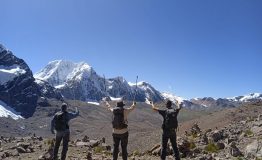
At noon, you will reach the last checkpoint of the trek. There, a vehicle will be waiting to take you back to Cusco. As you travel through the Andes, memories of the previous days flood your mind. The camaraderie with fellow hikers, the challenges overcome, and the triumphs achieved culminate in a sense of accomplishment.
You will arrive in Cusco in the late afternoon. The city, with its lively plazas and historic charm, will welcome you. This marks the end of an unforgettable journey on the Ausangate trek.
Statistics for day 4 of the Ausangate trek:
- Distance covered: 12 kilometers (7.5 miles)
- Starting altitude in Pacchanta: 4,200 meters (13,780 feet)
- Maximum altitude of the day: 4,500 meters (14,764 feet)
- Final altitude in Cusco: 3,400 meters (11,155 feet)
- Difficulty level: Moderate, with gentle descents and easy trails.
Inclusions
What's included
- Pre-trek briefing with your guide.
- Round-trip transportation from Cusco to the trailhead.
- Entrance fees to the Ausangate region.
- Professional bilingual guide (usually English/Spanish).
- Porters and mules to carry camping equipment and personal belongings (a set weight limit often applies).
- High-quality camping equipment, including tents and sleeping pads.
- Meals during the trek (breakfast, lunch, dinner, and snacks).
- Boiled water provided daily for drinking and cooking.
- First aid kit and emergency oxygen bottle.
- Environmental care (use of eco-friendly products, proper waste disposal).
- Cook and kitchen staff with all necessary equipment.
- Dining tent with tables and chairs.
What's not included
- Accommodation in Cusco before and after the trek.
- Meals outside the trekking route.
- Personal trekking gear such as hiking boots, trekking poles, and personal clothing.
- Sleeping bags (unless included in the package).
- Travel insurance (highly recommended, especially coverage for high-altitude trekking).
- Tips for the trekking team (guides, porters, cooks).
- Personal expenses such as souvenirs, additional snacks, and beverages.
- Horseback rides or additional transportation not included in the itinerary.
- Entrance fees to any hot springs or additional attractions not included in the original itinerary are not included.
Packing List
It is recommended to wear appropriate clothing for variable climates, using a layering system that maintains thermal comfort and provides protection against cold, rain, and wind. Trekking and camping equipment is essential to facilitate movement, rest, and proper organization of luggage. Likewise, personal protection and hygiene items contribute to well-being and safety throughout the experience.
- Thermal base layers (top and bottom)
- Quick-dry trekking shirts (both short-sleeve and long-sleeve)
- Light fleece or mid-layer jacket
- Waterproof and windproof jacket
- Trekking pants and/or convertible shorts
- Waterproof pants
- Underwear
- Warm hat, sun hat, and neck gaiter
- Gloves (lightweight and insulated)
- Comfortable camp clothing (such as a T-shirt and loose-fitting pants)
- Waterproof trekking boots with good ankle support
- Lightweight shoes or sandals for camp
- Wool or synthetic trekking socks
- Waterproof gaiters
- Gear and Accessories
- Backpack (40–60 liters) with rain cover
- Sleeping bag (rated for near-freezing or below-freezing temperatures)
- Inflatable pillow
- Trekking poles
- Headlamp with extra batteries
- Water bottles or hydration bladder
- Waterproof or plastic bags to organize and keep items dry
- Personal Items
- Sunglasses with UV protection
- Sunscreen and lip balm with SPF
- Personal first aid kit (including blister treatment and altitude sickness medication)
- Personal toiletries (toothbrush, toothpaste, biodegradable soap)
- Quick-dry towel
- Toilet paper and hygiene items
Frequently Asked Questions
1. What level of physical fitness is required for the Ausangate Trek?
Good physical fitness is required, as the route involves long hikes, constant changes in elevation, and is done at high altitude.
2. What is the maximum altitude reached during the trek?
During the trek, mountain passes exceeding 4,800 meters above sea level are reached, making prior acclimatization highly recommended.
3. What are the weather conditions like along the route?
The weather can vary considerably between day and night, with cold temperatures in the early morning and possible sudden changes, such as wind or light rain.
4. Where do you stay overnight during the Ausangate Trek?
Nights are spent in campsites located in high Andean zones, allowing for an experience close to nature and mountain landscapes.
5. Is it possible to do the Ausangate Trek all year round?
The trek can be done at different times of the year, although weather conditions vary by season, so it is important to consider the climate before planning the trip.
Feel free to call us. We’re a team of experts and would be happy to speak with you.
- +51 970 409 091
- [email protected]
Customer Experience
Verified Thanks Richard Did this four day Salkantay Trek with them as the Inca Trail was sold out. It was very pleasant experience and Richard, our guide took great effort inmaking this trip a memorable one. The camping sites were located in quiet parts of the trek, giving us opportunity to get good rest after a day full of hike. The food were all freshly cooked and authentic. Highly recommendPosted on TripadvisorVerified Immervie, cultural and traditional I booked this four day Choquequirao trek after not being able to hike the Inca Trail due to lack of availability. The trip was very well organised, the tour company took care of everything from transport and food to accomodation and entrance tickets. The guide was very nice and spoke good English. The site itself was very less crowded and scenic. Higly recommend visiting Choquequirao if you want to know more about the Incas history.Posted on TripadvisorVerified Thanks Richard! Did this two day trek with Richard, our guide. He was very friendly, informative and passionate to share his knowledge about the local traditions and customs. The trek included all meals and were all freshly cooked. The camping sites were located overlooking the valley. The red valley trip was the highlight and i truly enjoyed it more than the rainbow mountain.Posted on TripadvisorVerified Viaje mágico ✨️ I took the 4-day, 3-night tour to Choquequirao, and it was definitely an amazing experience. The organization was excellent, the service was outstanding throughout, and the team was always attentive and professional. Plus, the atmosphere was super fun, which made the whole trip even more special. I highly recommend this tour company if you're looking for a well-planned adventure full of great moments 😉Posted on TripadvisorVerified Choquequirao Hi everyone, I highly recommend the Choquequirao tour (the one I did) with this agency because of all my options, it offered the best guaranteed service. There were no problems, so I'm very satisfied.Posted on TripadvisorVerified Recommended I did the Machu Picchu-Inca Trail tour with this agency, 100% recommended guys, the service was excellent and seeing all these places was simply beautifulPosted on TripadvisorVerified A really wonderfull experience Visiting Manu National Park with this agency was truly the best choice! 👌 The Peruvian rainforest is truly magnificent and wonderful, and the agency really gives you the opportunity to experience the best of it.Posted on TripadvisorVerified A Remarkable Journey to Choquequirao An unforgettable 5-star adventure to Choquequirao, with breathtaking views, incredible Inca ruins, and a true sense of untouched beauty throughout the trek. The experience was made even better by our tour guide, Richard, who was knowledgeable, funny, and kind—he kept us motivated, shared fascinating insights, and made every moment along the journey even more enjoyable.Posted on TripadvisorVerified The trip of my dreams!!! I'm Nancy and I loved the experience we had with the tour. We had a wonderful experience to remember. The service was excellent, punctual, and professional from everyone who accompanied us. We'll definitely be back, thank you so much! 🤗Posted on TripadvisorVerified beautiful experience We had an unforgettable experience with this company visiting Manu National Park for two days. My family and I are very happy to have enjoyed such a well-organized tour. We saw monkeys, birds, snakes, capybaras, caimans, and much more. Thank you for this great experience, Trails to Machu Picchu.
Trustindex verifies that the original source of the review is Google. I did the Machu Picchu-Inca Trail tour with this agency, 100% recommended guys, the service was excellent and seeing all these places was simply beautifulPosted on GoogleTrustindex verifies that the original source of the review is Google. Visiting Manu National Park with this agency was truly the best choice! 👌 The Peruvian rainforest is truly magnificent and wonderful, and the agency really gives you the opportunity to experience the best of it.Posted on GoogleTrustindex verifies that the original source of the review is Google. Tuvimos un viaje inolvidable al parque manu de 2 dias 1 noche. Fue un tour inolvidable para nosotro y lo disfrutamod al maximo. Esta agencia de viajes es muy recomendable, desde el transporte, aalimentacion, guiado profecional y toda la logistica muy bien organizada gracias por todo señores de traisl to machupicchuPosted on GoogleTrustindex verifies that the original source of the review is Google. Fue uno bonita experiencia realizar el tour al Parque Nacional del Manu por 3 días, los guías super buenísimos que nos ayudaron a llevarnos una bonita experiencia, muy atentos y super divertidos!!!Posted on GoogleTrustindex verifies that the original source of the review is Google. They made my day 😊⭐⭐⭐⭐⭐Posted on GoogleTrustindex verifies that the original source of the review is Google. I had a great experience with them, recommendedPosted on GoogleTrustindex verifies that the original source of the review is Google. Very good tour that I have done, highly recommended to know the Inca Trail🙂😌Posted on GoogleTrustindex verifies that the original source of the review is Google. Tuvimos la oportunidad de ir con mi familia a conocer Cusco y la experiancia fue única, lo pasamos muy bien desde el transporte, nuestro guía fue muy profesional, la alimentación excelente. Hizo que mi estancia fuera realmente memorable. Estamos muy agradecidos y recomendamos la Agencia de viajes.Posted on GoogleTrustindex verifies that the original source of the review is Google. Buen servicio... me encanto el Guiado de la agencia ... siempre atentos y aclarando cada duda y pregunta con mucho conocimiento.