
From the Andes to the Amazon: An Epic Journey from Cusco to the Heart of Manu
The road trip from the historic city of Cusco to the Cultural Zone of the Manu National Park is one of the most spectacular routes in Peru, a dizzying descent that transitions from the freezing Andean heights to the lush Amazon rainforest. This journey is not only a feast for the senses due to its changing landscapes, but also an immersion into history, culture, and one of the most astonishing biodiversities on the planet.
The Route: From the Inca Heights to the Tropical Rainforest
The entire journey from Cusco to the river port of Atalaya, the main gateway to the Manu Cultural Zone, can take between 8 and 10 hours, depending on weather conditions and stops. The route crosses various ecological levels, offering an unparalleled visual spectacle.
First Key Stop: Paucartambo, the Town Anchored in Time
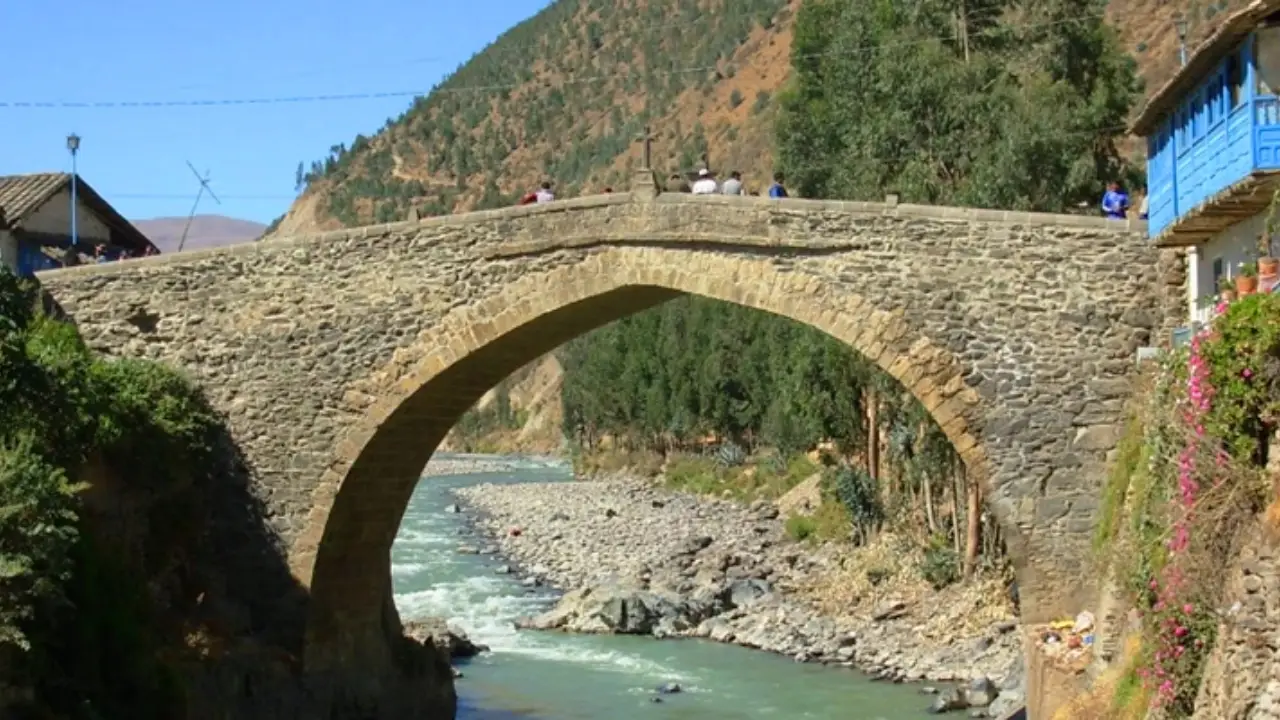
About 3 or 4 hours from Cusco lies the picturesque town of Paucartambo, the capital of the eponymous province. Situated at 2,906 meters above sea level on the banks of the Mapacho River, this town of colonial architecture with cobblestone streets and white adobe houses with blue balconies is famous for its religious and cultural fervor.
Historically, Paucartambo was an important commercial hub during the Inca Empire, connecting the Antisuyo (the jungle region of the empire) with the capital, Cusco. Products such as coca, gold, and fine textiles passed through this route. During the colonial era, it was established as a corregimiento and maintained its commercial relevance. Its architectural jewel is the colonial Carlos III bridge, commissioned by the King of Spain in 1775.
A visit to Paucartambo is not complete without experiencing its grandest festival: the Feast of the Virgen del Carmen, celebrated in mid-July, which attracts thousands of national and foreign visitors with its colorful masked dances and processions.
Ascent to the “Balcony of the East”: The Tres Cruces Viewpoint
From Paucartambo, a dirt road of approximately 45 kilometers (1.5 to 2 hours) ascends to the highest point of the journey: the Acjanaco Pass, the entrance to the Manu National Park, and the nearby Tres Cruces Viewpoint, located at more than 3,700 meters above sea level.
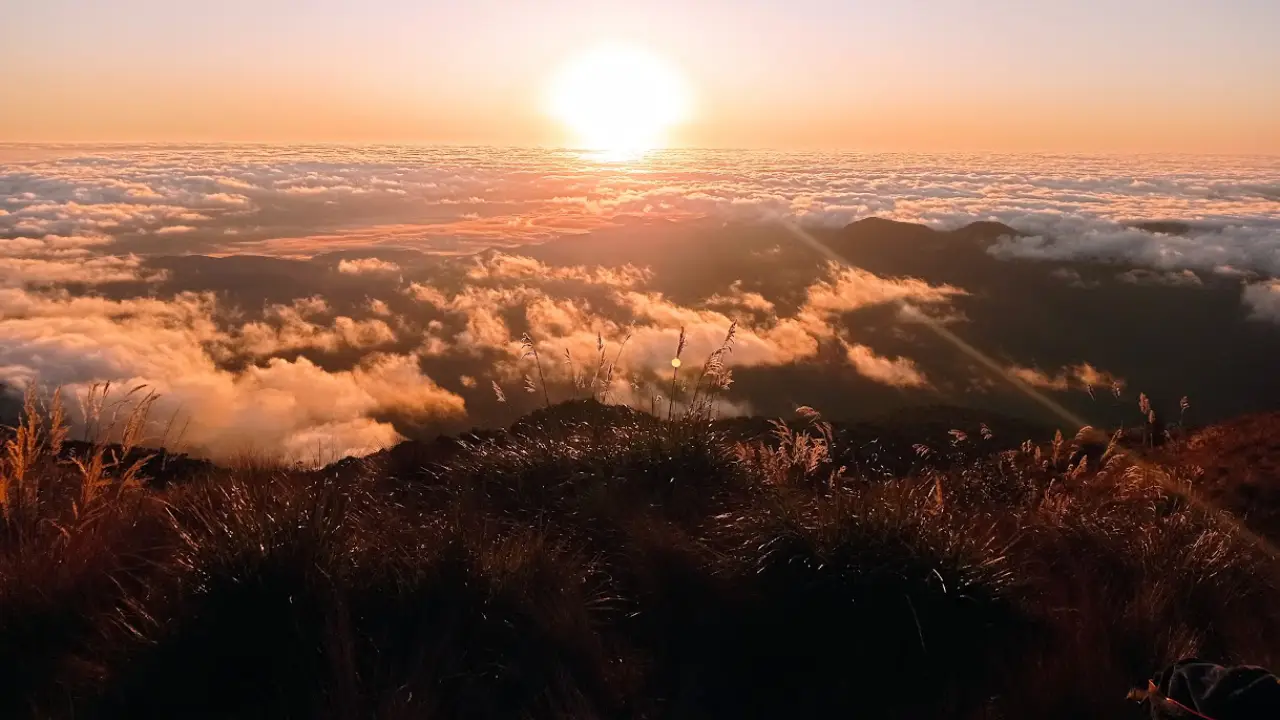
This viewpoint, also known as the “Balcony of the East,” is one of the only two places in the world (the other being in Japan) where you can observe an extraordinary optical phenomenon during the winter solstice (mainly in June and July). At dawn, the sunlight, passing through the clouds and the humid atmosphere of the lowland jungle, refracts and distorts, creating the illusion of seeing three suns or a sun that seems to dance on the horizon.
Beyond the phenomenon, the view from Tres Cruces is breathtaking: a sea of clouds covering the immense Amazonian plain, with the Ausangate mountain range visible in the distance. According to the Andean worldview, this place is a spiritual portal or Hanaq Pacha (upper world), where souls are purified with the first rays of the sun (Inti).
Mysteries in Stone: The Pusharo Petroglyphs and the Ancestral Legacy
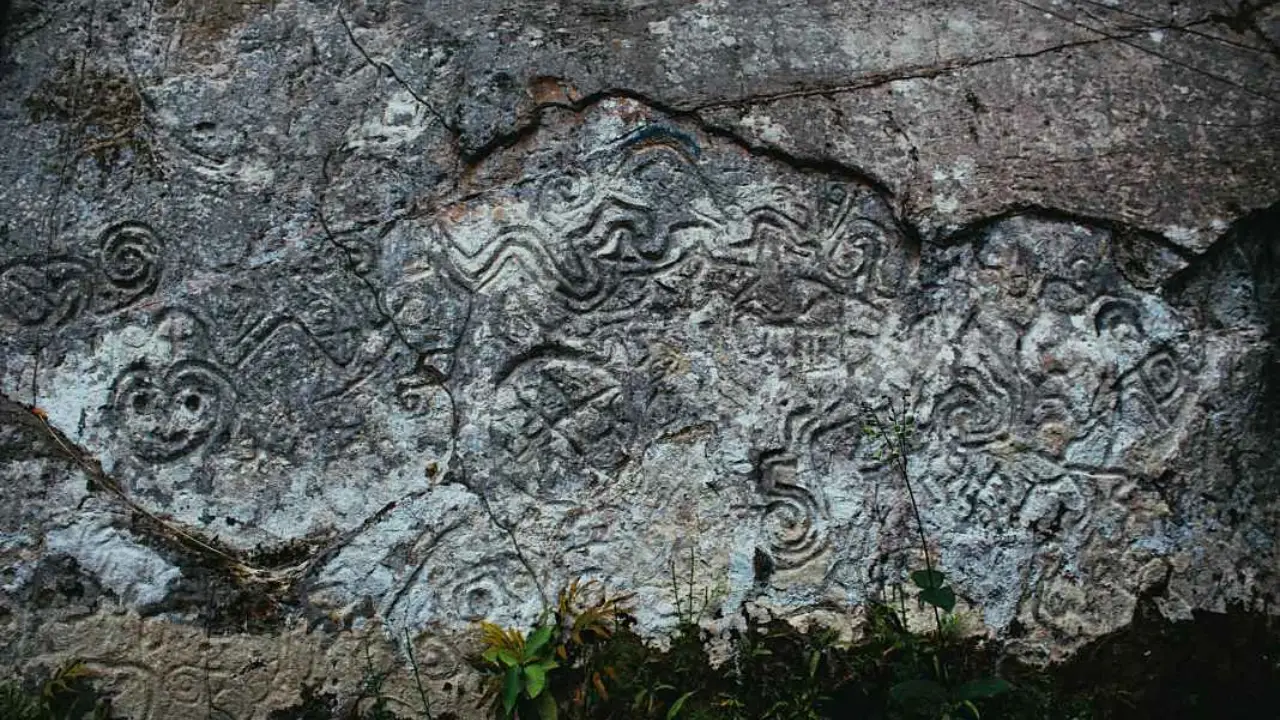
Deep within the vast Manu jungle, on the banks of the Palotoa River, lies one of the most enigmatic and significant rock art sites in the Amazon: the Pusharo Petroglyphs. Declared Cultural Heritage of the Nation, these engravings are a testament to the cultural legacy of vanished Amazonian peoples.
History and Significance
Officially discovered in 1921 by the Dominican missionary Vicente de Cenitagoya, the Pusharo petroglyphs cover a rock wall approximately 25 meters long. The authorship of the engravings remains a mystery to archaeologists. Some hypotheses suggest they were the work of the ancestors of the Matsiguenka ethnic group, who currently inhabit the area and consider Pusharo as their ancestral land. Other theories point to an older and culturally advanced Amazonian society that had contact with the Incas.
The engravings are characterized by their eminently geometric and abstract style, with intertwined figures that include representations of suns, snakes, feline footprints, and anthropomorphic faces or masks. The complexity and high degree of abstraction of the symbols suggest a profound worldview and an advanced symbolic capacity.
The petroglyphs are linked to legends about Paititi, the mythical lost city of the Incas, which has attracted numerous explorers and mystics to the area. Some esoteric interpretations suggest that the engravings could be a map to this citadel or even contain a lost form of writing.
Besides Pusharo, in the province of Paucartambo, you can find other archaeological sites such as the chullpas (funerary towers) of Ninamarca and the archaeological complex of Watoqto, which evidence the rich pre-Hispanic history of the region.
A Sanctuary of Life: The Astonishing Biodiversity of Manu
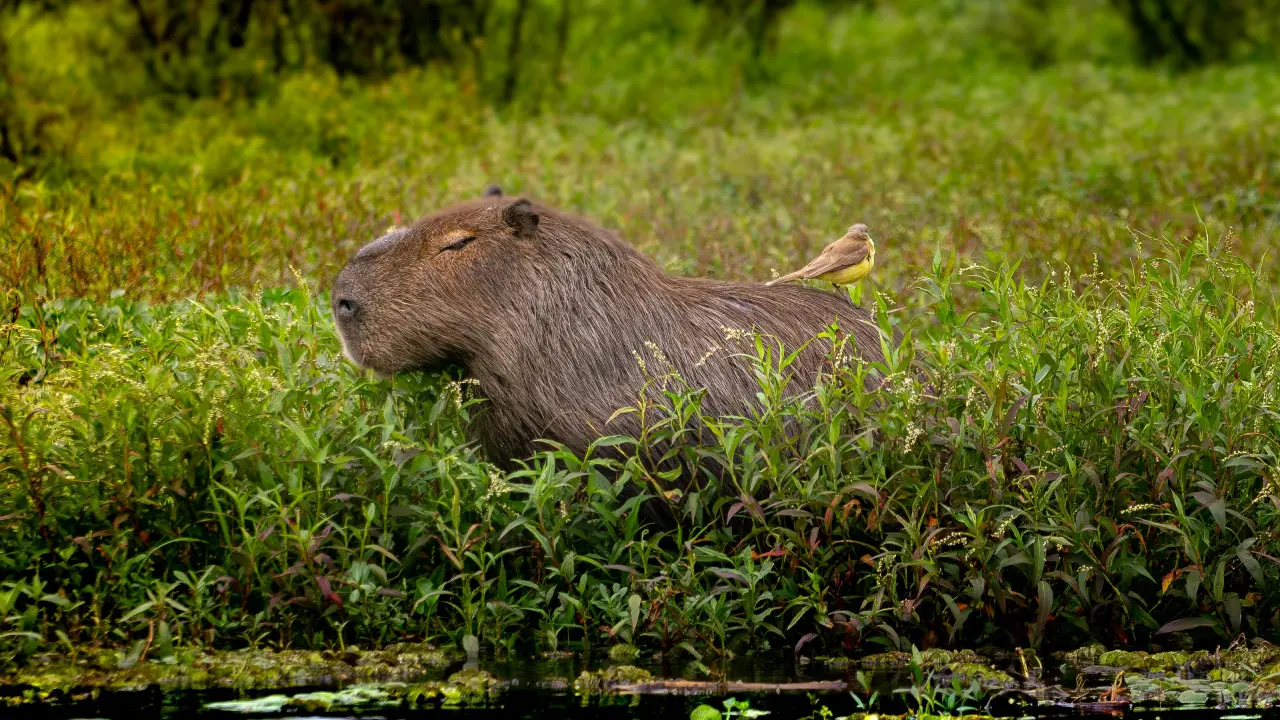
The Manu National Park, covering an area of over 1.7 million hectares, is one of the protected areas with the highest biological diversity in the world, recognized as a Biosphere Reserve and a UNESCO World Heritage Site. Its different altitudinal levels, from the Andean punas at more than 4,000 meters to the Amazonian lowland jungle, have created a variety of ecosystems that harbor a record number of species.
Figures of an Incomparable Wealth:
- Plants: It is estimated that the park is home to between 15,000 and 20,000 species of plants. 4,385 species have been identified, and up to 250 varieties of trees have been found in a single hectare. The aguajales forests, dominated by palm trees, are one of the most representative ecosystems.
- Mammals: About 228 species of mammals have been recorded. Among the most emblematic are the jaguar (otorongo), the giant river otter, the tapir (sachavaca), the spectacled bear, and 13 species of primates such as the howler monkey and the black spider monkey.
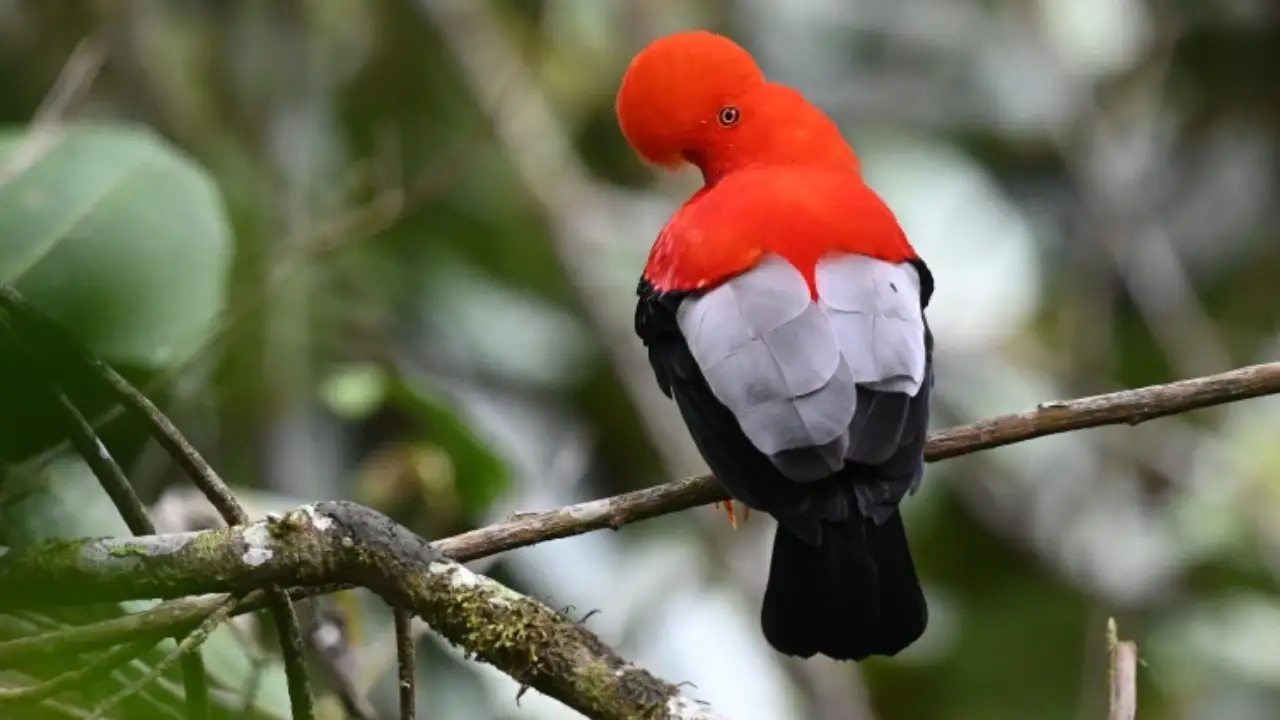
- Birds: Manu is a paradise for ornithologists, with over 1,030 registered bird species, representing more than half of Peru’s total. The Andean Cock-of-the-rock, Peru’s national bird, is one of the most colorful species that can be observed, especially in the cloud forests.
- Reptiles and Amphibians: The park holds the world record as the protected area with the highest diversity of amphibians and reptiles. 155 species of amphibians and 132 species of reptiles have been documented, including black caimans, various snakes, and turtles.
- Insects: The universe of insects in Manu is vast and largely unexplored. It is estimated that there could be around 30 million species. To date, more than 1,300 species of butterflies, 300 of ants, and 650 of beetles have been recorded.
This journey from Cusco to Manu is not just a geographical displacement, but a voyage through history, living culture, and a natural sanctuary that guards a vital portion of the planet’s biodiversity.

